What Is a Plenary Session? Plenary vs Keynote, Breakout and General Session
TL;DR
- A plenary session is the slot everyone attends, with nothing else running against it.
- The word comes from the Latin plenus, meaning full. A plenary meeting is one the whole body is entitled to attend.
- A keynote is usually in a plenary slot, but a plenary is not always a keynote. Breakouts are its opposite, and “general session” is the American name for it.
- Published conference guidance puts a plenary talk between 25 and 60 minutes. Keep the whole block under 90.
- Use plenaries for the things that must reach every delegate, and use the host to hold the time.
For a conference organiser, the useful answer to what is a plenary session is this: it is the slot where the whole room is in one place, with nothing else on the programme competing for them. Every breakout is optional. The plenary is not. That makes it the most valuable hour in your day and the easiest one to waste.

What is a plenary session?
A plenary session is a conference or meeting session that everyone attends, with no parallel sessions running at the same time. Lucid Meetings puts it plainly: a plenary is the part of a meeting or conference that everyone attends, and it turns up most at events that also split into smaller groups.
The dictionary definition is narrower, and worth knowing. Oxford treats plenary as a formal adjective describing a meeting to be attended by everyone who has the right to attend. Note the wording: has the right to attend, not happens to turn up. A plenary is defined by who is entitled to be there.
Two things follow for your agenda.
- Nothing competes with a plenary. If delegates can choose something else in that slot, it is not a plenary.
- Everyone hears the same thing at the same time. It is the only point in the day where that is true.
Where does the word plenary come from?
Plenary comes from the Latin plenus, meaning full. Oxford dates the English word to late Middle English, borrowed from late Latin plenarius, meaning complete. Say it PLEE-nuh-ree, with the stress on the first syllable.
That second sense, complete and without limit, survives in phrases like plenary powers. Conference use grew out of the parliamentary one, where the line between the whole chamber and its committees matters constitutionally.
- At the Welsh Parliament, Plenary is the meeting of the whole Senedd in the Siambr, chaired by the Presiding Officer, sitting on Tuesdays and Wednesdays.
- The European Parliament’s 720 members meet for plenary sittings in the Strasbourg and Brussels chambers.
- At the United Nations, most business goes to six Main Committees, while some agenda items are taken directly in the General Assembly plenary.
- The IPCC’s 195 member governments meet in Plenary Sessions of the Panel at least once a year, and that is where its reports are approved.
That history is why the word still carries weight. A plenary is where the whole body does the business it cannot hand to a committee.
Plenary vs keynote, breakout and general session
Four labels that overlap heavily. That is why organisers use them loosely, and why delegates end up in the wrong room.
| Label | Who is in the room | Runs against other sessions | What it is for |
|---|---|---|---|
| Plenary session | Everyone | No | Whole-room business: context, decisions, shared moments |
| Keynote | Everyone, normally | No | One talk that frames the theme |
| Breakout session | A self-selecting slice | Yes | Depth on one topic, several at once |
| General session | Everyone | No | The same slot as a plenary, in American event usage |
Is a keynote a plenary session?
Usually yes, but the two words are not interchangeable. A keynote is a type of content: one talk, built to frame the event. A plenary is a type of slot: whole room, nothing against it. Most keynotes sit in a plenary slot, and a plenary can just as easily hold a panel, an awards presentation, a members’ vote or a results briefing with no keynote in it.
Plenary or breakout session?
A breakout session is the exact opposite. Meeting Professionals International defines a breakout as a smaller, topic-focused session held alongside a larger conference or general session. The two work as a pair: the plenary sets the question, the breakouts dig into it, the plenary hears what came back.
What about a general session?
General session is the American industry term for the same slot. The same glossary calls a general session the main gathering where all attendees come together for keynotes and shared programming. UK and academic programmes tend to say plenary, while US corporate programmes say general session. Pick one word and use it consistently across the conference agenda, the app and the signage.
Does your conference need a plenary session?
Yes, if anything in the programme has to reach every delegate. That is the whole test. Apply it honestly rather than opening with a plenary because last year’s agenda had one.
Clear cases for a plenary:
- Strategy, numbers or a change people need to hear first-hand rather than picked up second-hand in the corridor.
- Anything with a vote or a resolution.
- Awards and recognition, which only land when the room is full.
- The close, where the threads of the day get pulled together.
Cases where you can skip it:
- A training day where every session is a workshop and there is nothing whole-room to say.
- A small event that is effectively one room all day anyway.
- An open-format day such as an unconference, where delegates set the agenda themselves.
Three plenaries because the programme has always had three is how you end up reading slides to a hall of 300 people.
How long should a plenary session run?
Plan 25 to 60 minutes of content, and keep the whole block under 90 minutes. Published conference guidance clusters tightly in that range.
- European Space Weather Week gives a plenary talk nominally 25 minutes including questions, while its parallel sessions get 60, 75 or 90 minute slots.
- SEBBM allots plenary speakers 45 minutes for presentation and discussion, against 30 for a symposium speaker.
- The 2024 International Degrowth Conference ran one to three plenaries a day at around an hour each, built as dialogues between two or more keynote speakers.
Notice what those have in common. A plenary is one unit of attention, not a container for four unrelated updates. If yours has to run 90 minutes, segment it: change the voice, the format or what the room is doing every 15 to 20 minutes. The energy in a room is a curve, and one speaker holding a hall past the half hour is fighting it. A hall is not twelve people in a training room.
What happens in a plenary session?
Whatever genuinely needs the whole room: a keynote, a panel, awards, a results or strategy briefing, questions to the leadership team, a vote, or the report-back from the breakouts.
One idea worth stealing from academic conferences. The ESWW conveners’ guidance lets parallel session chairs propose talks for upgrade to plenary, so the strongest content reaches everyone. The corporate version is simple: ask every breakout to send one idea to the closing plenary, and tell them at the start that you will be asking.
The host’s job in a plenary session
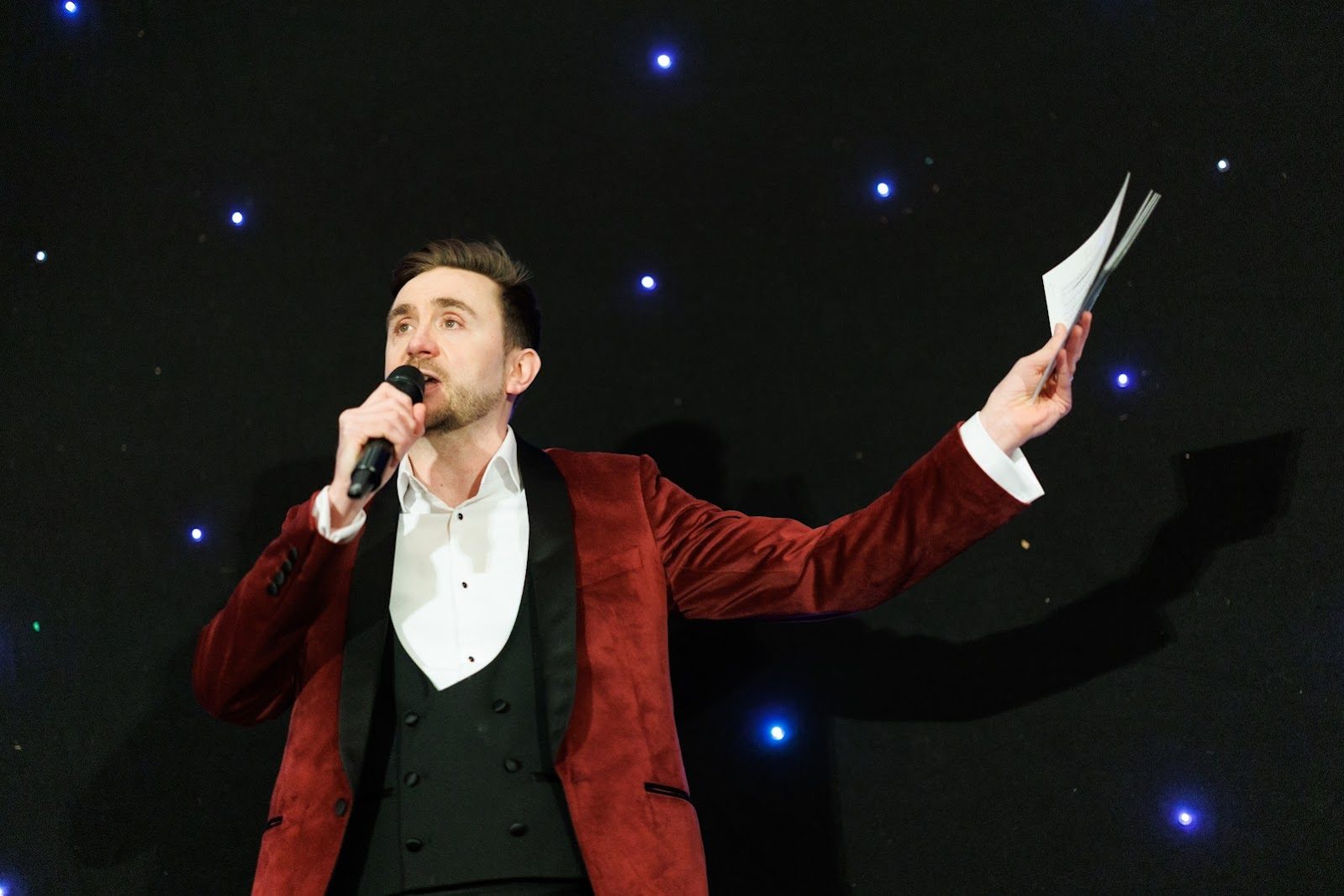
I have hosted 800+ events, and the plenary is where a host earns the booking. Everyone is in, nothing else is running, and there is nowhere to hide a flat twenty minutes.
- Open it properly. Say what this slot is for and what the room walks out with. Thirty seconds, not three minutes of thank-yous.
- Hold the clock. A plenary that overruns eats the breakouts or the lunch, and the delegates pay for it either way.
- Get the room back. After breakouts people drift back at their own pace. Restarting on time is mostly about telling people exactly when and where, then starting when you said.
- Run the questions. Hands up in a hall of 300 gets you the four most confident people. I use RoomReader, my own live Q&A software, included with hosting: delegates send questions from their phones, nothing to download, so the ones the room actually wants answered get asked.
- Land the close. What was decided, what was not, and what happens next.
It is the same moderation skill a host or moderator brings to a panel, and holding a hall of hundreds to time is most of what conference facilitation means in practice.
One more meaning: the school plenary
If you searched plenary and got lesson plans, that is the other British usage. In UK schools a plenary is the part of a lesson where learners consolidate learning and the teacher checks what has actually landed, usually at the end.
Different setting, sound instinct. A closing plenary that revisits what the day was for, and checks what people are taking away, does the same job.
Planning a conference and want a plenary that keeps the whole room with you? The guide to host a conference covers the rest of the day. To talk about yours, send the agenda or check availability at hello@conferencehost.uk.


17:00Close
Send me your agenda. I’ll show you where the room comes alive.
A fixed price, a free planning call, and a reply within one working day.