Breakout Session: What It Is and Ideas That Work at a Conference

TL;DR
- A breakout session is a small group that leaves the main meeting to work on one question, then reports back.
- Keep discussion groups to about five people. Bigger groups drift into a few people giving speeches.
- Give every breakout one question, one output and one timekeeper.
- The hardest part is the return. Late restarts cost energy and ideas, so getting the room back on time is the host’s job.
- Never let every group report back. Take three headlines, or collect them on phones and read the best.
A breakout session is the part of a conference where the room splits into smaller groups, works on something specific and comes back. Done well, it is where delegates stop listening and start using what they heard. Done badly, it is a long coffee break with flipcharts, followed by forty minutes of every table reading out its notes.

What is a breakout session?
A breakout session is a smaller meeting that splits off from the main conference to tackle one topic, then returns to the plenary. The Cambridge Dictionary defines it as a small group that separates from a larger meeting to discuss a particular issue before returning.
At a conference, the term covers two quite different things:
- Parallel tracks. Delegates choose between several sessions in separate rooms, each with its own speaker or panel.
- Working breakouts. Everyone is given a task and splits into small groups, in other rooms or simply at their tables, to discuss it and bring back an answer.
This guide is mostly about the second kind, where the planning usually goes wrong.
Where breakouts fit in the conference day
The energy in a room is a curve, and I have watched it across 800+ events: the cold open at 9am, the slump after lunch, the awkward gap before networking. Breakouts work best straight after the content they are meant to apply. A keynote at 10am followed by a 25-minute breakout on “what would this change for us?” beats a keynote followed by two more talks.
After lunch is the other strong slot, because it is harder to drift off while talking in a small group than while listening in rows. The guide to conference energisers covers that slump. Avoid the last slot before the close, where overruns eat the closing remarks.
How long should a breakout session be, and how many people per group?
For a working breakout, plan for 20 to 30 minutes of discussion in groups of around five, plus time to move.
Group size matters more than most agendas allow for. Researchers at the University of Glasgow found that in five-person groups discussion worked like dialogue, with people influenced by those they talked with. In ten-person groups it became serial monologue, and members were influenced most by the dominant speaker. Stanford’s teaching guidance suggests groups of 3 to 8 depending on the task.
| Breakout format | Group size | Discussion time | Allow for moving |
|---|---|---|---|
| Table breakout in the main room | 5 to 8 | 15 to 25 min | 2 min |
| Breakout rooms on the same floor | 5 to 8 per group | 25 to 40 min | 5 to 10 min each way |
| Parallel track | Any | One full slot | 10 min changeover |
Put the moving time in your run of show as its own line. If it is not on the timing sheet, it comes out of the discussion.
Breakout session ideas that work at a conference
These conference breakout session ideas work for professional adults, at scale, without anyone being put on the spot.
One question, one output
The simplest format. One question per group, and a clear brief on what to bring back: one recommendation, one risk, or one thing to stop doing. Assign roles before people move. Stanford lists note-taker, reporter and timekeeper among the useful ones.
Write first, talk second
Give everyone three minutes to write their own ideas before anyone speaks, so the first confident voice does not set the agenda. Group brainstorming has often been found less effective than people working alone, the Association for Psychological Science notes. Writing ideas down instead of calling them out, known as brainwriting, is the fix researchers have tested.
Gallery walk
Each group writes its answer on a flipchart. The sheets go up around the room, and groups rotate between them adding comments. The Australian National University’s version uses groups of four or five and ends with a whole-room discussion. It replaces the report-back entirely, which is half the appeal.
Shift & Share
When several teams need to present projects, set up five to eight stations and let small groups rotate between them. Shift & Share is designed to replace long presentations and runs in 70 to 90 minutes. It suits internal conferences where departments rarely see each other’s work.
Speaker deep dive
After a keynote, the speaker takes a smaller room for 30 minutes of questions with whoever wants to go further. Asking a question in front of 25 people is a much smaller risk than asking one in front of 400.
Breakouts without leaving your seat
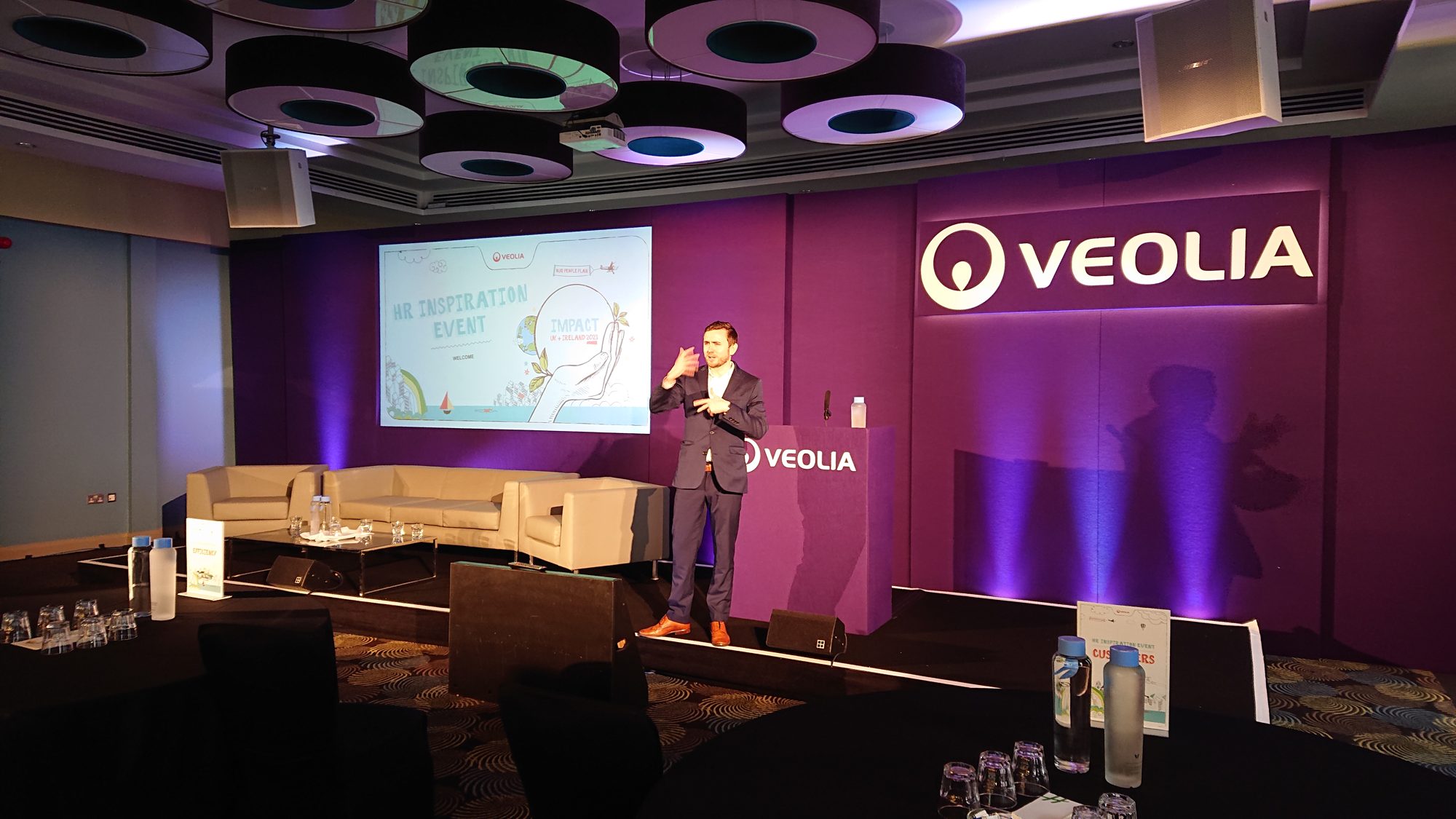
This is the one designed for a hall, not for twelve people in a training room. Moving several hundred people to other rooms eats your discussion time. Round tables are already breakout groups. Put the question on screen, start a timer, name a reporter at each table, and the whole room works at once.
How do you facilitate a breakout session?
You facilitate a breakout session by setting it up so tightly that the groups barely need you. Before anyone moves, the room should know four things: the question, the output, the time, and who is keeping it.
- Put the question on screen and leave it there.
- Name the deliverable. “Bring back one recommendation” works. “Discuss the keynote” does not.
- Pick a timekeeper and a reporter in each group before anyone moves.
- Walk the floor: listen in, nudge any group that has wandered off the question, and note good lines for later.
That last one matters most. Hear which tables have found something and you can shape the report-back before it starts. It is a large part of what conference facilitation means in practice.
How do you get everyone back to plenary on time?
You give clear warnings, start on time whoever is missing, and make the first minute worth being there for. Lateness is not a courtesy issue. It costs output. In a 2018 study, groups whose meetings were deliberately started five or ten minutes late produced fewer ideas, of lower quality and feasibility, than groups that started on time. A 2013 survey of US employees by Steven Rogelberg’s team found 37% started late, and most people judged arriving five minutes after the start to be late.
What works:
- Give warnings at five minutes and at one minute, in every room.
- Put walking time into the agenda so the restart time is honest.
- Play music in the main room as people return, then stop it at the start time.
- Start with something people do not want to miss: a quick result, a vote, or the first headlines from the groups.

Engagement is not a gimmick bolted on at the end. It is how you keep a room with you from the first minute, including the first minute after a breakout. Waiting for stragglers tells everyone else that punctuality was optional. Bringing a room back on time is part of hosting a conference well.
How do you run report-backs that do not drag?
Ask for headlines, not minutes. Fifteen groups reporting for three minutes each is 45 minutes, and the later groups mostly repeat the earlier ones.
Better options:
- Three volunteers only. Ask which groups found something surprising, and take three.
- One sentence per group. Each reporter gets one sentence and a strict ten seconds.
- Phones, not microphones. Groups send their headline from a phone and the host reads out the strongest. I use RoomReader, my own live Q&A software, so every group’s answer lands in one place without anyone queuing for a microphone.
- Gallery walk. The sheets stay on the wall through the next break.
Whichever you pick, the host should sum up the themes in a minute at the end.
How do virtual breakout sessions work?
A virtual breakout session uses your meeting platform’s breakout rooms to move attendees into smaller video calls, then pulls them back. As of October 2026, Microsoft Teams supports up to 50 breakout rooms in meetings of up to 1,000 people, with time limits that close rooms automatically. Zoom allows up to 100 breakout rooms, a countdown before rooms close, a broadcast message to every room, and an Ask for Help button.
Online, the same rules apply, only tighter. Paste the question into the chat before rooms open (nobody can glance back at a slide) and set the room timer. A host can only be in one room at a time, Stanford notes, so bring a co-host for larger events.
Hybrid is harder. The University of Colorado’s IT guidance says it is easiest to send remote attendees into their own breakout rooms, and that mixed in-room and remote breakouts need extra planning, including background noise. The guide to hybrid event engagement covers the rest.
What goes wrong with breakout sessions?
Almost always the design, rarely the delegates:
- A vague task. “Discuss” produces discussion and nothing else.
- Groups too big, so a couple of voices take over and the rest watch.
- No moving time. The agenda says 30 minutes; people get 18.
- Cringe: asking people to act out an idea or perform for the room. Professional adults will happily take part if nobody risks looking foolish.
Cringe, not reluctance, is what kills participation.
Back in the room
A breakout session is only as good as the plenary it feeds. The work happens in the groups; the value lands when the whole room hears the best of it, briefly and on time.
If you want a host to run the breakouts, keep the whole room with you and bring 300 people back on the minute, send the agenda or check availability at hello@conferencehost.uk.


17:00Close
Send me your agenda. I’ll show you where the room comes alive.
A fixed price, a free planning call, and a reply within one working day.