Conference Hosting: How to Host a Conference from Open to Close
TL;DR
- Conference hosting is keeping a whole room with you from the first minute to the last, not reading names off a running order.
- Plan the run of show before anything else: every handover, every timing, and the two or three points in the day where energy will sag.
- Open with a reason to look up, introduce speakers so they land, moderate so panels stay useful, and run Q&A so it does not die in silence.
- Treat energy as a curve. The 9am cold open, the slump around 1:30pm after lunch, and the gap before networking all need a deliberate lift.
- Close on purpose: recap, thank the room, and send people out with one clear thing to do next.
Conference hosting is the difference between a day that drifts and a day that lands. Get it right and the room stays with you through the slow slots, the speaker changeovers and the questions nobody wants to ask first. Get it wrong and you have a schedule that runs to time on paper while the energy quietly leaks out of the room. This is the end-to-end playbook I use to host a conference from the cold open to the closing line, with links to the deeper guides where each part deserves more room.
What does conference hosting involve?
Conference hosting is running the room, not just announcing it. The host holds the thread of the day: the timings, the handovers between speakers, the energy in the room, the questions from the floor, and the sense that everyone is in the right place at the right moment.
That is a wider job than most agendas admit. A host reads the room in real time, decides when to press on and when to let a moment breathe, and covers the gaps when a laptop will not connect or a speaker overruns. The audience should barely notice the mechanics. They should just feel that the day flows.
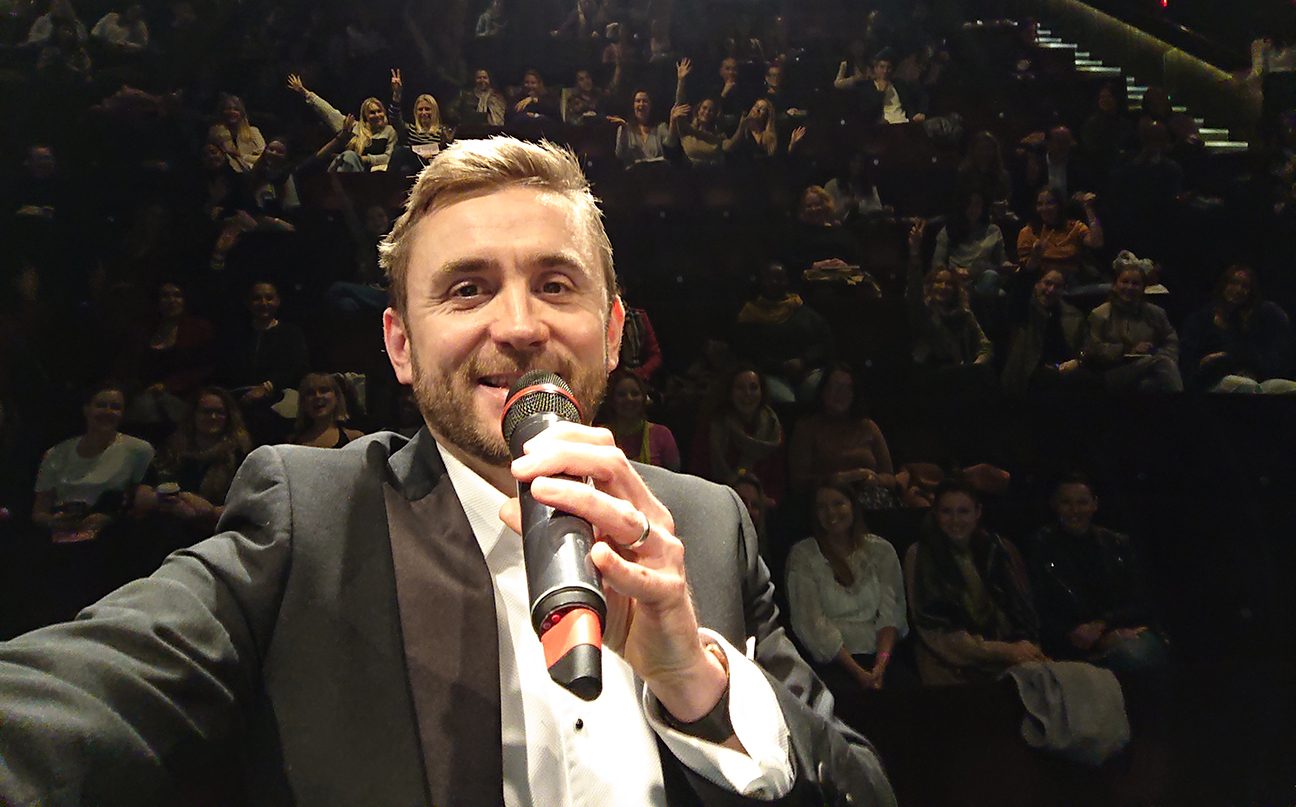
I have hosted 800+ events over more than twenty years on stage and television, and the pattern holds every time. The content is the speakers’ job. The experience of the day is the host’s.
Planning the run of show
The run of show is the minute-by-minute script for the whole day, and it is the first thing to build. Not the slide deck, not the welcome line. The map.
List every segment in order with a start time, an owner and a duration: doors, welcome, first session, break, panel, lunch, and so on to the close. Then add the joins. The join is where a day usually falls apart, so write down exactly how each handover happens: who is on stage, what the host says, where the next speaker is standing.
A workable run of show for a single-day conference looks like this:
| Time | Segment | Owner | Host note |
|---|---|---|---|
| 08:30 | Doors and coffee | Venue | Music on, screen holding slide |
| 09:00 | Welcome and open | Host | Set the tone, one reason to be here |
| 09:15 | Keynote | Speaker 1 | Intro 30 seconds, clear handover |
| 10:15 | Break | All | Announce return time twice |
| 10:45 | Panel | Host + 3 | Moderate, save 10 mins for Q&A |
| 12:30 | Lunch | All | Flag the post-lunch restart clearly |
| 13:30 | Re-open | Host | Deliberate energy lift here |
| 16:30 | Close | Host | Recap, thank, one next step |
Build in slack. If every session is timed to the minute with no buffer, the first overrun pushes the whole afternoon back and you spend the day apologising. Knowing how to run a conference is mostly knowing where the day will bend before it bends.
How should you open a conference?
Open by giving the room a reason to look up in the first two minutes. The cold 9am open is the hardest slot of the day: people are still on their phones, half of them have not had coffee, and nobody has committed their attention yet.
Do not spend that window on housekeeping and fire exits. Lead with why the day matters to the people in the seats, then get them doing something small and low-risk so the room becomes a room rather than rows of strangers. Housekeeping can wait ninety seconds.
The open sets the contract for the whole day. If the first ten minutes are flat, the audience learns that it is fine to stay passive, and you spend the rest of the day pushing uphill. I have written a fuller guide on opening strong if you want the detail.
How do you keep the room’s energy up all day?
You keep energy up by treating it as a curve and planning lifts at the points where it always dips. The energy in a room is not random. After twenty years watching it, I can tell you where it goes: the cold open at 9am, the slump after lunch at around 1:30pm, and the awkward gap before networking.
Those three moments need something deliberate, not a hope that the next speaker is lively. The post-lunch session in particular will die on its own unless you re-energise the room on purpose. A strong speaker helps, but the host owns the restart.
This is where whole-room engagement earns its place. I run eight game show formats that every delegate plays on their own phone with nothing to download, and live Q&A through my own software, RoomReader. The point is not entertainment for its own sake. It is a reliable way to lift a flat room at a known dip and hand a warmed-up audience to the next speaker.
Professional adults will happily take part, as long as the format removes the risk of looking foolish. Cringe kills participation, not reluctance. Anything you run in a big room has to be built for a hall, not for twelve people in a training room.
Conference hosting tips for introducing speakers
A good speaker introduction does one job: it makes the audience want to listen. That is the whole test. Not a recital of a biography, not a list of every role the speaker has held, just a short, confident setup that tells the room why this person and why now.
Here are the conference host tips that matter most for introductions:
- Keep it to about thirty seconds. Long introductions steal the speaker’s energy.
- Say the name clearly at the end, so the applause has somewhere to land.
- End on the speaker’s topic, not their CV, so the first slide connects.
- Confirm the name pronunciation with the speaker beforehand. Every time.
- Set up the handover so the speaker walks into a warm room, not a cold one.
The introduction is also a handover of energy. If you close it flat, the speaker starts flat. If you close it with intent, they inherit a room that is ready. There is more on this in the guide to introducing speakers.
How do you moderate a panel or discussion?
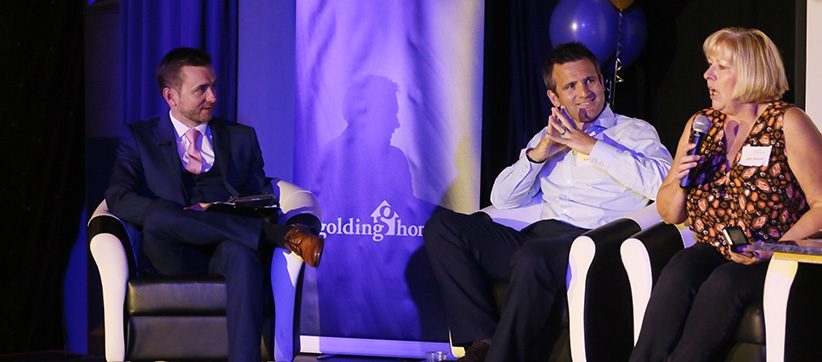
You moderate a panel by steering it, not by joining it. The moderator’s job is to keep the conversation useful, balanced and moving, and to protect the audience from the panel that talks in circles.
Come in with a spine of questions but be ready to drop them. The best moments usually come from following what a panellist just said, not from marching through a prepared list. Watch the quiet panellist and bring them in before the confident one takes all the airtime. Cut off the answer that has gone on too long, politely and without apology.
Save real time for the floor. A panel that runs its full slot on the moderator’s questions and leaves two minutes for the audience has missed the point. I keep the mechanics in the guide to moderating panels.
How should you handle audience Q&A?
Handle Q&A by making it easy and safe to ask, because the default state of a Q&A is silence. Nobody wants to be the first hand up, and a roving mic that takes thirty seconds to arrive kills the moment before the question lands.
Take the friction out. Let people submit questions from their phones as the session runs, so you walk into Q&A with a list already building rather than a hopeful “any questions?” and a wall of quiet. That is exactly what RoomReader does in my hosting, and it turns a dead slot into the part people remember.
Read questions in an order that serves the room, group the ones that overlap, and never let a “question” become a speech. If the answer runs long, thank them and move on. Your job is to protect the audience’s time, not to please the loudest voice in the hall.
How do you close a conference?
Close a conference by recapping, thanking, and giving people one clear thing to do next. The end of the day is not the moment to trail off with “well, that’s about it from me”.
A clean close does three things in order. It reminds the room of the one or two ideas worth carrying out of the door. It thanks the speakers and the organisers by name so the credit lands. And it points people at a single next step, whether that is the networking drinks, a feedback form or a follow-up date.
People remember how a day ends. Send them out with energy and a purpose, not with a mumble and a scramble for coats.
Becoming a better conference host
Becoming a better conference host comes down to preparation, reading the room, and honest feedback, not natural showmanship. Nobody is born knowing where the 1:30pm slump sits. You learn it by hosting, watching and adjusting.
If you are learning how to be a conference host, start with the run of show and the energy curve, because those two skills carry the day. Rehearse your handovers out loud. Watch a recording of yourself and mark every moment the room went quiet. Ask the organiser what actually landed. The craft is repeatable once you stop treating each event as a one-off performance.
If you would rather bring in a host who already runs the room this way, you can check availability and send through your agenda. Either way, the principles above are the same ones I use on stage: plan the run of show, own the energy, and close on purpose.

17:00Close
Send me your agenda. I’ll show you where the room comes alive.
A fixed price, a free planning call, and a reply within one working day.