How to Hold Audience Attention Across a Full Day

TL;DR
- Audience attention is not a flat line you can assume. It rises and falls in a curve across the day, and the work is to plan for the dips before they arrive.
- The three predictable drops are the 9am cold open, the post-lunch slump around 1:30pm, and the restless gap before networking.
- The popular idea that attention dies after ten minutes is weakly supported. What the evidence backs is that a change of pace, a break or an interactive moment wins it back.
- Manage attention with the running order, not with one big activity dropped in after the room has already gone flat.
- Size every attention device for the room. What holds twelve people in a training session will not hold two hundred in a hall.
Holding audience attention for a full conference day is a different job from holding it for a single keynote. Over eight hours, energy drains, minds wander, and the room quietly checks out unless someone is managing the curve on purpose. After twenty years hosting conferences, I have learned that audience attention behaves the same way at almost every event: it climbs, plateaus, dips hard after lunch, and frays before the day ends. This post walks through that curve hour by hour and shows what to do at each point, whether you host the day yourself or brief someone to do it for you.
Why does audience attention move in a curve?
Audience attention moves in a curve because human alertness is not constant. It is shaped by the time of day, the length of time on task, and how recently the room last did something rather than just watched.
The energy in a room is a curve, and I have watched it for twenty years. It opens cold at 9am when nobody has warmed up yet. It settles into a workable plateau through the morning. It falls off a cliff after lunch. Then it frays in the last hour when people start thinking about trains, emails and the drinks reception.
Those dips are predictable, which is the good news. If you know exactly where attention will drop, you can put the right moment in each slot before it happens. Fighting the curve after the room has gone flat is much harder than planning for it in advance.
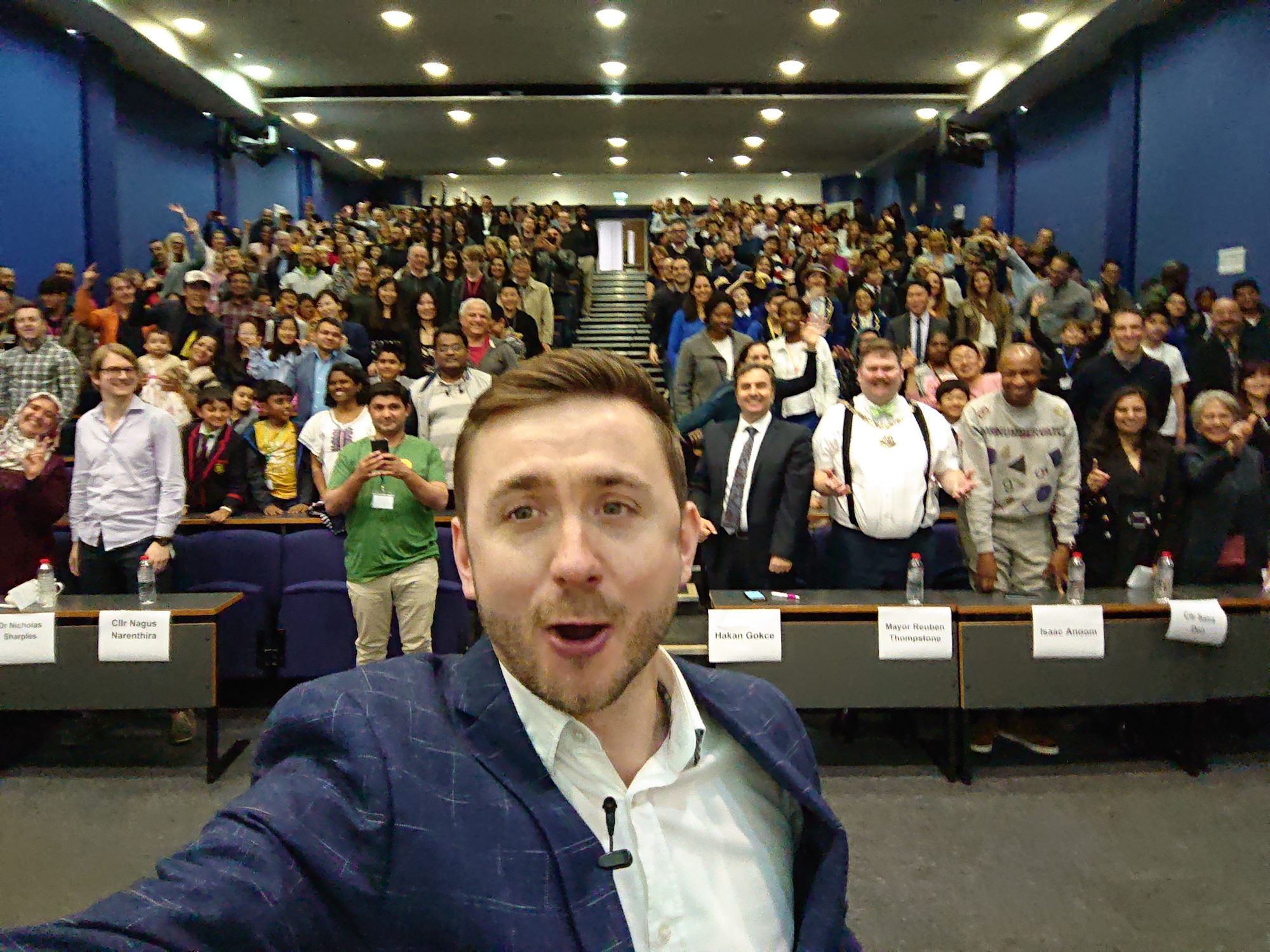
How do you win audience attention at the 9am cold open?
You win audience attention at 9am by warming the room deliberately in the first ten minutes, not by launching straight into content. A cold open needs permission to engage before it needs information.
At the start of the day the room is a set of strangers who have not spoken yet. Half of them are still holding a coffee and wondering where the toilets are. If your first speaker opens with dense slides, attention never actually arrives, it just tolerates.
So spend the opening on temperature, not throughput. Get the room doing something low-risk and shared in the first few minutes: a quick live vote, a single question everyone answers from their seat, a show of something on the big screen that proves the audience is present and taking part.
Good conference icebreakers for a large group do exactly this. They let people contribute as part of a crowd before anyone is asked to speak alone. Warm the room first and it will follow the agenda far more willingly for the rest of the day.
The mid-morning plateau: holding a warm room
The late morning is the easiest stretch, which is precisely why it gets neglected. The room is awake, fed by coffee, and still fresh. Attention holds on its own with less help from the stage.
The mistake here is coasting. Organisers load the hardest, densest content into this slot because the room can take it, then leave it running with no breaks or changes of pace. By late morning even a warm room starts to sag if nothing shifts.
Protect the plateau with rhythm. Break long sessions into shorter blocks. Change the format between speakers so the room is not watching the same shape of thing for two hours. A short interactive moment between two heavy talks resets attention without needing a full activity.
Think of the morning as the reserve you will spend after lunch. Do not burn the room out before the hardest part of the day arrives.
Why does the post-lunch slump hit hardest?
The post-lunch slump hits hardest because early-afternoon drowsiness is a genuine circadian effect, not just a full stomach. Alertness falls between roughly 2pm and 4pm whether or not a big lunch was eaten.
Researchers describe this early-afternoon dip in alertness and cognitive performance as a real, recurring pattern tied to the body clock. One study of the post-lunch dip places it around 2pm to 4pm and describes it as a circadian effect driven by the body clock.
For a conference that matters, because you cannot fix the slump by serving a lighter lunch. The dip is coming regardless. What you can control is what the room is asked to do while it happens.
Putting your driest speaker or your longest panel into the 1:30pm slot is the most common attention mistake on a running order. You are scheduling a monologue straight into the biology of drowsiness.
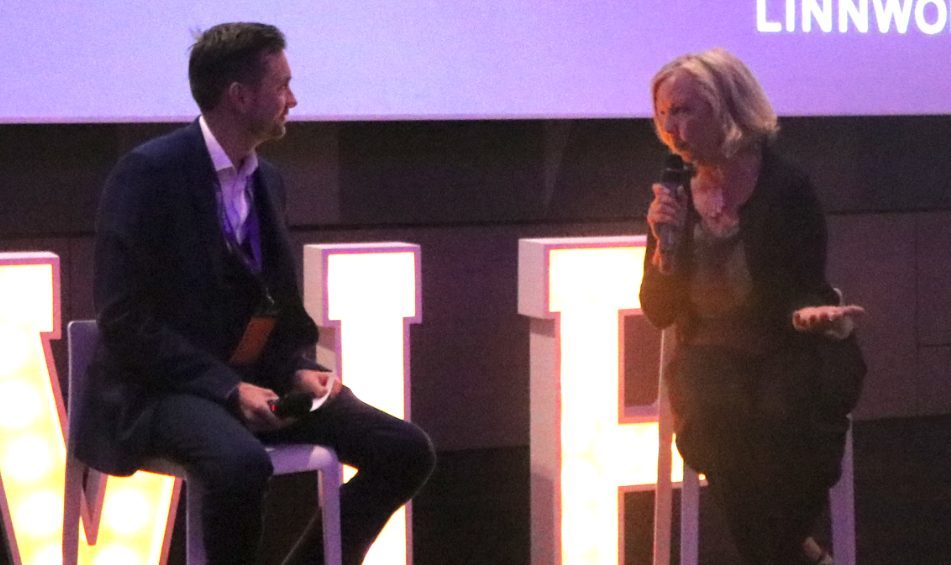
What re-energises the room after lunch?
You re-energise the room after lunch with movement, participation and a genuine jolt, not with another passive session. The slot immediately after lunch should ask the audience to do something, not just receive.
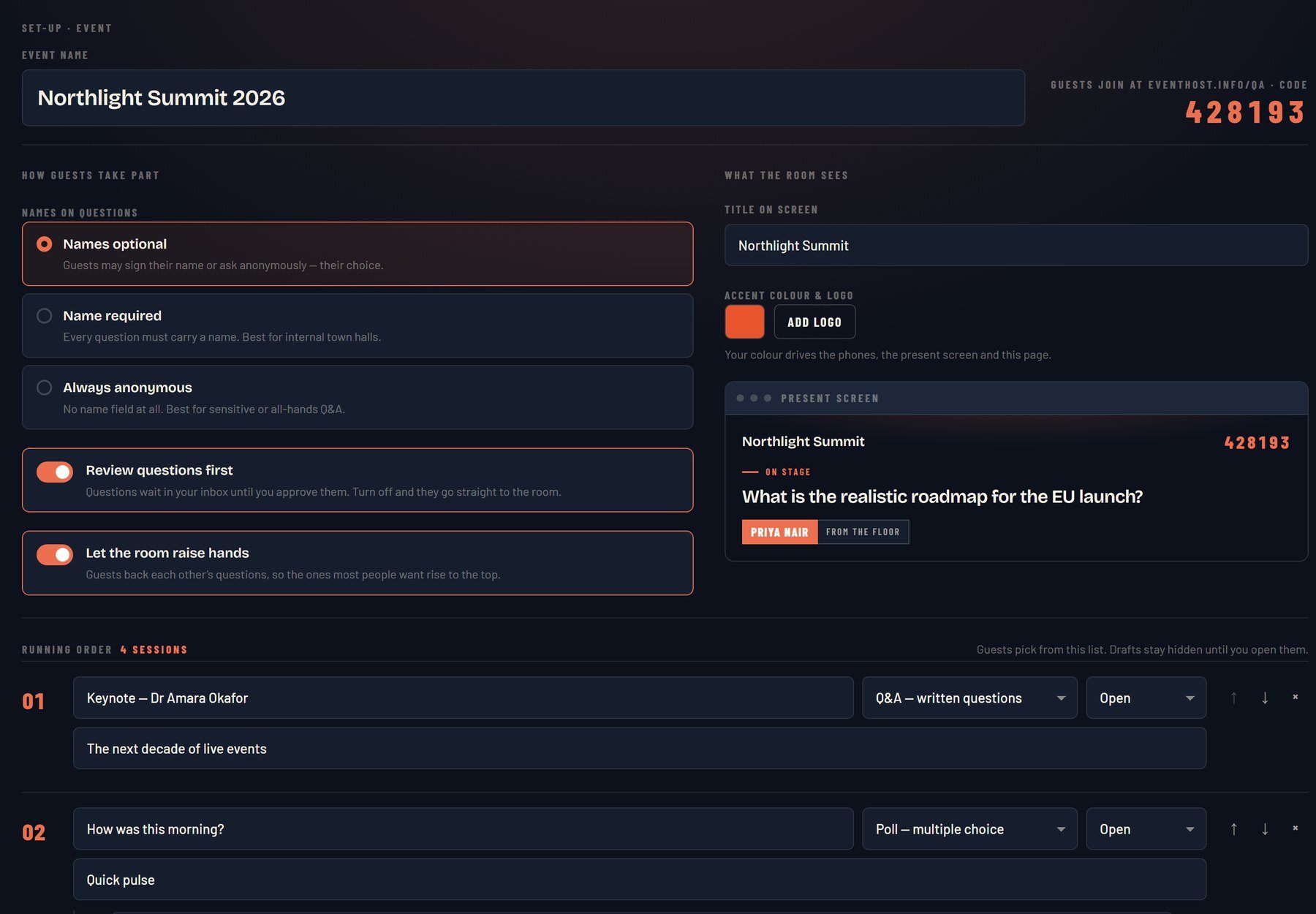
This is where a whole-room interactive moment earns its place. A live game everyone plays on their own phone, a fast round of audience voting with the result on the big screen, anything that makes two hundred people act at the same time rather than sit and digest.
The point is not entertainment for its own sake. It is that participation raises alertness in a way that watching cannot. Genuine audience engagement built for a hall, where every delegate takes part from their seat with nothing to download, is how you carry a room through the exact hour it wants to fall asleep.
Schedule the jolt on purpose. Mark 1:30pm on the running order as an active slot before you decide anything else about the afternoon.
The awkward gap before networking
The last stretch of the day has its own trap. People know the drinks reception is coming, they are half-thinking about leaving, and attention frays into restlessness rather than sleepiness.
This gap is not about tiredness. It is about permission. Delegates are unsure whether they are allowed to stand up, talk to a stranger, or start winding down, so they hover in a low-attention limbo.
The fix is to give the transition a shape. A short closing moment that hands the room a reason to talk to each other, a final interactive round that seeds conversation, or a clear signal that the formal day is done and the social part has begun.
Done well, the end of the agenda flows straight into networking with energy intact. Done badly, the room simply drains out the doors while your closing speaker talks to the backs of heads.
Does audience attention really fade after ten minutes?
Not in the way the popular rule claims. The idea that audience attention collapses after ten or fifteen minutes is weakly supported by the evidence, so do not build your whole day around a stopwatch.
A review of the research on attention span during lectures found little solid primary data behind the famous ten-minute limit, and noted that the biggest variable is the speaker, not a fixed clock in the audience’s head.
What the evidence does support is more useful anyway. Attention is regained through breaks, changes of pace and interactive moments. In other words, you hold a room by varying what it does, not by rationing the minutes.
That is why the running order matters more than any single talk. A well-shaped day with regular changes of format will hold attention far longer than a series of brilliant but identical monologues.
A full-day running order that protects attention
Pulling it together, holding attention across a full day comes down to matching the format to the curve. Plan the shape first, then slot the content in.
| Slot | Attention state | What the room needs |
|---|---|---|
| 9am cold open | Cold, unwarmed | Low-risk participation, permission to engage |
| Late morning | Warm plateau | Density, but broken into blocks with pace changes |
| 1:30pm post-lunch | Circadian dip | Movement and a whole-room interactive jolt |
| Pre-networking | Restless, distracted | A shaped close that hands over to conversation |
Mark those four moments on the running order before you choose a single speaker or activity. Decide what attention needs at each point, then fill the slots to match.
Do that and you stop hoping the room stays with you. You plan for it. That is the difference between an agenda that survives the day and one that keeps the whole room with you from the first minute to the last.

17:00Close
Send me your agenda. I’ll show you where the room comes alive.
A fixed price, a free planning call, and a reply within one working day.