Unconference: What It Is and How to Run One That Works
TL;DR
- An unconference is an event where the people who turn up build the agenda on the day, then choose which sessions to join.
- The method comes from Harrison Owen’s Open Space Technology, first run in 1985. BarCamp, born in 2005, spread it through the tech world.
- It runs on four principles and one law, the law of two feet: if you are not learning or contributing, move somewhere you can.
- The agenda is open. The frame is not: you still need a theme, rooms, a session board and a strong opening.
- For most corporate audiences, a hybrid works best: a fixed morning, then an unconference afternoon.
An unconference flips the usual event. Nobody books the speakers in advance. The delegates propose the sessions, set the agenda in the first hour and vote with their feet for the rest of the day. Done well, it gets a room talking about the problems it actually has. Done badly, it is an expensive day of half-empty breakouts.
What is an unconference?
An unconference is a participant-driven event where attendees create the agenda when they arrive. UKGovCamp, which has run in the UK since 2007, puts it simply: its topics are set by attendees on the day.
The aim is to put conversation ahead of presentation. A 2015 paper in PLOS Computational Biology, Ten Simple Rules for organising one, says session content should come from everyone in the room, not a few people at the front. Its authors also name something every organiser has seen: the best conversations at a traditional conference usually happen over coffee.
Where did the unconference format come from?
It began with a coffee break. Harrison Owen had run earlier symposiums in the usual way, and the participants agreed that the real excitement came in the coffee breaks, which nobody had planned. So in 1985, in Monterey, he gathered about 85 people for the Third Annual International Symposium on Organization Transformation with no agenda at all. They built a three-day programme in two and a half hours.
He called it Open Space Technology. Owen, who died in March 2024 aged 88, saw it used in 146 countries, well over 300,000 times, according to his obituary on Open Space World.
The tech world added the “camp”. O’Reilly Media’s Foo Camp (Friends of O’Reilly) was invitation only, with sessions written onto a giant blank grid. In August 2005 a group including Tantek Çelik and Chris Messina built an open alternative, BarCamp, and planned it in six days. The first one ran at the Socialtext offices in Palo Alto. Çelik later wrote that thousands of BarCamps followed.
What are the unconference rules?
There are four principles and one law, and they come straight from Owen’s user’s guide:
- Whoever comes is the right people.
- Whatever happens is the only thing that could have.
- Whenever it starts is the right time.
- When it is over, it is over.
The one law is the law of two feet. Responsibility for a good outcome sits with each participant. If you are not learning or contributing, you thank the group and move somewhere you can, politely and never in anger.
It also handles anyone who turns a session into a speech. Nobody challenges them; people just leave.
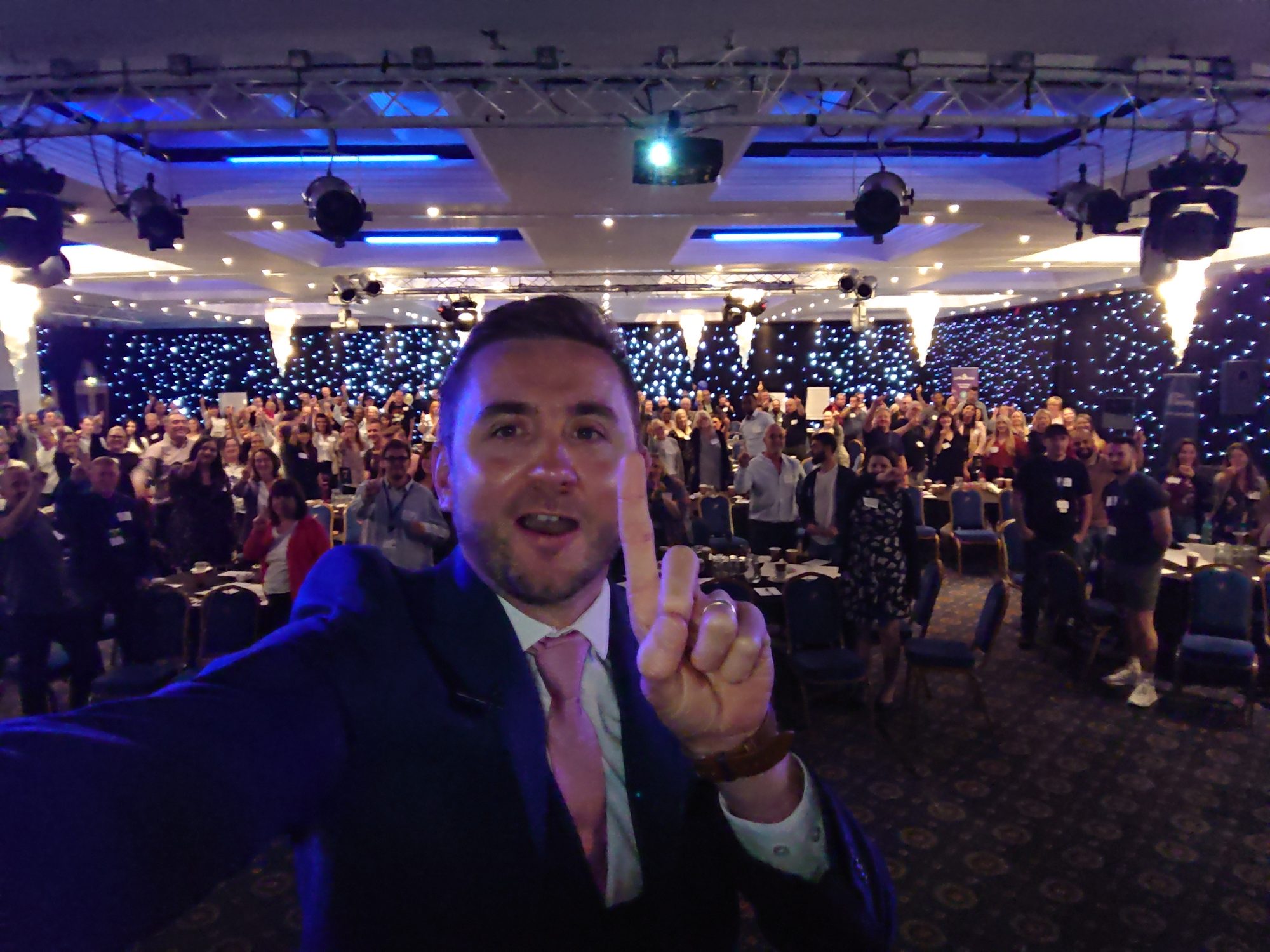
I have hosted 800+ events, and one thing holds in every room: professional adults will happily take part if the format removes the risk of looking foolish. Cringe, not reluctance, is what kills participation. The law of two feet removes the risk. Nobody is trapped and nobody is on the spot.
How does the unconference format work on the day?
It runs in four stages: opening, agenda setting, sessions and a close. Owen’s version starts with everyone in a circle facing a long blank wall.
- The opening. The host states the theme, explains the principles and the law, and invites anyone with an issue they care about to write it down.
- The Community Bulletin Board. Each proposer stands, names their topic and tapes it to the wall. Proposing a topic means convening it and making sure notes get taken.
- The Village Market Place. Everyone signs up for whatever they want, and proposers sort out clashes of time and room between themselves.
- The sessions. Groups meet, talk and record what came out of it. Owen even suggests the leader leaves the room for a coffee, to show the group is now in charge.
- The close. No speeches. People say what mattered and what they will do next.
How long? Owen puts the minimum at about five hours and says even that is “cutting it rather close”. Eight hours gives real exploration, and firm conclusions can take two or three days. The Liberating Structures version can be as short as 90 minutes.
Unconference planning: what you still have to organise
The agenda is open. Almost nothing else is. Ten Simple Rules warns that equipment, venue, connectivity, power and catering still make or break the day.
| Decision | Rule of thumb | Source |
|---|---|---|
| Theme | One question people genuinely care about | Ten Simple Rules |
| Group size | About 20 minimum, 400 works well | Owen |
| Session slots | Expect 3 in 10 people to propose a session | Liberating Structures |
| Room | A circle, a long blank wall, plenty of breakout space | Owen |
| Sound | Microphones once the group passes 40 | Liberating Structures |
| Food | Refreshments in the main room, buffets over several hours | Owen |
| Notes | A notetaker in every session | Sunlight Foundation |
That 3-in-10 figure drives your room plan. A group of 120 might post 36 sessions. Six spaces across four time slots give you 24 places, so some topics will merge, which is normal.
Owen’s guide has reports posted on the wall as each session finishes, so the proceedings are ready before people leave. Put your timings in a proper run of show even though the content is open.
Unconference ideas for a corporate audience
Use it for questions where nobody has the answer yet. Owen is explicit about the opposite case: if you already know where you are, where you are going and every step in between, Open Space is “a waste of time”. Training on a new system is a lecture, not an unconference.
Themes that suit it:
- What should we stop doing next year?
- How do we make the new hybrid working policy actually work?
- What do customers complain about that nobody owns?
- An internal conference after a merger, where teams need to find each other.
The PLOS authors also describe a “curated unconference”, where topics are collected in advance and organisers shape the programme, plus fishbowls and World Café rounds. Each trades some freedom for predictability.
When does a hybrid agenda suit a corporate event?
A hybrid suits most corporate events, because a fully open day asks a lot of people who did not choose to be there. Owen says participation should be voluntary, and that people should know what they are walking into. A compulsory company day breaks the first condition, and springing the format on people breaks the second.
The PLOS authors say unconference sessions inside a traditional event can be a valuable way to get people involved. A typical hybrid looks like this:
| Time | Session |
|---|---|
| 09:00 | Opening and leadership update (fixed) |
| 10:30 | Keynote on the theme (fixed) |
| 12:30 | Lunch |
| 13:30 | Open the board: topics posted, then the market place |
| 14:15 | Two rounds of open sessions |
| 16:00 | Closing circle: what we will do next |
The energy in a room is a curve. A fixed morning gives people a shared starting point. Opening the board after lunch gives the slump something to push against, because everyone is choosing, moving and talking. The guides on hosting a conference and opening a conference cover the fixed parts.
What goes wrong at an unconference?
Most failures come from the frame, not the people:
- An empty wall. Nobody wants to go first. Organisers interviewed by Eventbrite recommend inviting a few people with unconference experience who can always propose a topic.
- Mini keynotes, because session leaders turn up with a slide deck. The Sunlight Foundation says the best sessions are led by someone facilitating a conversation, not giving a presentation.
- The same voices. Confident people propose everything. One organiser told Eventbrite to actively encourage under-represented attendees to become “emergent leaders”.
- Fake freedom. If people build the agenda but are then assigned to sessions, the Liberating Structures page is clear: it is not Open Space.
- No notes, so Monday looks exactly like Friday.
Ten Simple Rules adds one for organisers: trust your community. Handing over control feels risky. That is the point.
Opening the room is the hard part
The first 20 minutes decide the day. Somebody has to explain four principles and a law without sounding like a cult, then get the first brave person to the wall. The Liberating Structures page recommends introducing the principles and mechanics in an entertaining way. That is a hosting job.
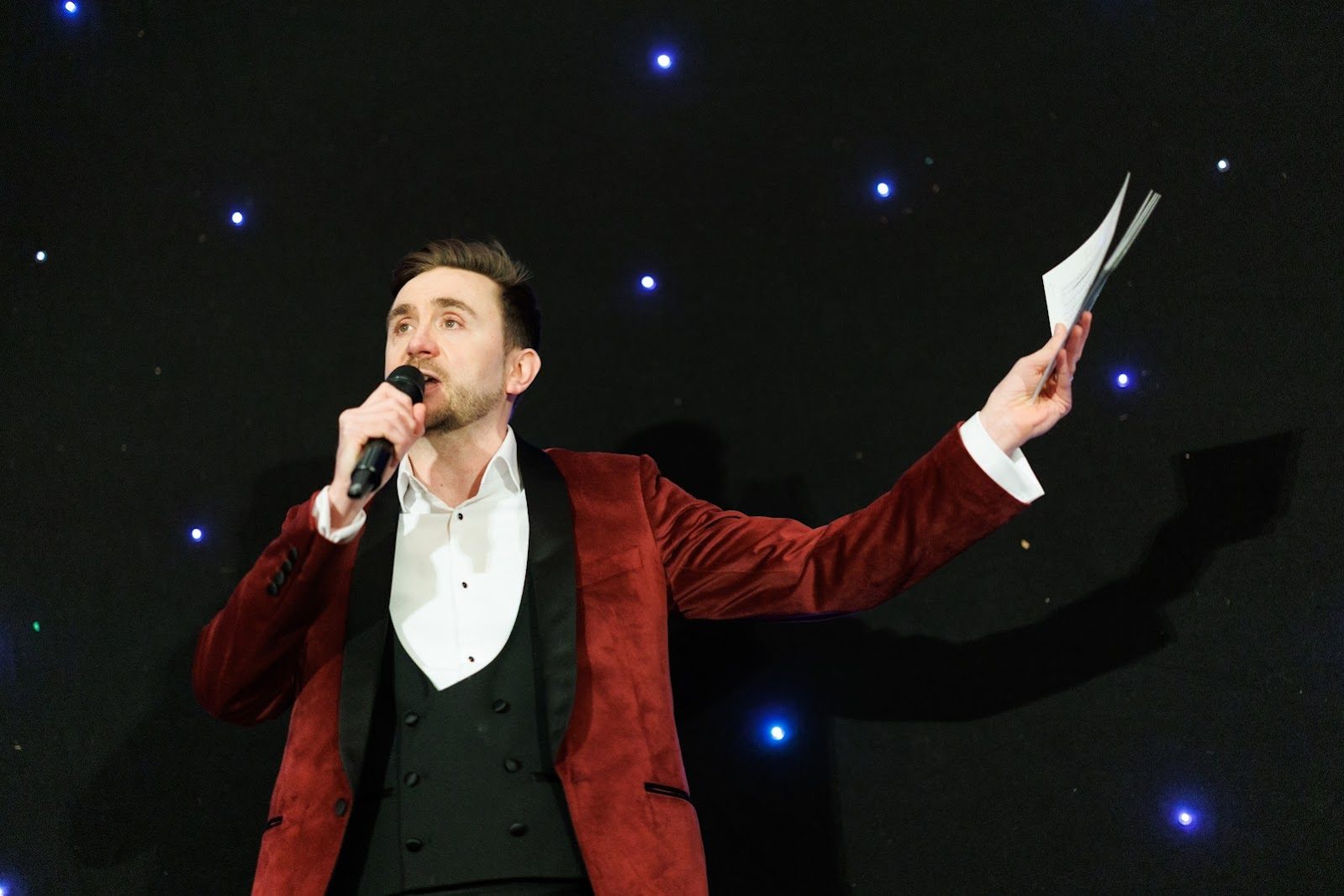
It is the same skill any big room needs: read the hall, then make it safe to take part. Delegates can send topic ideas from their phones through RoomReader, the live Q&A software I built and include with hosting, so quieter people do not have to stand up first. For the wider picture, see these engagement strategies.
If you are planning an unconference, or a hybrid day with an open afternoon, and want someone to open the space and keep the whole room with you, look at conference facilitation, then send the agenda or check availability at hello@conferencehost.uk.

17:00Close
Send me your agenda. I’ll show you where the room comes alive.
A fixed price, a free planning call, and a reply within one working day.