Audience Engagement Strategies That Work in a Big Room
TL;DR
- The best engagement strategies are planned as a curve across the whole day, not a single activity dropped in when the room goes flat.
- Design for the size of the room. What works for twelve people in a training session dies in a hall of two hundred.
- Cringe, not reluctance, is what stops professional adults taking part. Remove the risk of looking foolish and most people will join in.
- Give the room a concrete reason to look up: a live vote that changes what happens next, a question that gets answered, a result on the screen.
- Measure it by what you see, not by a download count. Heads up, phones used on purpose, laughter at the right moments.
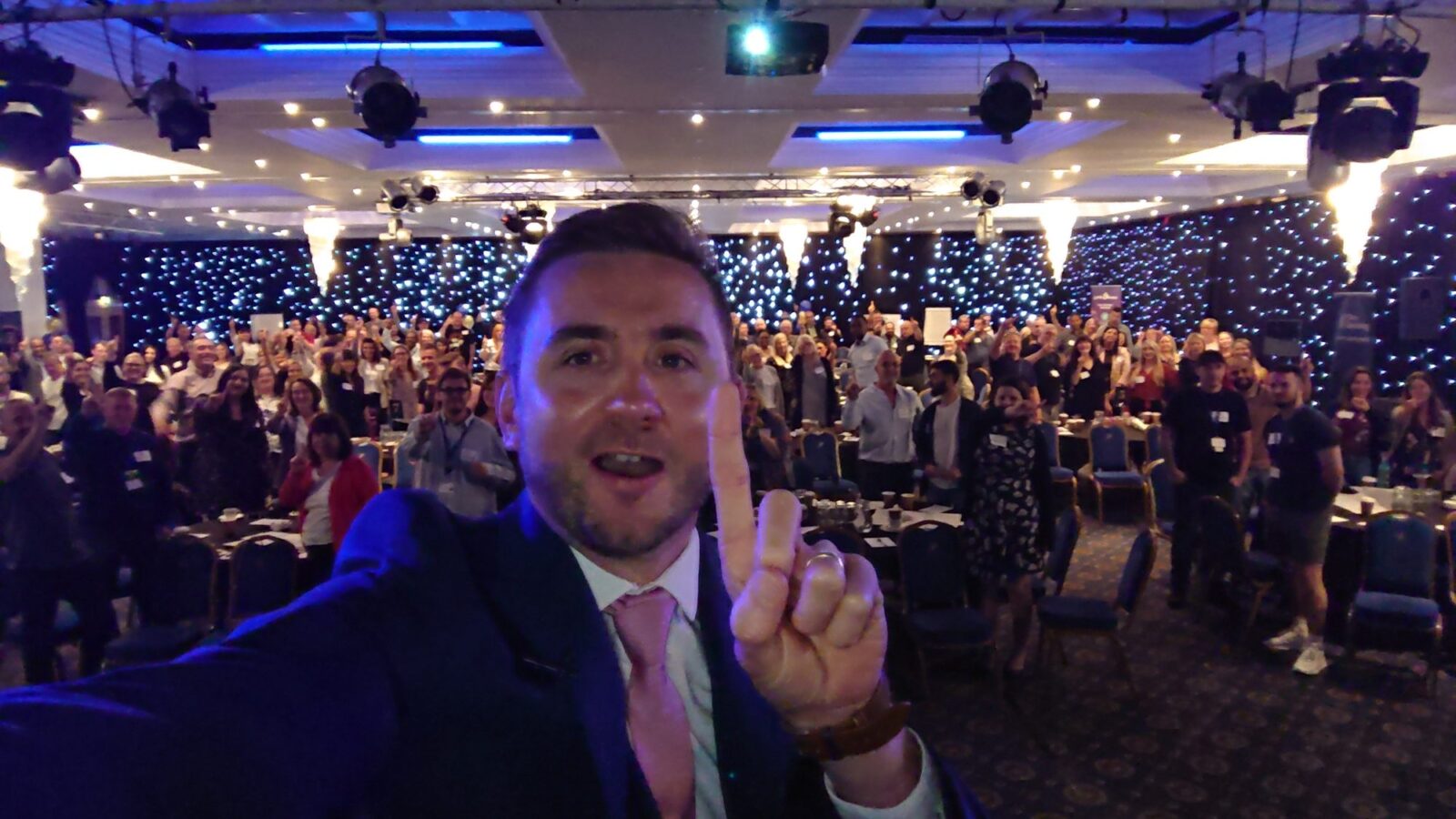
Most advice on audience engagement reads like a list of party games. That is not a strategy, and it is not what keeps a hall of two hundred people with you. After twenty years hosting conferences, I plan engagement strategies the way I plan a running order: as a deliberate shape across the day, sized for the room, built to remove risk, and pointed at the exact moments energy drops. This post lays out that framework so you can apply it whether you host the event yourself or brief someone to do it.
What makes audience engagement strategies work at scale?
Engagement strategies work at scale when they are planned in advance, sized for the room, and tied to the real energy dips of the day. Everything else is decoration.
Increasing attendee engagement is a genuine priority for organisers, not a nice-to-have. In one survey of 1,757 event organisers, 19% named it their company’s highest priority as they planned their next conference.
The trouble is that most people treat it as a single tactic. They book a quiz, add a polling app, or ask everyone to turn to their neighbour, then wonder why the room stays flat. A tactic is not a strategy. A strategy decides where energy needs to be at 9am, at 11am, after lunch and before networking, then puts the right moment in each slot.
Start with the energy curve, not the activity
Here is the mistake I see most often: organisers pick the activity first, then look for a gap to drop it into. That is backwards.
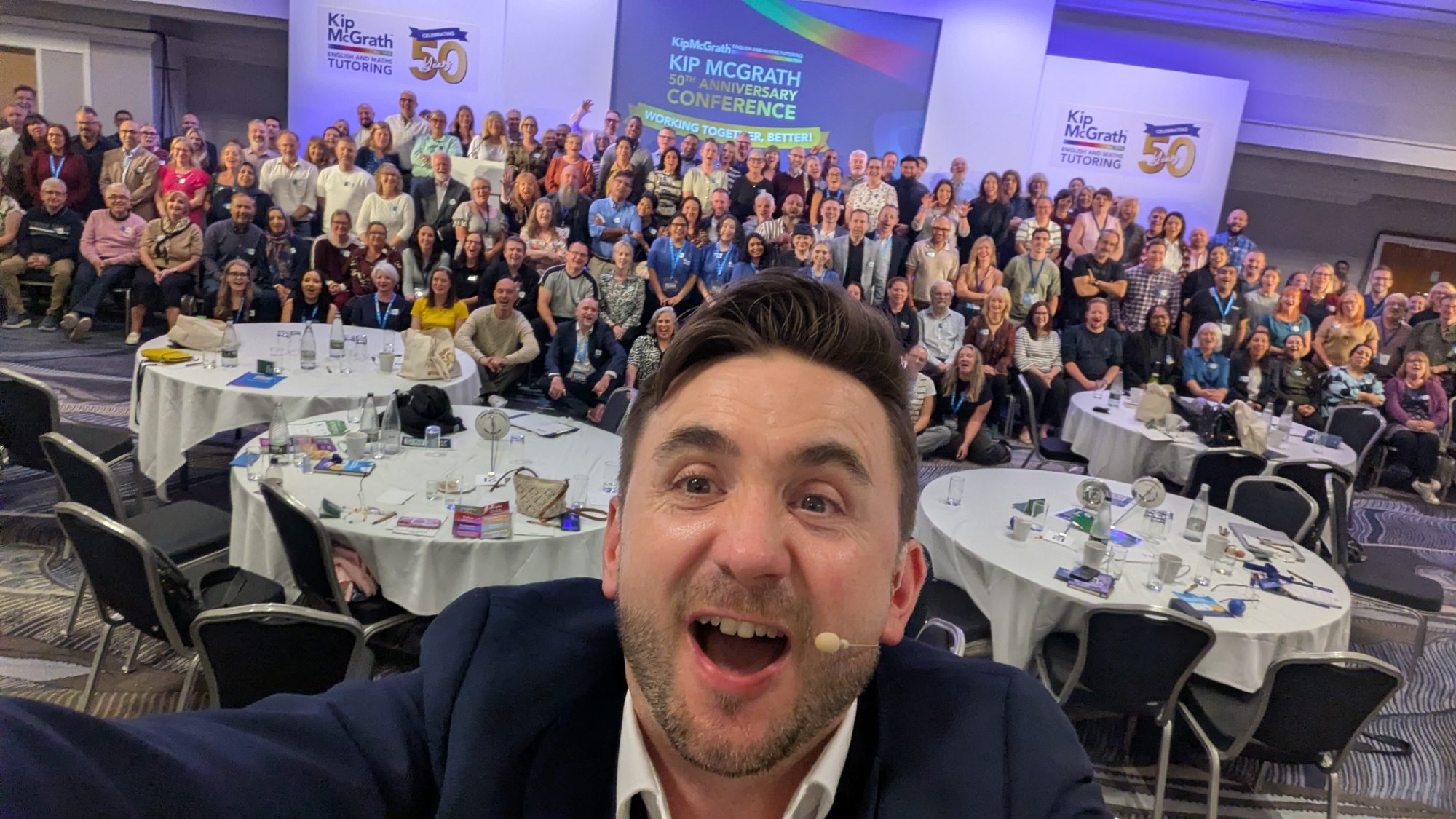
Twenty years of hosting has taught me that the energy in a room is a curve, and it dips in the same places every time. It has a cold open at 9am when nobody knows each other yet. It has a slump after lunch, usually around 1:30pm, when blood sugar and attention both fall. It has an awkward gap before networking when people are not sure whether they are allowed to leave their seats.
Plan the curve first. Mark those three moments on the running order before you choose a single game or question. Then ask what each moment needs. The cold open needs warmth and permission to speak. The post-lunch slump needs movement and a jolt. The pre-networking gap needs a reason to talk to a stranger.
When you plan the shape first, the activities almost pick themselves. When you plan activities first, you end up with fun in the wrong places and dead air in the right ones.
Why do so many engagement strategies fail in a big room?
Most engagement strategies fail in a big room because they were designed for twelve people in a training session, not a hall of hundreds. The mechanics do not survive the jump in scale.
“Go round the room and introduce yourself” works with twelve. With two hundred it is forty minutes of tedium and half the room stops listening. A show of hands tells you nothing you can act on. “Discuss with the person next to you” leaves the front row talking and the back row checking email.
Scale changes three things. Time: anything that runs person by person becomes unbearable. Visibility: in a big room most people are anonymous, which is a gift if you use it and a problem if you ignore it. Risk: being picked out in front of two hundred colleagues is far more exposing than in front of eleven.
A strategy built for scale respects all three. It runs in parallel so everyone acts at once. It uses anonymity to lower the stakes. And it never singles out an individual who did not volunteer.
How do you design engagement for 200 people instead of 12?
You design for 200 by making everyone act at the same time, on their own device, with no one forced to perform alone. Parallel participation is the whole game.
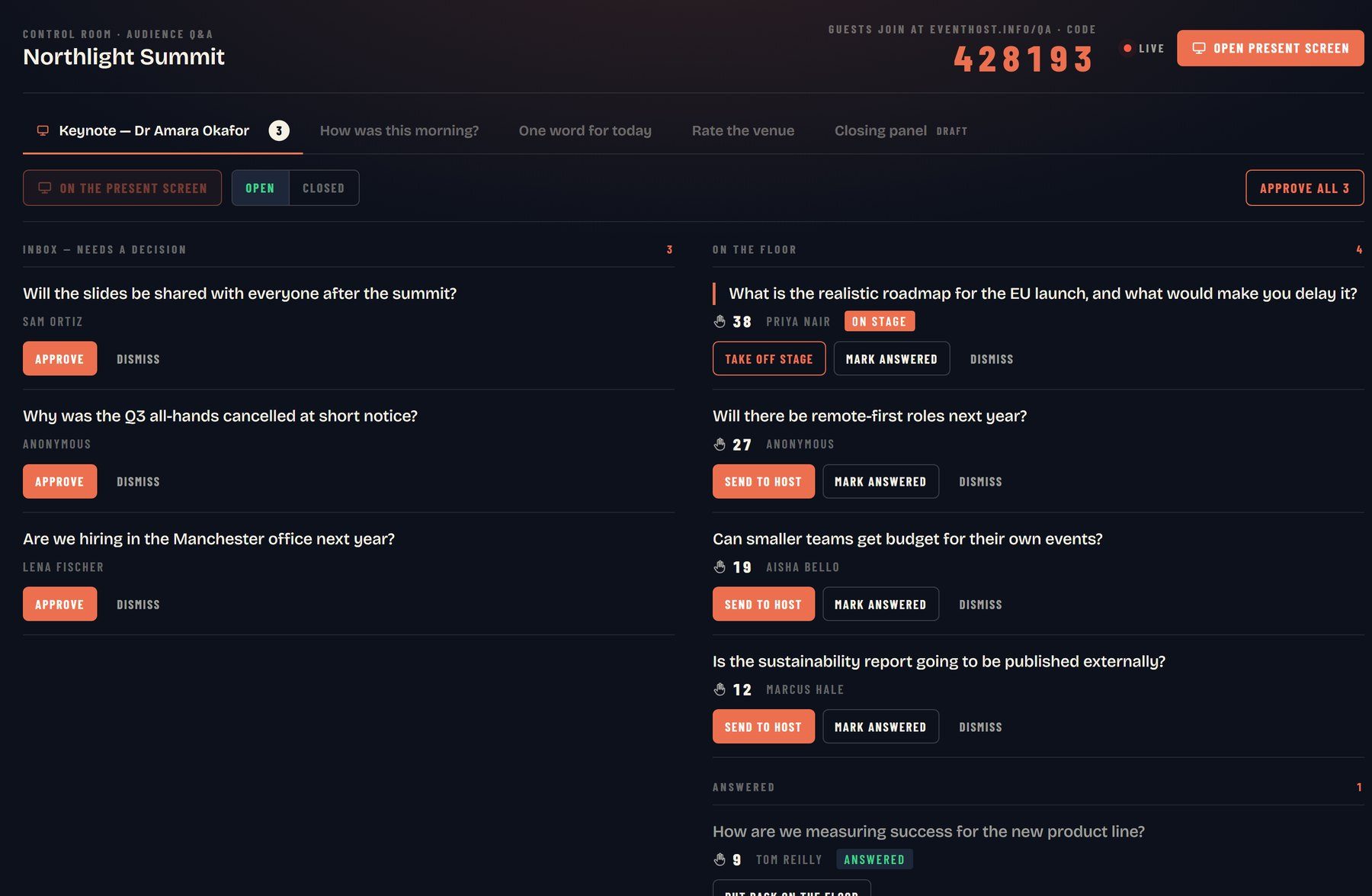
The tools organisers already know, from a polling app to a Q&A board, exist because they solve the parallel problem: two hundred people can answer at once. That instinct is right. What lets it down is treating the tool as the strategy rather than the mechanism.
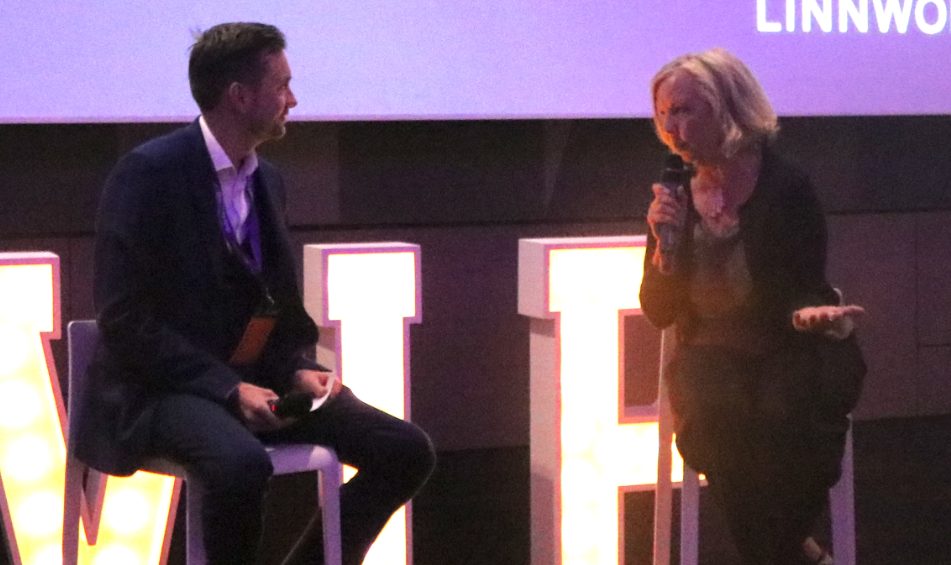
A phone in every hand is only useful if there is a reason to pick it up. This is where I lean on genuine audience engagement: live Q&A where the room votes questions up so the best ones reach the stage, and whole-room formats where every delegate plays on their own phone with nothing to download. The point is not the software. The point is that everyone can take part at the same moment without leaving their seat or risking embarrassment.
Design rules for scale:
- Everyone acts in parallel, never one at a time.
- No download, no faff. If it needs an app store, half the room is gone.
- Keep the barrier to entry near zero. One tap to join.
- Put the result on the big screen so the room sees itself take part.

How do you remove the cringe that kills participation?
You remove cringe by taking away the risk of looking foolish. Professional adults will happily take part if the format protects them from standing out badly.
I am blunt about this because it is the single biggest lever. It is not that delegates are reluctant. It is that forced fun, childish games and anything that puts one person on the spot triggers a very reasonable fear of embarrassment in front of colleagues and, often, their boss.
Design the risk out and participation climbs. That means anonymity where it helps, so a wrong answer costs nothing. It means play as a group or a team rather than as an exposed individual. It means humour that the host carries, so the delegate never has to be the funny one. And it means no volunteers dragged up on stage who did not put their hand up.
The same principle applies to openers. Good conference icebreakers for a large group let people contribute from their seat, as part of a crowd, before anyone is asked to speak alone. Start safe, build trust, and the room will go further with you later.
Give the room a reason to look up
A poll is not a reason to look up from your phone. This is the part most strategies miss.
If you ask a room to vote and nothing visibly changes, you have taught them that taking part is pointless. The next time you ask, fewer hands move. Engagement is a promise: if you contribute, something happens.
So close the loop, every time. A live vote should change what the speaker does next. An audience response question should get read out and answered from the stage. A game result should appear on the screen with the room reacting to it. The stronger the visible consequence, the more the room leans in.
This is also why timing beats volume. One well-placed moment where the audience clearly shapes the session does more than five throwaway polls. Give people proof that their input matters, and you will not have to beg for the next one.
How do you measure whether it worked?
You measure engagement by what you can see in the room and what people do on purpose, not by a raw download or attendance count. Reach is not impact.
Watch for heads up rather than down, phones used deliberately at the moments you planned rather than scrolling through the whole session, and laughter or reaction landing where you designed it to. Those are the honest signals.
If you want harder numbers, look at participation rate on live votes and questions, how many delegates submit rather than just watch, and whether the post-lunch session held the room instead of emptying it. Set the target before the event, at the specific moments on your curve, so you know what good looks like when you get there.
A framework you can reuse
Pulling it together, a working engagement strategy for a big room comes down to four decisions made in order:
- Map the energy curve of the day and mark the dips: cold open, post-lunch slump, pre-networking gap.
- Design each moment for the size of the room, so everyone acts in parallel on their own phone.
- Remove the cringe by taking away the risk of standing out alone.
- Give the room a visible reason to look up, and close the loop so contribution always changes something.
Do those four things and you are no longer hoping the room comes alive. You are planning for it. That is the difference between a list of activities and a strategy that keeps the whole room with you from the first minute to the last.

17:00Close
Send me your agenda. I’ll show you where the room comes alive.
A fixed price, a free planning call, and a reply within one working day.