Team Meeting Ideas That Make a Recurring Meeting Worth Attending
TL;DR
- A recurring team meeting earns its slot only when it does something writing cannot: argue a decision out, or surface what nobody has typed up.
- Three standing items is plenty. Write each as a question, and cut anything that is a read-out of a document.
- Rotate who runs it. One voice setting the tone every week turns a meeting into a ritual.
- Sit-down meetings run 34% longer than stand-up ones and produce no better decisions. Shorten before you add anything.
- If nobody can name a decision the meeting made last month, kill it and see who complains.
Most team meeting ideas online are party games bolted onto a meeting nobody wanted. This is about the meeting itself: the recurring one, the standing fixture everybody joins every week and nobody defends.
The numbers are grim. Executives now spend nearly 23 hours a week in meetings, against under ten hours in the 1960s. Office employees average 18 hours a week in meetings and say 30% of their invitations were unnecessary, at roughly $25,000 per employee a year in US payroll (reported in 2023).
I have spent twenty years watching the energy in rooms, across 800+ events. What kills a recurring meeting is almost never the people in it. It is a format set once by whoever booked the slot and never revisited.

What should a recurring team meeting actually be for?
A recurring team meeting is for work that cannot be done in writing: decisions that need an argument, problems nobody has written down, and the signal of how the team is actually doing.
That last one matters more than most agendas admit. The CIPD notes that employee voice often happens informally via team meetings, and that a quarter of employees report high levels of silence at work. Acas treats formal group meetings as one channel of direct consultation, not a replacement for one-to-ones.
Gallup found engagement is highest among employees who meet their manager at least once a week, yet only 21% of millennials and 18% of everyone else do. The answer is not fewer meetings. It is a smaller, sharper one that happens reliably.
What belongs on the standing agenda, and what to cut
Keep three standing items. Any more and the meeting becomes a container that fills itself.
Write each item as a question, not a topic. “Budget” is a heading; “what are we cutting to find £40k by March?” is a meeting. Roger Schwarz’s point in Harvard Business Review is that a good agenda sets expectations and makes it obvious when a discussion is finished. Topic titles do not.
| Keep | Cut |
|---|---|
| One decision that needs the group in the room | Any update that already exists in writing |
| The one thing that is off track, with its owner | Round-the-table status from every person |
| A short, genuine “anything we are not saying?” | Standing items kept because they are standing items |
The cut column is where the time is. If an item could be pasted into a document on Monday morning, paste it there instead.
Should you rotate who runs the team meeting?
Yes, and it is the cheapest change here. Rotating the chair every few weeks breaks the habit of one voice setting the tone, the running order, and what counts as finished.
Someone who has to prepare the meeting looks at it properly instead of inheriting it. Quieter people get a turn at the front with a defined job, a kinder route into visibility than being told to contribute more.
And you find out fast which items exist only because the usual chair likes them.
Give the rotating chair a brief: the three questions, the finish time, and permission to drop an item. Without it, rotation just hands the same script to a new reader. Reading the room is the skill that separates a chair from a timekeeper.
The Scrum Guide sets the Daily Scrum as a 15-minute event at the same time and place, names no facilitator, and says the developers can select whatever structure they want. The format belongs to the team, not the organiser.
Team meeting ideas that break the status-round habit
The status round is the default because it is easy to run and impossible to fail. It is also why people stop listening: everyone waits for their 40 seconds, delivers it, and checks out.
Five replacements that work with professional adults:
- Silent start. Five minutes reading the one-page update in the room, then straight into questions. Nobody reads it out.
- One question each. Not “what did you do”, but something with content: what is most likely to slip this month, and why?
- Decision-only. Two decisions on the agenda. When both are made, the meeting ends, even at eleven minutes.
- Pre-mortem. Pick the riskiest thing in flight and spend ten minutes on how it fails. Unglamorous, and the most useful ten minutes in most calendars.
- Questions in advance. Collect them beforehand instead of hoping for hands in the air. I built RoomReader for this, and it is included when I host.
If you want something lighter at the top, keep it short and low risk. Team meeting icebreakers that take two minutes and cannot embarrass anyone are the only kind professional adults will join twice. Cringe, not reluctance, is what kills participation. For bigger changes, liberating structures and a roundtable discussion both scale past a status round.
How long should a team meeting be?
Shorter than it is now. Thirty minutes is enough for most recurring team meetings, and fifteen is enough for a delivery team.
Bluedorn, Turban and Love compared 56 groups meeting standing with 55 meeting seated: the sit-down meetings ran 34% longer and produced no better decisions. Comfort buys length, not quality.
Two more reasons to finish early. Microsoft’s Human Factors Lab monitored 14 people through back-to-back video meetings and found beta wave activity, associated with stress, building across two hours. Short breaks reset it. A 2022 study of 195 employees measured a mean 20.22 minutes to get back to work after a virtual meeting.
Your 60-minute meeting is not costing an hour.
How often should a recurring team meeting happen?
Weekly for most teams, daily and very short for teams shipping something together, monthly almost never.
Monthly is the cadence that dies. Four weeks is long enough for the agenda to become a catch-up, then a read-out, then optional. Weekly keeps items small enough to be decided rather than reported.
Fortnightly works if you have a genuine two-week rhythm, but if you are choosing it because weekly felt like too much, fix the length instead.
When the meeting has become a read-out
Stop reading things out. Move every update to writing, send it the day before, and spend the meeting on the two things people disagreed with.
This one is easy to diagnose: if the first fifteen minutes could be replaced by a link, it is a read-out. That is roughly where the 3.6 hours a week which 9,615 knowledge workers told Asana in 2023 they lose to unnecessary meetings goes.
Say it plainly at the top: we are not going through the update, we are going through the objections. The first time, it will feel oddly short. That is the point.
How do you kill a meeting that has outlived its purpose?
Delete it and watch who asks for it back. If nobody asks within a fortnight, it was never a meeting, it was a habit.
Shopify did this at scale in January 2023. A bot purged every recurring meeting with three or more people from employee calendars, staff were told to wait a fortnight before adding anything back, and a month later the company put the total at 322,000 hours removed. The same reporting notes that the average Teams user’s meeting time more than tripled between February 2020 and February 2022, which is how calendars got into that state.
You do not need a bot. Cancel the next three instances, tell people why, and ask anyone who misses it what decision it was making. If the answer is “visibility”, that is a document. If it is a real decision, put the meeting back with that as its only standing item.
Which team meeting ideas work when the room gets big?
Past about thirty people, a team meeting becomes an event, and nearly everything above changes.
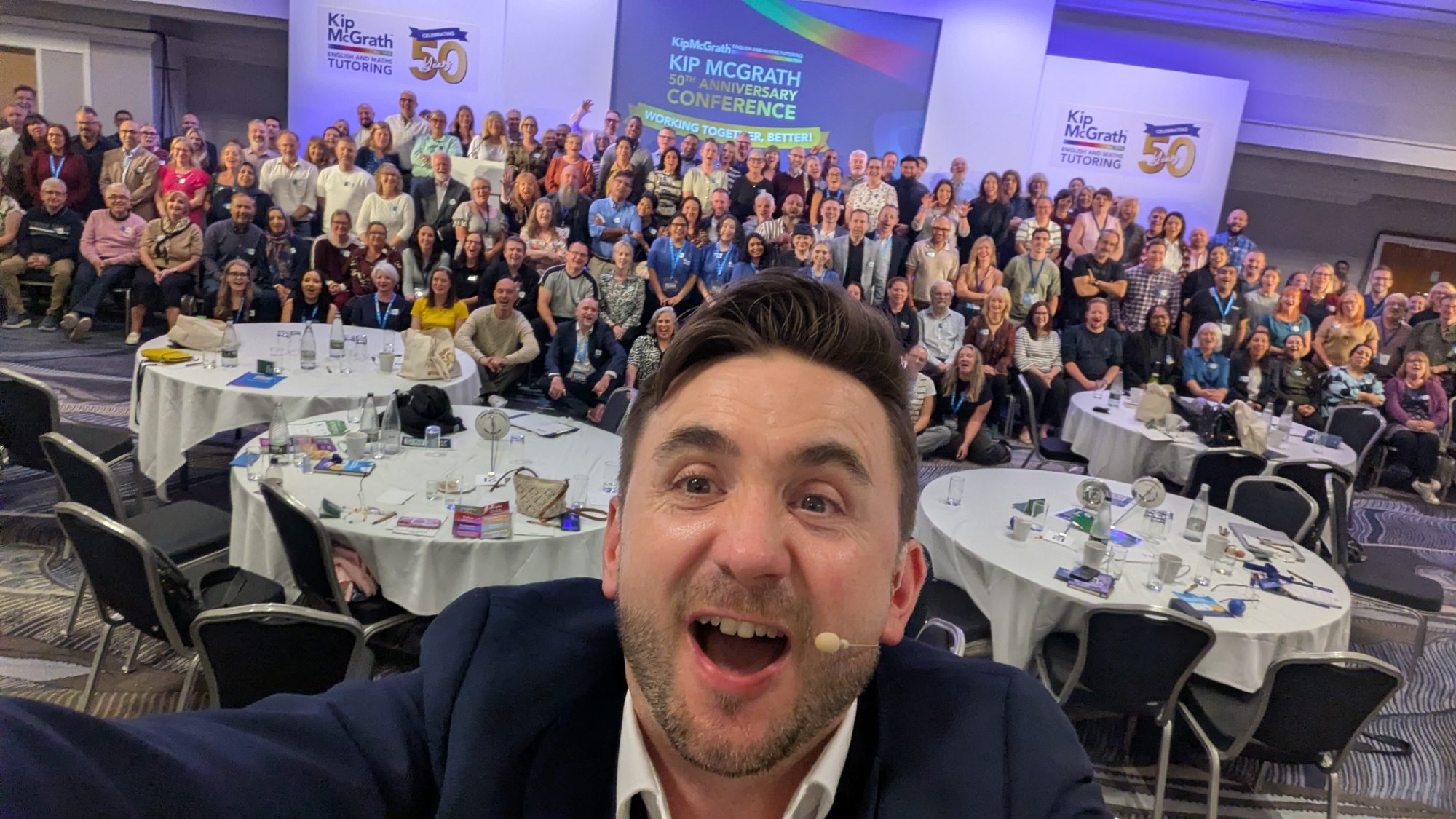
Nobody is going round the table. Discussion collapses to whoever will take a microphone, and everyone else stays quiet unless you give them another route in. That is where phone-based participation earns its keep: questions typed in and voted on so the real ones surface, and whole-room formats every delegate plays on their own phone with nothing to download. I run eight of them. They were built for a hall, not for twelve people in a training room, and the conference games page sets out how they work.
The energy in a room is a curve. For an all-hands or a kickoff, aim the interactive moments at the cold 9am open and the slump after lunch, not wherever the agenda has a gap.
Try one thing on the next instance: write the agenda as three questions, hand the chair to someone else, finish five minutes early. If that version is worse, you have learned something. If nobody notices the old one has gone, you have learned more.


17:00Close
Send me your agenda. I’ll show you where the room comes alive.
A fixed price, a free planning call, and a reply within one working day.