Lunch and Learn: Ideas, Format and How to Run One People Turn Up To

TL;DR
- A lunch and learn is a short, informal talk over lunch: one speaker, one idea, questions, done in 45 to 60 minutes.
- If attendance is expected, it is work: GOV.UK counts job-related training as working time.
- Brief the speaker hard: 20 minutes of content, a question to the room every few minutes, three takeaways.
- Ask about allergies on the invite, label food item by item, and keep virtual sessions captioned and camera-optional.
A lunch and learn is the cheapest learning format most workplaces have: one colleague, one topic, one room and some sandwiches. It is also the one most likely to be quietly resented, because everyone invited can see whose lunch hour pays for it. Below: ideas, a 45 to 60 minute running order, remote versions, and a fix for the “unpaid lunch” problem before it empties the room.
What is a lunch and learn?
A lunch and learn is an informal learning session held over lunch, where people eat while a colleague or guest gives a short talk and takes questions. Nobody is assessed.
Health Education England’s knowledge team ran [monthly lunchtime talks](https://library.hee.nhs.uk/knowledge-mobilisation/knowledge-mobilisation-toolkit/case-studies/lunch-and-learns: about 20 minutes of presentation, then questions and networking, with people bringing their own lunch.
A seminar runs longer, built around expert-led discussion. A webinar is delivered online to an audience who mostly watch. A lunch and learn is defined by its slot. Short, regular, and built around food.
Is a lunch and learn just an unpaid lunch?
Yes, if attendance is expected and it eats the only break people get. That is the complaint in employee forums, and the official guidance (as of October 2026) backs it up:
- Rest breaks. Someone working more than 6 hours a day has the right to a 20-minute break, uninterrupted and away from where they work (Acas, updated 21 March 2025). That break does not have to be paid unless the contract says so.
- Training is work. GOV.UK’s working hours page counts “job-related training” as part of the working week, and lunch breaks when no work is done as outside it.
- Minimum wage. The minimum wage guidance (updated 6 January 2026) counts time spent training.
A mandatory session in someone’s unpaid break is the version people resent. They have a point. This is general guidance, not legal advice: check contracts with HR before setting a policy.
The fix is simple, and it improves turnout:
- Run it in paid time (12:30 to 13:15, say) and leave people their normal break too.
- Or make it genuinely optional, record it, and keep attendance out of appraisals.
- Pay for the food. Eating together has value of its own: in a Cornell study, firefighter crews who shared meals more often were rated higher-performing.
- Finish on time. Overrunning is the fastest way to lose next month’s crowd.
How long should a lunch and learn session be?
Between 45 and 60 minutes, with no more than 20 to 25 minutes of talking. Any longer and it stops being lunch.
| Time | What happens |
|---|---|
| 0 to 10 min | Food, arrivals, one easy question on screen |
| 10 to 30 min | The talk: one idea, three points, a question to the room every 5 to 7 minutes |
| 30 to 45 min | Questions and discussion |
| 45 to 50 min | Three takeaways, one action, next month’s topic |
| 50 to 60 min | Optional: people who want to stay and talk |
The start time matters too. I have watched the energy in rooms for twenty years, and it is a curve: the slump after lunch, around 1:30pm, is real. A 2005 review found the post-lunch dip happens even when people have not eaten, though a high-carbohydrate lunch makes it worse. Start at 12:15 or 12:30 and you finish before it lands.
Lunch and learn ideas and topics for work
The best lunch and learn topics are things one colleague knows well and everyone else would like to know by Friday:
- A tool deep dive: the five spreadsheet shortcuts finance uses every day.
- “What my team actually does”: a 20-minute tour of another department.
- A project post-mortem. What went wrong and what you would change, told by the people who were there.
- Customer insight: someone from support plays back what customers keep asking.
- Writing and presenting: how to write an email people answer.
- Your pension scheme, explained by the provider.
- A guest speaker with a story worth hearing: a supplier, a client, a former colleague.
Rotate presenters. HEE’s advice was to approach teams not yet represented, which also widens who turns up.
How do you brief a lunch and learn speaker?
Give the speaker a written brief with a time limit, one main idea and a rule about questions. Most internal speakers are not trained presenters. The brief is what stops a 20-minute talk becoming 45 minutes of slides.
- 20 minutes maximum, rehearsed out loud once.
- One idea. If they cannot say it in a sentence, the talk is not ready.
- Three takeaways on the last slide, plus one thing to try this week.
- A pause every few minutes for a quick question to the room.
- Slides sent the day before, so remote attendees and screen reader users have them.
Engagement is not a gimmick bolted on at the end, and the research agrees. In a Harvard study of a 21-minute online lecture split into four segments, students quizzed after each segment reported mind wandering on 19% of checks, against 41% for those not tested. More ways to break up a talk: these interactive presentation ideas.
How do you get questions going in a quiet room?
Make the first question anonymous and easy, then build. A quiet room is rarely an uninterested one. Nobody wants to speak first in front of their manager.
- Open with a question that takes no courage: a guess, a number, a quick vote.
- Collect questions anonymously on phones during the talk, so they are waiting at the end. When I host, I use RoomReader, my own live Q&A software: everyone types on their phone, nothing to download.
- Have one question ready, or ask a colleague to bring one.
- Try pairs: 60 seconds with your neighbour, then ask one pair what they came up with.
- Never cold-call anyone by name.
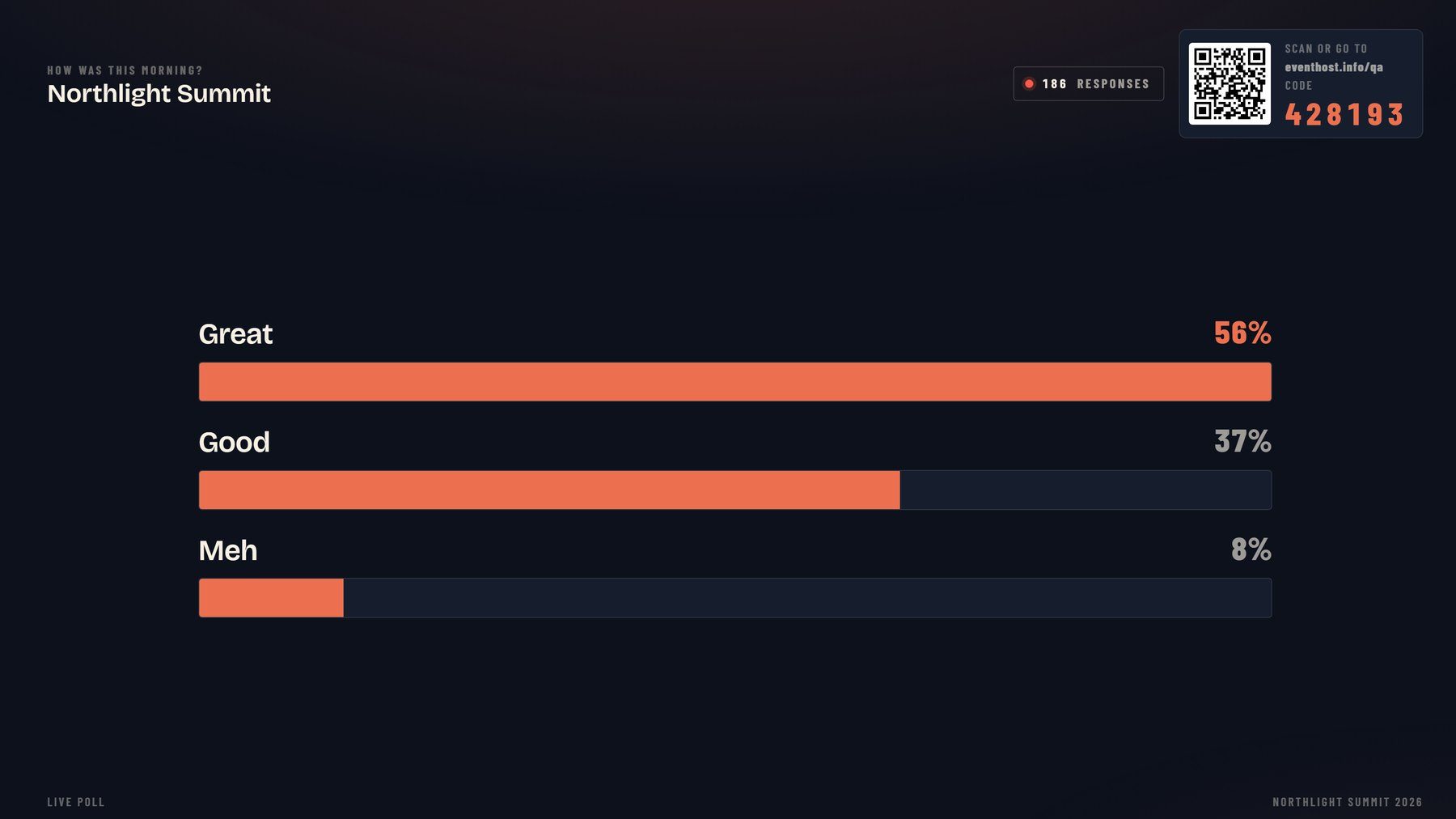
Cringe, not reluctance, is what kills participation: remove the risk of looking foolish and professional adults will join in. These participation techniques work in a meeting room as well as a hall. So do these ways to hold attention.
What food should you serve at a lunch and learn?
Simple food people can eat quietly, labelled and ordered with allergies in mind. Three Food Standards Agency points belong on every organiser’s checklist:
- Ask on the invite. Around 6% of UK adults have a food allergy, so in a room of thirty the odds favour at least one.
- Label each dish. The FSA lists 14 allergens food businesses must declare, and its guidance (updated July 2026) wants buffet information given dish by dish, not for the spread as a whole.
- Watch the clock. Chilled food can stay out of fridges for up to 4 hours; after that it has to be thrown away.
How to run a virtual lunch and learn
A virtual lunch and learn works when it stays short and people can eat off camera. Nobody wants to be watched chewing on a video call.
- Make cameras optional, and say so in the invite.
- Turn on captions and share the slides as a file, not only on screen. The W3C’s remote meetings guidance (2022) recommends both, because screen sharing alone shuts out screen reader users.
- Open the chat or an anonymous Q&A from minute one, with someone reading questions out.
- Record it for shift workers, and tell attendees before you start recording.
- In a hybrid session, give the remote audience the first question.
A quick warm-up helps a remote group settle: try these virtual icebreakers, and read how to keep remote attendees with you.
What should a lunch and learn invite say?
A good lunch and learn invite answers five things in its first two lines: topic, speaker, timings, food, and whether it is optional. For example:
“Lunch and learn: how Support handles a complaint, with [speaker name]. Thursday 12:30 to 13:15, Room 3 and online. Lunch provided: reply with any allergies or dietary needs by Tuesday. Optional, in work time, and recorded if you cannot make it.”
Send it a week ahead, with a reminder on the morning.
Make it a habit, not a one-off
A lunch and learn series lives or dies on rhythm. Pick a regular slot, monthly or fortnightly, and protect it. HEE’s team found scheduling the hardest part and attendance varied, so check the calendar for big meetings and do not judge a series on one quiet session.
If your lunch and learns grow into something bigger, a town hall or a learning day, and you want a host who keeps the whole room with you, send the agenda or check availability at hello@conferencehost.uk.



17:00Close
Send me your agenda. I’ll show you where the room comes alive.
A fixed price, a free planning call, and a reply within one working day.