Conference Closing Remarks: What to Say and How to End Well

TL;DR
- Strong conference closing remarks do three jobs: thank the people who made the day happen, restate the ideas worth remembering, and point the room at one clear next step.
- Keep it short. Two to four minutes is plenty. The close is a landing, not a second keynote.
- Use a simple order every time: thank, recap, call to action, sign-off.
- A short template you can adapt is below, along with the mistakes that quietly flatten an ending.
- Put logistics before the thanks, never after. End on energy and warmth, not on car park instructions.
The last five minutes of a conference decide what people carry out of the door. Closing remarks are the moment where a good day becomes a memorable one, or where a strong programme leaks its energy while the host reads out housekeeping. This guide sets out what to say, in what order, and how to end well, and it pairs with our companion piece on opening a conference.
What should conference closing remarks actually do?
Good conference closing remarks do three jobs: they thank the people who made the day possible, they restate the handful of ideas worth remembering, and they send the room off with one clear action. Everything else is optional.
The open sets expectations. The close pays them off. By the final session the room is tired, a little full, and starting to think about trains and emails. Your job is to gather that scattered attention for a few minutes and give it shape. A close that rambles loses the room. A close that lands sends people home able to say, in one sentence, what the day was about.
Think of it as the reverse of a keynote. A keynote earns attention slowly. The close already has it, briefly, and must spend it well.
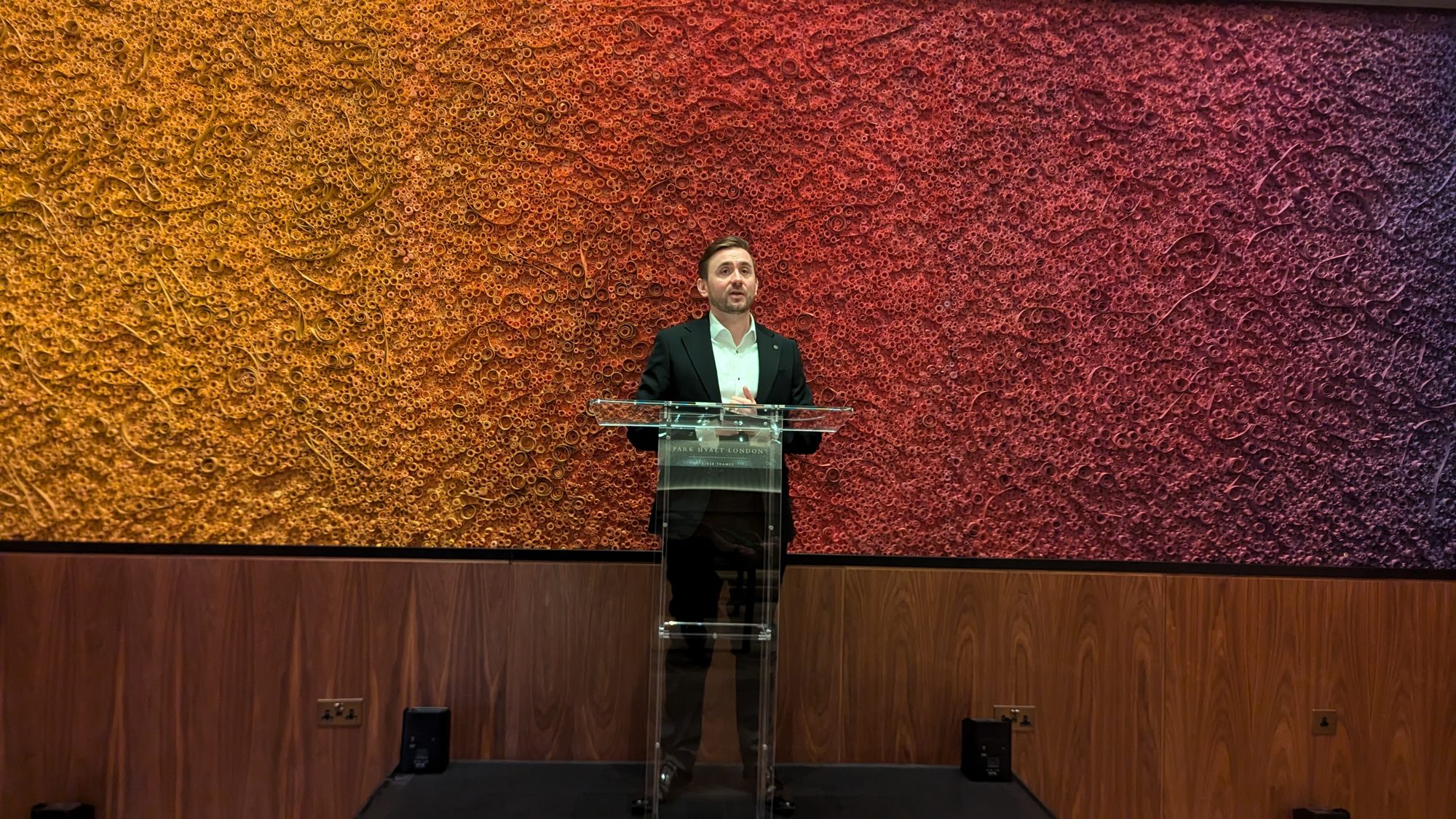
A simple structure for closing remarks
The most reliable structure for closing remarks for a conference has four parts, in this order:
- Thanks. Speakers, sponsors, the organising team, and the audience for showing up and taking part.
- Recap. The two or three themes that ran through the day, stated plainly.
- Call to action. The single thing you want people to do next.
- Sign-off. A warm, confident line that releases the room.
Order matters more than wording. Handle the practical notes (feedback forms, where drinks are, transport) before the thanks, so the emotional beats come last. Nobody wants the final words of a good day to be about a broken lift.
Keep each part tight. Two sentences of genuine thanks beats a two-minute list that turns into an awards ceremony.
What should you include in a closing speech?
A conference closing speech should include four things: sincere thanks, a short synthesis of the day, a clear next step, and a human sign-off. Leave out anything that belongs in an email.
Here is what each part is really for:
| Part | What it does | Watch out for |
|---|---|---|
| Thanks | Recognises effort, builds goodwill | Turning it into an endless roll call |
| Recap | Helps people remember and repeat the message | Re-summarising every session in order |
| Call to action | Converts a good day into behaviour | Listing five actions, so none stick |
| Sign-off | Ends on warmth and energy | Trailing off with “so, yeah, thanks” |
The recap is where most speeches go wrong. You are not reviewing the agenda. You are naming the two or three threads that connected it, so a delegate can explain the day to a colleague who was not there. If you cannot name those threads, that is a signal to listen harder during the programme, not to talk longer at the end.
For the call to action, pick one. One decision, one habit, one conversation to have back at the office. A single clear ask is far more likely to happen than a tidy list of five.

How do you close a conference on time?
You close a conference on time by treating the ending as a fixed slot, not as whatever is left over when the last session overruns. Protect it in the run sheet and defend it on the day.
Overruns almost always steal from the close, because it sits at the end where there is nothing to push into. That is exactly why the ending feels rushed at so many events: the host is suddenly compressing thanks and takeaways into ninety seconds while a room eyes the exits. Good audience engagement across the day only pays off if you leave room to gather it at the end.
A few practical habits keep the close on schedule:
- Build a hard stop into the agenda and share it with speakers in advance.
- Give the final speaker or panel a clear, quiet signal for time, the same way a good host handles speaker introductions and handovers.
- Write your closing remarks to a word count, not a vibe. Two to four minutes is right for most conferences.
- Cut housekeeping to the essentials and put the detail on a slide or in a follow-up email.
If the day has run late and energy has dipped, resist the urge to re-inflate it with a long speech. A short, warm close lands better than a tired attempt to relight the room. If you do need a lift before the final words, that is a job for a deliberate energiser, not for the sign-off itself.
A short closing remarks template you can adapt
Use this as a skeleton and change the words to sound like you. The brackets are your prompts. It runs to roughly two and a half minutes when spoken at a natural pace.
“Before we finish, two quick practical notes: [feedback link or QR], and [transport or drinks]. Right, that is the admin done.
Thank you. To [speaker names or roles] for giving us so much to think about. To [sponsor or host organisation] for making today possible. And to all of you, for the questions, the energy, and for actually taking part rather than just watching.
If you take three things away from today, take these: [theme one], [theme two], and [theme three]. That, for me, is what this day has been about.
So here is the one ask. Before the end of the week, [single specific action: have the conversation, book the pilot, message the person you met at lunch]. Not all of it. Just that first step.
Thank you for a genuinely good day. Travel safely, stay in touch, and we will see you next time.”
Notice the shape. Admin first, then thanks, then a three-point recap, then one action, then a warm release. Swap the phrasing freely, but keep the order. That sequence is what makes closing remarks feel finished rather than merely stopped.
Read it aloud before the event and time it. A script you have spoken once always lands better than one you are seeing for the first time on stage.
What are the most common closing mistakes?
The most common closing mistakes are ending on admin, over-thanking, and re-running the whole agenda. Each one drains the energy you spent the day building.
The usual offenders, and the fix for each:
- Ending on housekeeping. Fixing: move all logistics before the thanks so the last words are human, not procedural.
- The endless thank-you list. Fixing: group the thanks and name only the people who genuinely need naming.
- Summarising every session. Fixing: synthesise into two or three themes instead of replaying the timetable.
- Five calls to action. Fixing: choose one, and make it specific and time-bound.
- The apologetic sign-off. Fixing: write and rehearse a confident final line so you do not trail off.
- Overrunning into the close. Fixing: protect the slot and hold speakers to time earlier in the day.
There is a quieter mistake underneath all of these: treating the close as a formality. The ending is not filler between the last session and the bar. It is the part people replay on the way home, and the part that decides whether they book to come back.
A conference is a curve of energy, and the close is where you let the room land on a high rather than drift out flat. Get the order right, keep it short, end with warmth and one clear ask, and you turn a full day into something people can actually carry with them.
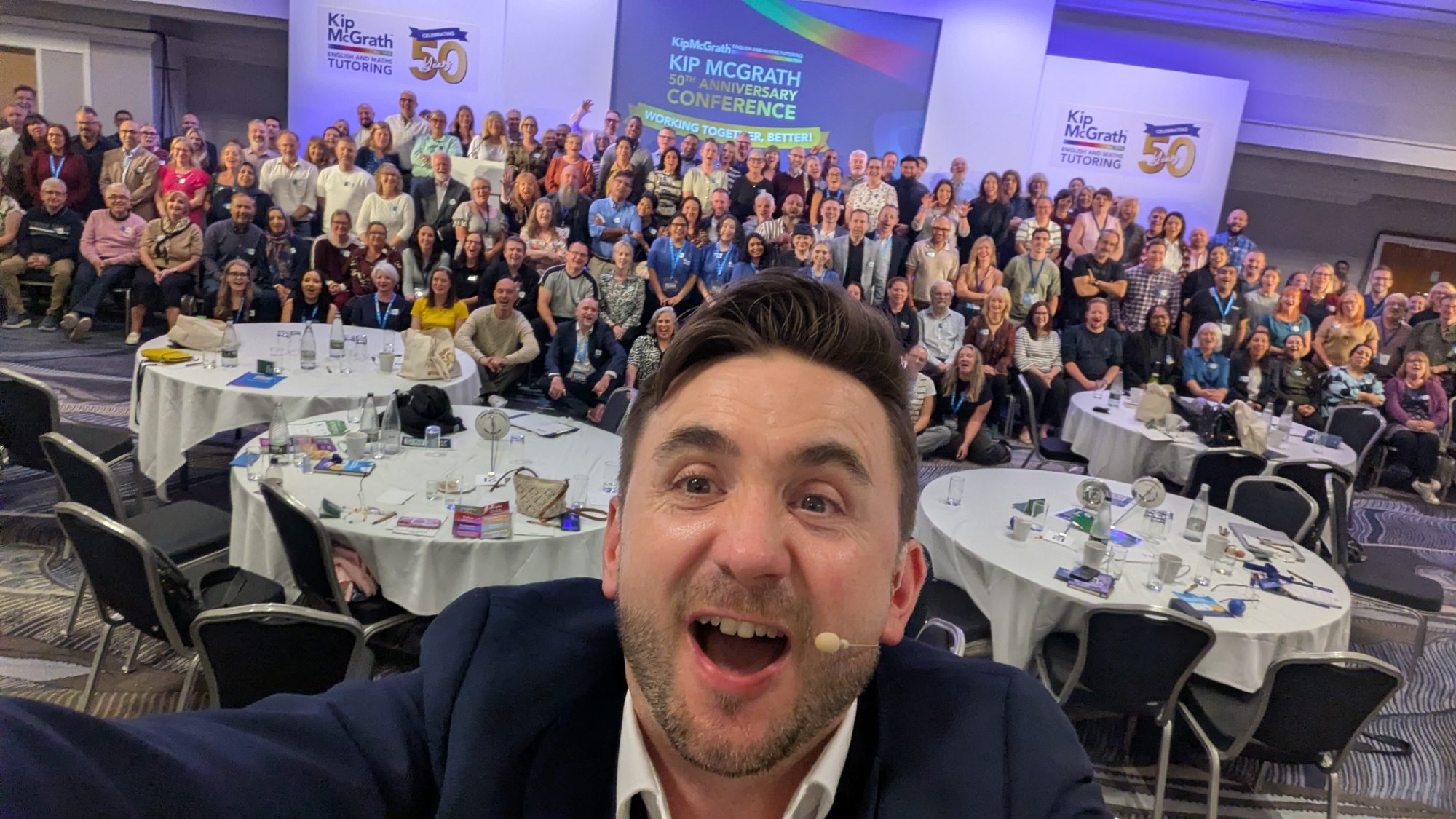

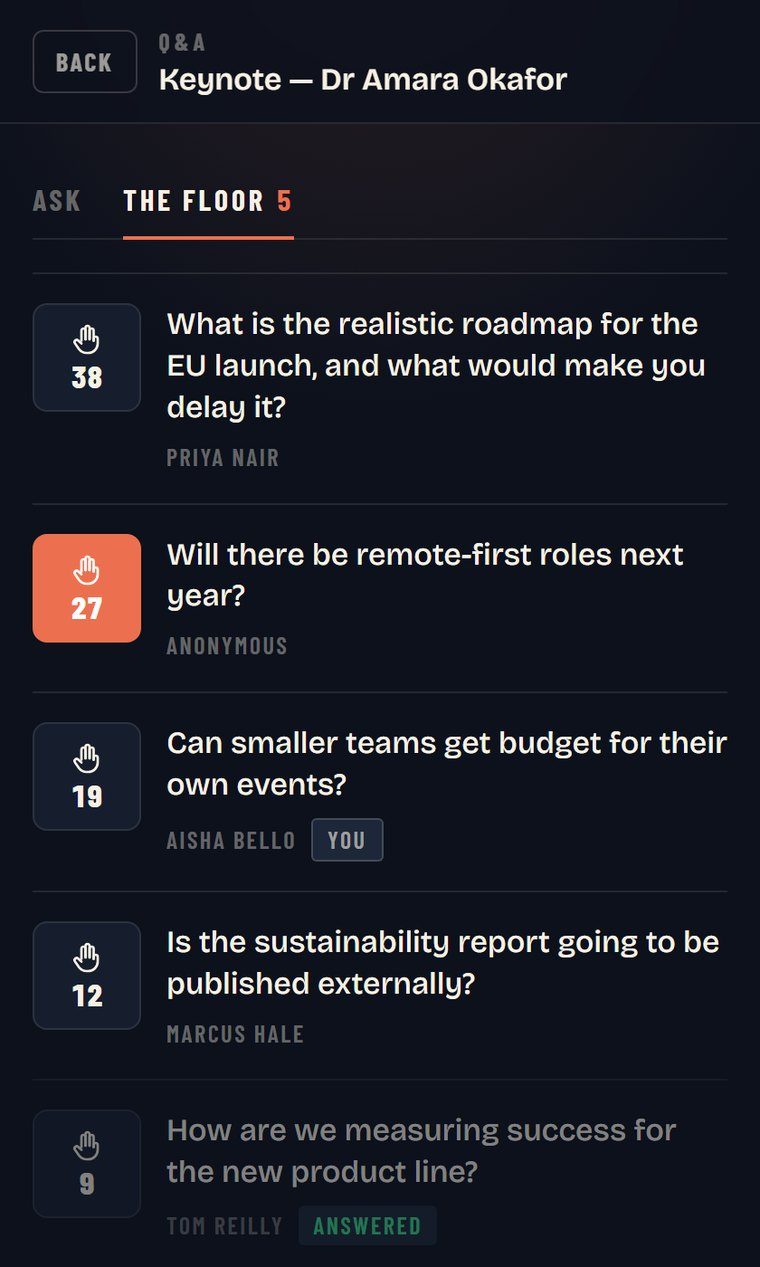
17:00Close
Send me your agenda. I’ll show you where the room comes alive.
A fixed price, a free planning call, and a reply within one working day.