Hybrid Conference: The Honest Version From the Host’s Chair
TL;DR
- A hybrid conference is not one event with a bigger room. It is two events sharing one camera feed.
- The online audience is often the larger one, and almost always the one dropped by mid morning.
- The host’s discipline is scheduled, not natural: name the online room early, cut to camera on cue, read its questions out whole.
- The production floor decides it before any platform does: camera on the speaker, audio from the desk, a named chat moderator.
- If you will not staff and fund the second audience, record the day properly instead.
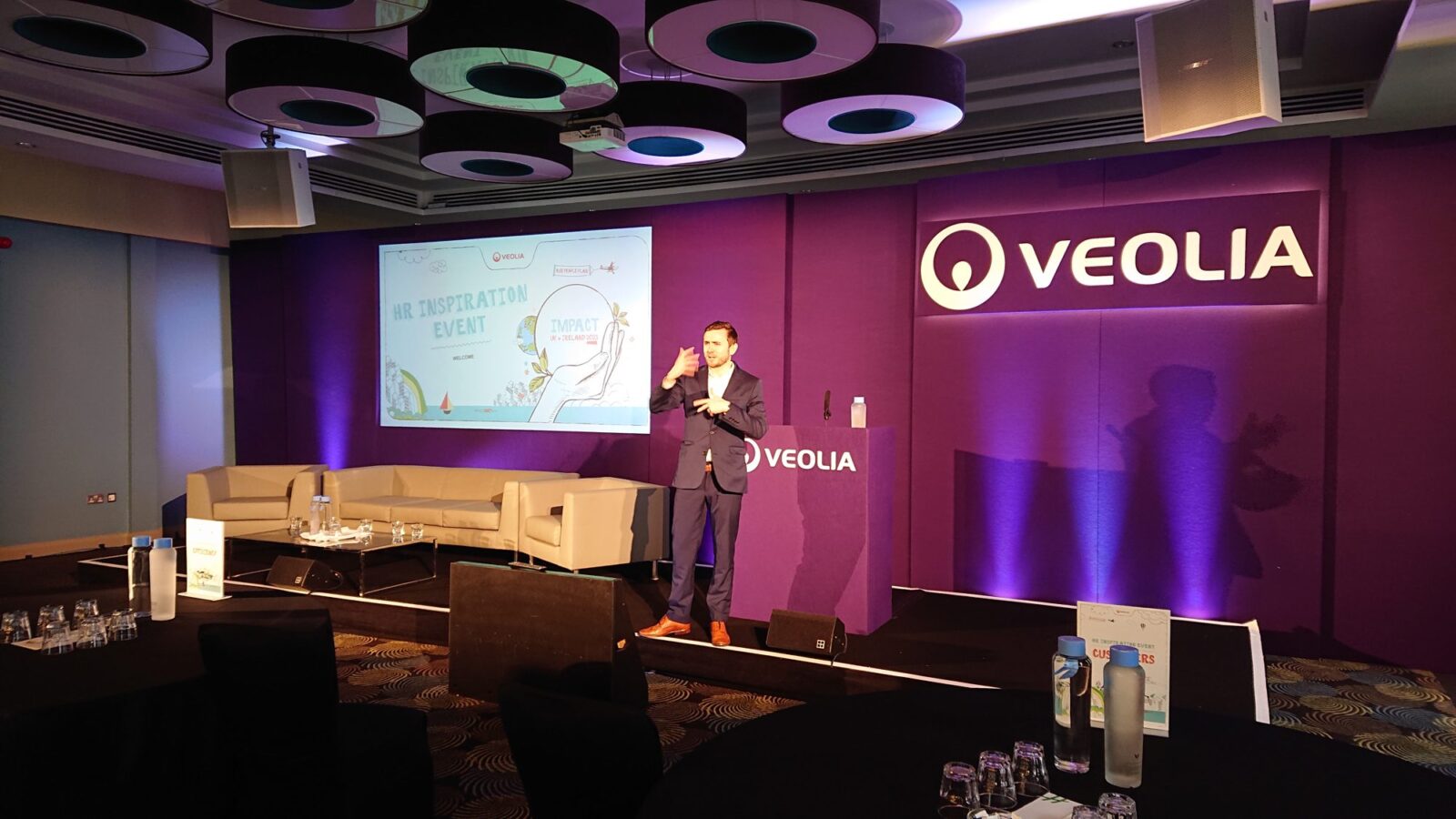
A hybrid conference is sold as one event with a much bigger room. Run one from the stage and the truth arrives fast: it is two events sharing a feed. One audience has a chair, a coffee and 400 people breathing around it. The other has a browser tab and an inbox one click away. This is a host’s view of which one gets abandoned, and what it costs to stop it.
What is a hybrid conference, and why is it two events?
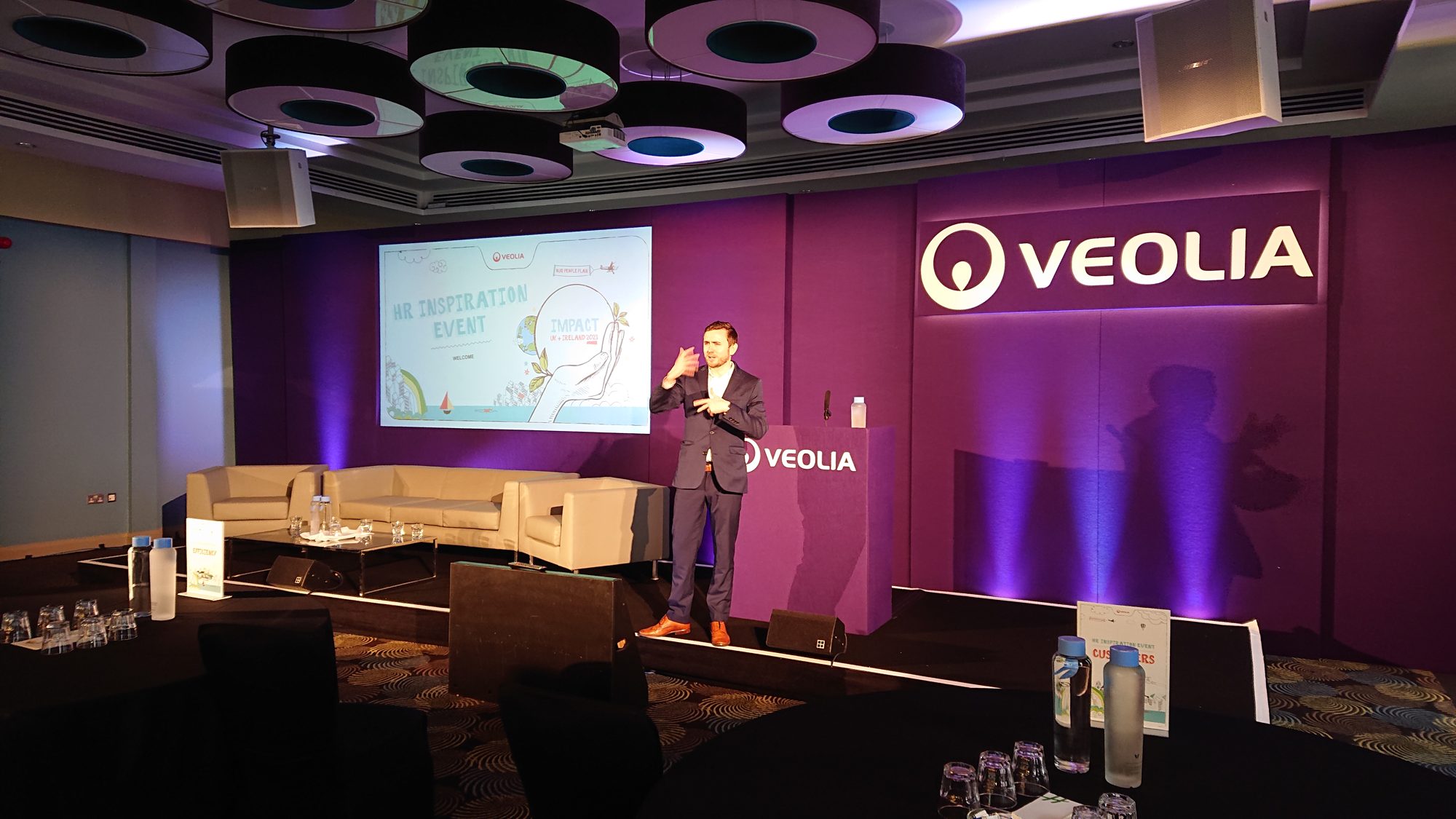
A hybrid conference is an in-person event delivered live to an online audience at the same time, which in practice means producing two events that share a camera feed and a running order.
The room gets a day out. The online audience gets a window onto someone else’s day out, and that window is usually the busier room. A 581-delegate marine biology meeting in France in September 2021 had 159 onsite and 422 online. A hybrid dermatology congress the same year ran 155 in person and 995 virtual, then surveyed the physical attendees only. The bigger audience was not asked.
Who is actually watching from home?
The person watching from home has your conference open in a second tab, and nobody in the room can see them stop.
That is the real gap, and it is not about commitment. In a hall, leaving is public: you stand, you squeeze past knees, people notice. At a desk it costs nothing, so the content does all the holding.
Microsoft’s analysis of remote meeting telemetry, paired with a 715-person diary study and published at CHI 2021 in May 2021, found multitasking rises with meeting size and length. Your conference is the biggest, longest meeting in their week.
Worth knowing who they are. In the European Respiratory Society’s survey of virtual congress registrants, in BMC Medical Education in April 2024, cost was 74.0% of the reasons for not attending in person. They are largely the people with no travel budget.
The split attention this asks of a host
I have watched the energy in a room for twenty years, and all of that reading comes off faces. A camera gives nothing back, so this discipline has to be written into the cue sheet.
Name the online room in the first minute, with a number: “there are 400 of us in this hall and another 900 watching the stream.” Then give them something to do before the first session, so they see it land in the room.
Read online questions out in full. Not “someone online asks about budget”, but the question as written, with the name and where they are watching. Paraphrasing tells the chat its words count less than a microphone.
Describe the room to the camera. Say what the laugh was about. Say the show of hands looked like two thirds.
Then retire “and for those of you at home”. It arrives at the end of a section, and both audiences hear the afterthought. Engagement is not a gimmick bolted on at the end, and neither is a second audience. More on holding both rooms at once.
What can an online audience never get?
An online audience can never get the corridor, and it is better to stop pretending otherwise.
The French organisers put it plainly: informal interaction forms naturally onsite over coffee and meals, exactly the moments online attendees need off the screen. Table talk is not a feature anyone can ship.
What you can give instead is hosted contact, scheduled. That conference ran 11 online-only events across time zones rather than leave its online majority with a holding slide. Substitutes that earn their place:
- A chat host with a name, answering in their own voice.
- The speaker staying in the stream ten minutes after their slot, while the room goes to coffee.
- Slides, contacts and the recording the same day.
Then be honest in the joining instructions. Promising the atmosphere loses that audience before anyone speaks.
The production minimum for a hybrid conference
A hybrid conference needs three things on the floor before it needs any platform: a camera framed on the speaker, audio taken from the sound desk, and a visible chat moderator.
Frame tight: a wide, locked-off shot of the stage turns a keynote into security footage.
Take the sound from the desk, never a camera’s room mic. Researchers played 196 participants identical conference talks in high and low audio quality. The poor-audio version made them rate the speaker less intelligent and the research less important (Science Communication, 2018). Bad audio quietly downgrades your speakers.
Staff it honestly. Those organisers needed five people for the broadcast room (two on the controls, a sound engineer, two camera operators) plus extra chairs purely to pass microphones and watch the chat box. Their streaming channel took 46% of the conference budget.
Give both rooms the same way in. Audience response systems in a phone browser treat a vote from row F and a vote from a kitchen table as one vote. My own live Q&A software, RoomReader, works that way and comes with the hosting: every delegate on their own phone, nothing to download.
How should the agenda change for a screen audience?
Remote viewers lose focus faster than the people in the room. Shorten the blocks, thin the parallel tracks, and design the breaks around the people who are not in the building.
Microsoft’s Human Factors Lab put EEG caps on 14 people in March 2021 and ran them through four back-to-back half-hour video meetings. Stress-linked beta wave activity climbed across the two hours. With ten-minute breaks between the same meetings it stayed level. That is the argument for a 45-minute ceiling on anything the stream sits through.
Breaks are where most hybrid days quietly end. The room walks out for 25 minutes, the stream gets a logo and a music loop, and people go for good. Say when to come back and what for, or put something hosted in the gap.
Same programme, or a different one? Same spine, different edges. In that respiratory survey, 67.4% of 684 respondents wanted virtual sessions during the in-person event and through the year. The European Association of Science Editors, arguing since November 2024 that hybrid should be the norm, schedules later in the week because weekends fail online delegates. Put both timings in one conference agenda.
Q&A mechanics that stop the room always winning
The room wins Q&A by default: a body, a hand and a microphone within reach. Left alone, every session ends with four questions from the first six rows.
A 2025 study of hybrid meetings at a software company found virtual participants less engaged than co-located colleagues, especially in the absence of a clear speaking order. Order is the fix. The host polices it.
- Online question first, in every session, with no apology for it.
- Then strict alternation: chat, room, chat, room, until time is gone.
- One shared list both audiences vote on, so the top question wins wherever it came from.
- The host reads it out. Never make a remote attendee unmute and perform.
When time runs out, do not say “do keep the conversation going in the chat”. Take two unanswered questions to the speaker afterwards and publish the answers. Holding remote attendees is small promises kept.
Should you run a hybrid conference at all?
Only if you will staff and fund the second audience properly. If you will not, record the day well and say that is what you are offering.
Nobody enjoys it. The European Astronomical Society, explaining its 2022 meeting, reported the hybrid option was preferred by 16% of respondents, and called full hybrid at that scale expensive and complicated on its venue’s own estimates. A Nature Astronomy comment reposted in January 2025 pulls the other way: affordable at large scale, though meaningful interaction between the two audiences is far from trivial.
Both are true. Hybrid works when it is a production with its own crew, budget and host brief, and wastes money when it is a tick box. Three questions settle it:
- Who owns the online audience by name on the day, and what else are they doing then?
- What share of the budget is the stream getting? Under 10% and you are buying a recording.
- Would an edited recording with the decks, out inside 48 hours, serve them better than live?
If the answer is the recording, do that without embarrassment. It beats a stream nobody is tending. If you are going ahead, brief whoever holds the room to hold both rooms, in writing. That is the job I take on as a hybrid event host: send the agenda and I will tell you where your online audience leaves.
17:00Close
Send me your agenda. I’ll show you where the room comes alive.
A fixed price, a free planning call, and a reply within one working day.