What Is Facilitation? Team Facilitation Skills for Meetings and Events
TL;DR
- Facilitation means running the process of a group conversation so the group does its own thinking and reaches its own decisions.
- A facilitator stays neutral on the content. A chair, a trainer and a subject expert usually do not.
- The core facilitator skills are question design, neutrality, timekeeping, managing energy and summarising what the group has said.
- A few simple techniques (silent writing, 1-2-4-All, dot voting, a parking list) fix most meetings.
- Bring in an outside facilitator when the person who would normally run the meeting has a stake in the outcome, or the room is too big for an internal chair.
What is facilitation, in plain terms? It is the job of running how a group talks so that what it talks about actually gets decided. The facilitator owns the process: the questions, the order, the clock and who gets heard. The group owns the content and the answers.
I am a broadcast-trained conference host, panel moderator and facilitator, and I have hosted more than 800 events. Here is what facilitation means, the team facilitation skills that make a meeting work, the techniques worth stealing, and when to bring someone in from outside.
What is facilitation?
Facilitation is guiding a group’s process so that the group can think, decide and act together. The International Association of Facilitators puts it neatly: facilitation is the art of helping a group think together, explore options and make decisions. In the same definition, the facilitator designs and guides the process so participants can concentrate on their ideas and outcomes.
The key word is process. A facilitator is usually described as content neutral: someone who does not take sides in the discussion they are running. They are expert in how the conversation is built, not in what the right answer is.
That is the facilitation meaning most organisers need. In the room to push a view? You are a participant. In the room to help everyone else reach a view? You are facilitating.
How is facilitation different from chairing, training and moderating?
The difference is what the person is responsible for. Facilitators are responsible for the group’s process, chairs for the meeting’s business, trainers for what people learn, and moderators for one conversation in front of an audience.
| Role | Owns | Takes a view on the content? |
|---|---|---|
| Facilitator | How the group works together | No, stays neutral |
| Chair | The agenda, the decisions, the formal record | Often, and usually directs the discussion |
| Trainer | The skills or knowledge being taught | Yes, that is the job |
| Moderator | One panel or Q&A in front of an audience | No, serves the audience |
| Mediator | A dispute between people | No, impartial |
A facilitator’s role is different from a trainer with subject expertise, who leads the group through material. A mediator works on a disagreement: Acas describes the mediator as impartial, with the outcome decided by the people involved. Facilitation borrows that impartiality and points it at ordinary work: planning, prioritising, deciding.
On a conference day these titles blur, and I have written a longer guide to the host, MC, moderator and facilitator roles if you are deciding who to book. Moderating a panel is its own craft, covered in the guide to moderating a panel.
What is facilitation in a team meeting?
In a team meeting, facilitation is the difference between a conversation that wanders and one that ends with a decision and an owner. Team facilitation is usually done by someone inside the team, often the manager. That is exactly why it is hard: the manager is also the person with the most influence over the answer.
The stakes are not small. A 2017 Harvard Business Review article found executives spending an average of nearly 23 hours a week in meetings, up from fewer than 10 hours in the 1960s. Meeting facilitation is how you make that time produce something.
A useful map of what happens in a good meeting comes from Sam Kaner’s diamond model. Groups start with divergent thinking, where ideas are added, then pass through an uncomfortable middle called the groan zone, before convergent thinking narrows things down. The same article’s advice is simple: name that transition out loud, so people know the discomfort is normal rather than a sign the meeting is failing.
Most failed team meetings skip a phase. They jump from one idea straight to a decision, or they generate forty ideas and run out of time before choosing any.
What facilitation skills does a facilitator need?
A good facilitator needs five practical skills: designing questions, staying neutral, keeping time, managing energy and summarising. The IAF’s own core competencies cover the same ground in broader terms, from planning appropriate group processes to guiding the group towards useful outcomes.
Question design. The question you put to a group shapes everything it gives you back. Write it before the meeting, test it on one colleague, and avoid yes/no questions, which close a conversation rather than open it.
Neutrality. SessionLab’s guide to facilitator skills says to stay neutral on content while being an expert on process. Got a view? Declare it and hand the facilitation to someone else, or keep it out of the room.
Time. Agree how long each part gets and say it aloud. A visible clock does more for discipline than any amount of polite interrupting.
Energy. The energy in a room is a curve, and I have watched it for twenty years: the cold open first thing, the slump after lunch, the awkward gap before networking. A good facilitator spots attention dropping and changes the format before it collapses. Pushing on and hoping is not a plan.
Synthesis. Every so often, say back what the group has said in a sentence or two. It shows people they were heard, exposes disagreements hiding under vague agreement, and gives you the record of the meeting almost for free.
Facilitation techniques worth knowing
You do not need a large toolkit. Four facilitation techniques cover most meetings, and none of them needs special kit.
- Silent writing first. Before anyone speaks, give everyone a minute to write their own answer. It stops the first confident voice setting the direction and pulls ideas out of the quieter half of the room.
- 1-2-4-All. One of the liberating structures, and a good first one to try with a team. Its published steps run one minute of silent reflection, two minutes in pairs, five minutes in fours, then about seven minutes sharing with the whole group. Everyone contributes in roughly a quarter of an hour.
- Dot voting. Each person gets a set number of votes to place on the options. The Nielsen Norman Group recommends people vote quietly, with no lobbying until everyone has voted, and warns about the HIPPO effect: the highest-paid person’s opinion pulling everyone else along.
- A parking list. Anything important but off-topic goes on a visible list, with a time it will be dealt with. Nobody feels dismissed. The agenda survives.
For openers that get people talking before the real work, the team meeting icebreakers guide has quick, low-cringe options. Bigger structured methods such as six thinking hats, appreciative inquiry, action learning sets and chairing a formal meeting each have their own guide on this site.
Facilitation at an event is a different job
Most facilitation advice was designed for twelve people in a training room, not for a hall. A conference or all-staff day changes the arithmetic. In a room of 300 you cannot hear every voice, pairs and fours take longer to form, and reporting back from forty tables would eat the afternoon.
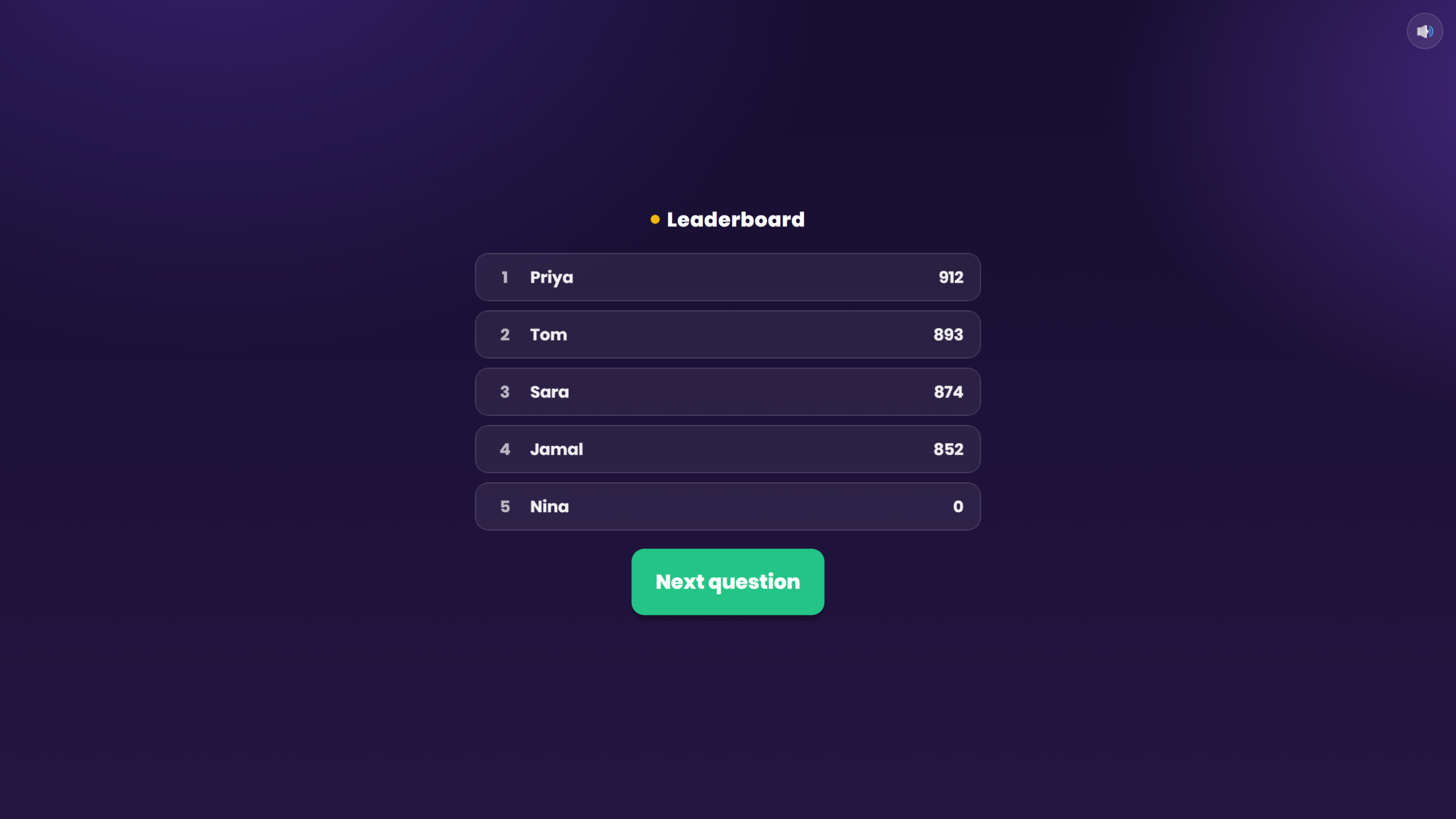
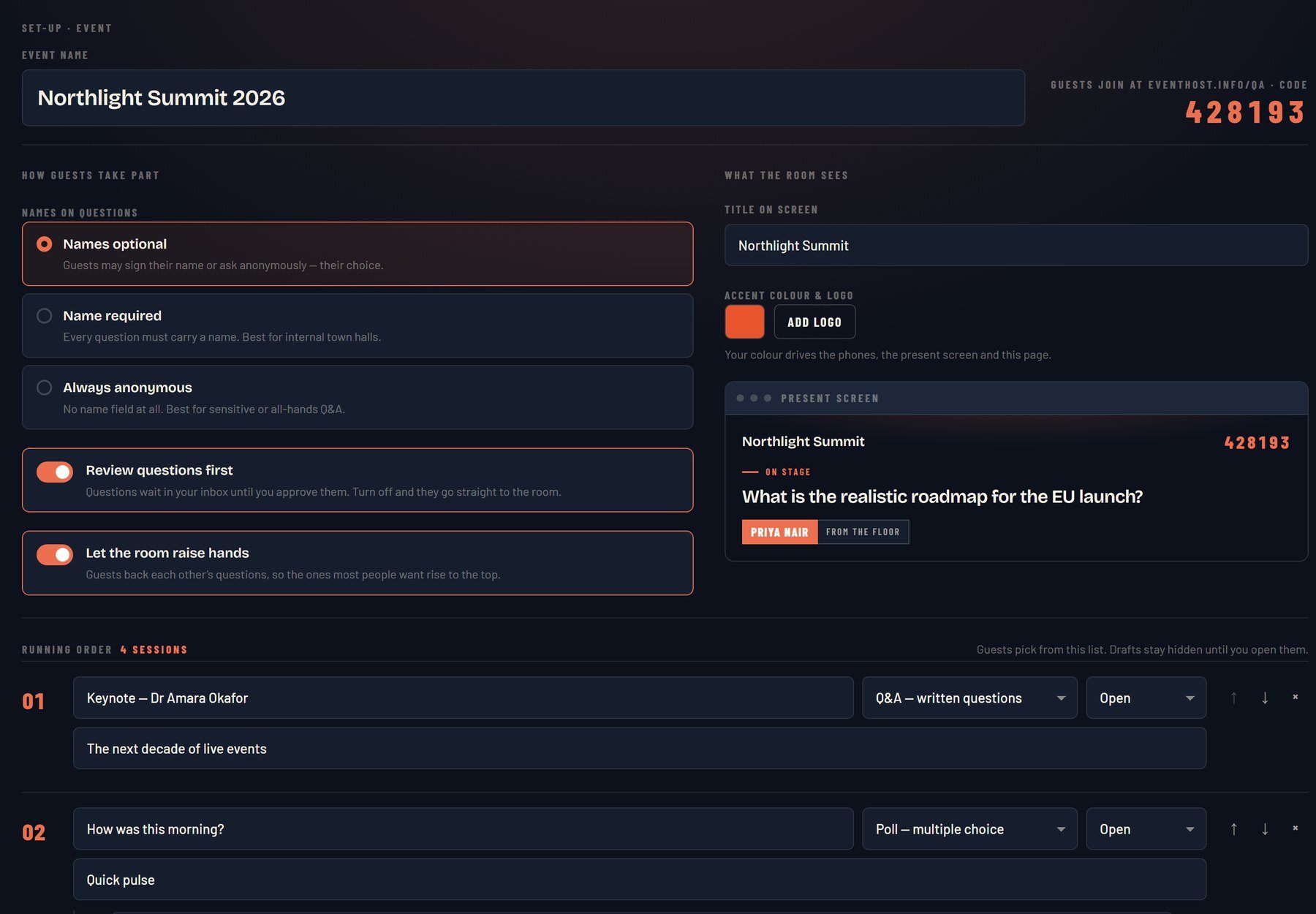
At that scale the facilitator’s tools change. You lean on phones instead of flipcharts: I run live questions and votes through RoomReader, my own software, so every delegate takes part on their own phone, nothing to download. You plan for the known dips in the day, using conference energisers at the post-lunch slump rather than hoping the next speaker fixes it.
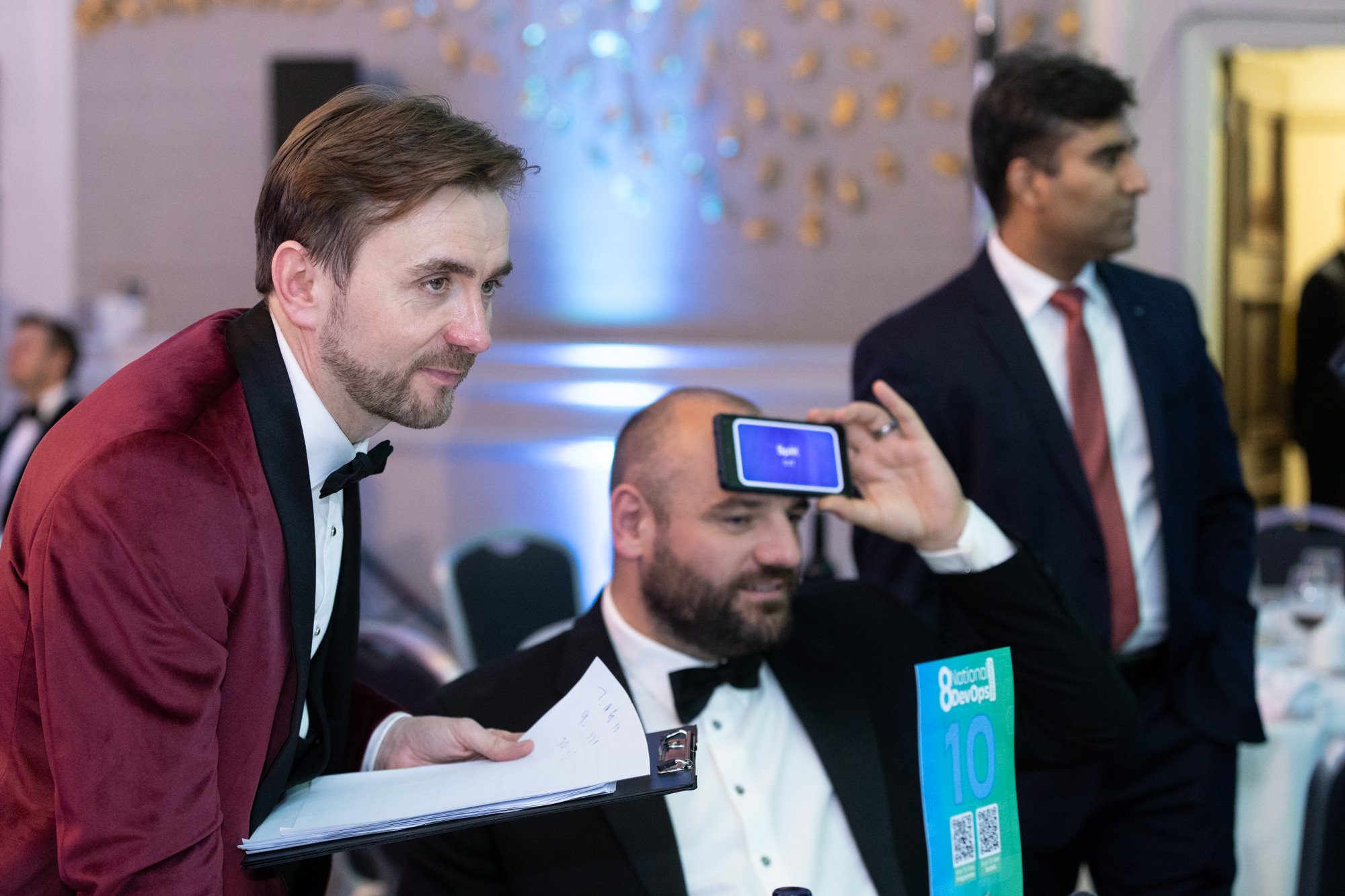
The principles do not change. Neutral on content, firm on process, and nobody put on the spot. Cringe, not reluctance, is what kills participation, in a team of eight or a room of 800.
When should you bring in an outside facilitator?
Bring in an outside facilitator when the person who would normally run the session has a stake in the result, or when the group or the format is too big to run from inside. Make Happy, a London facilitation consultancy, frames the choice as hiring a professional or training team members to facilitate. Both work. The trick is knowing which situation you are in.
Signs it is worth paying for outside help:
- The leader who would facilitate is also the person whose plan is being discussed.
- There is history in the room: a restructure, a merger, a disagreement nobody has named.
- The session is a whole-company or whole-conference event, not a team meeting.
- You need the leadership team to take part as participants, not run the day.
- The day has to produce a decision, and you cannot afford for it to run out of time.
For a regular weekly meeting, train someone inside the team. For a leadership day, a town hall or a conference, an outside conference facilitator lets everyone in the organisation take part, including the people who would otherwise be stuck running it.
Before your next meeting
Pick one thing from this guide and try it next week. Write the question in advance. Add a minute of silent writing. Say back what the group has agreed before you close. Facilitation is mostly small habits done every time, and your next meeting is the place to start.

17:00Close
Send me your agenda. I’ll show you where the room comes alive.
A fixed price, a free planning call, and a reply within one working day.