Team Building Activities for Work That Adults Will Actually Join
TL;DR
- Team building improves trust and coordination, but fun-only sessions do little alone. Goal setting, role clarity and a debrief are where the value is.
- Four in ten Britons say they dread team building. Cringe, not reluctance, is what kills participation, so pick formats where nobody can look foolish.
- Indoor, seated, mixed-ability activities that run in 20 to 60 minutes beat anything that needs a harness or a field.
- Run them in working hours, aim the lively ones at the post-lunch slump, and always finish with a short debrief.
Most team building activities fail for the same reason most icebreakers fail: they were designed for someone else’s team. This guide is the opposite: indoor team building activities for work that professional adults will actually join, with the group size, timing and failure points for each.
The bar is low. In a YouGov poll, 40% of Britons said dread was the feeling they associate with a team building exercise. A 2025 Acas survey found team building tops the list of workplace social activities employees dislike, chosen by 31% of the people asked.
Do team building activities for work actually do anything?
Yes, but not in the way most organisers assume. Team building reliably improves how people work with each other. It does not, on its own, make a team perform better.
A review in American Psychologist summarises a meta-analysis of 60 effect sizes. Team building produced significant gains in trust, coordination and shared understanding, but no significant direct effect on team performance. Of the four classic components (goal setting, relationship management, role clarification and problem solving), goal setting and role clarification were the most effective.
The same review is blunt about the ropes-course afternoon: there is limited evidence that light-hearted activities without those components work. Fun is the delivery mechanism. The content has to be about how the team works.
Why do so many people dread team building?
Because too many put a professional adult on the spot. Of Britons who have been on a team building exercise, YouGov found 60% found it embarrassing or cringe-worthy. Only 44% agreed they worked together more effectively afterwards, and 50% disagreed.
Acas adds a point every organiser should take seriously. Some neurodivergent staff, including autistic people, may find certain social activities uncomfortable. Its advice is to ask staff what appeals rather than assume, and to hold team building within normal hours so people with caring responsibilities are not shut out.
I have hosted 800+ events, and my view is simple. Professional adults will happily take part if the format removes the risk of looking foolish. Cringe, not reluctance, is what kills participation.
Choosing team building activities: five filters
| Filter | Ask | Why it matters |
|---|---|---|
| Group size | Is it 6 people, 30 or 300? | An activity built for one table falls apart across a hall |
| Time | Five minutes, 30 or 90? | Longer is not better, and the debrief needs its own time |
| Mobility | Can everyone take part seated? | Physical tasks quietly exclude people |
| Voice | Will one person end up doing all the talking? | Dominant voices make groups less effective |
| Purpose | What should change on Monday? | Without a goal it is just a nice afternoon |
Employers must make reasonable adjustments for disabled staff, and Acas says these can cover any area of work, training included. Build that in at the design stage rather than improvising on the day.
Indoor team building activities for work: the shortlist
These six work indoors, with mixed abilities, in a meeting room or a hall.
| Activity | Group size | Time | What it builds | What goes wrong |
|---|---|---|---|---|
| Marshmallow challenge | Teams of 4 | 18 min build, 15 min debrief | Testing ideas fast | One planner takes over |
| Fix one real problem | 4 to 8 per table | 45 to 60 min | Problem solving, goals | It turns into a moan |
| Role map | Up to 12 | 45 min | Role clarity | It drifts into personal criticism |
| Build and explain | 4 to 8 | 60 to 90 min | Shared understanding | Without a guide it wanders |
| Table quiz or game show | 20 to 500 | 30 to 45 min | Energy, cross-team mixing | A know-all table runs away with it |
| Eat together | 6 to 30 | 60 to 90 min | Informal trust | Dietary needs ignored |
The marshmallow challenge
Each team gets 20 sticks of dry spaghetti, about a metre of tape, a metre of string and one marshmallow. They have 18 minutes to build the tallest freestanding structure with the whole marshmallow on top.
Tom Wujec, who popularised the marshmallow challenge, reports that kindergarten children tend to beat business students. The children put the marshmallow on early and keep testing. Adults plan one perfect design and discover too late that the marshmallow is heavier than it looks. That is your debrief, ready-made: where did we plan when we should have tested?
Fix one real problem
Give each table one genuine, minor work problem (a clunky handover, a meeting that always overruns) and 30 minutes to agree a fix, an owner and a date. The review above stresses leaving with tangible action plans, and following them up.
One rule: talk about the work, not the people. Top-performing teams, the review notes, target content rather than personalities.
Role map
List the team’s ten most common tasks on a whiteboard. Everyone marks who they think owns each one. Gaps and overlaps appear within minutes, and role clarification was one of the two most effective components in the evidence. Keep it about roles, never about anyone’s performance.
Build and explain
LEGO Serious Play began as a process for guided workshops with adults: people build a model of an idea, then explain it to the group. The value is that the quieter half of the team gets the floor, because everyone builds and everyone explains. You can borrow the principle without the official kit, but someone needs to guide it.
Table quiz or game show
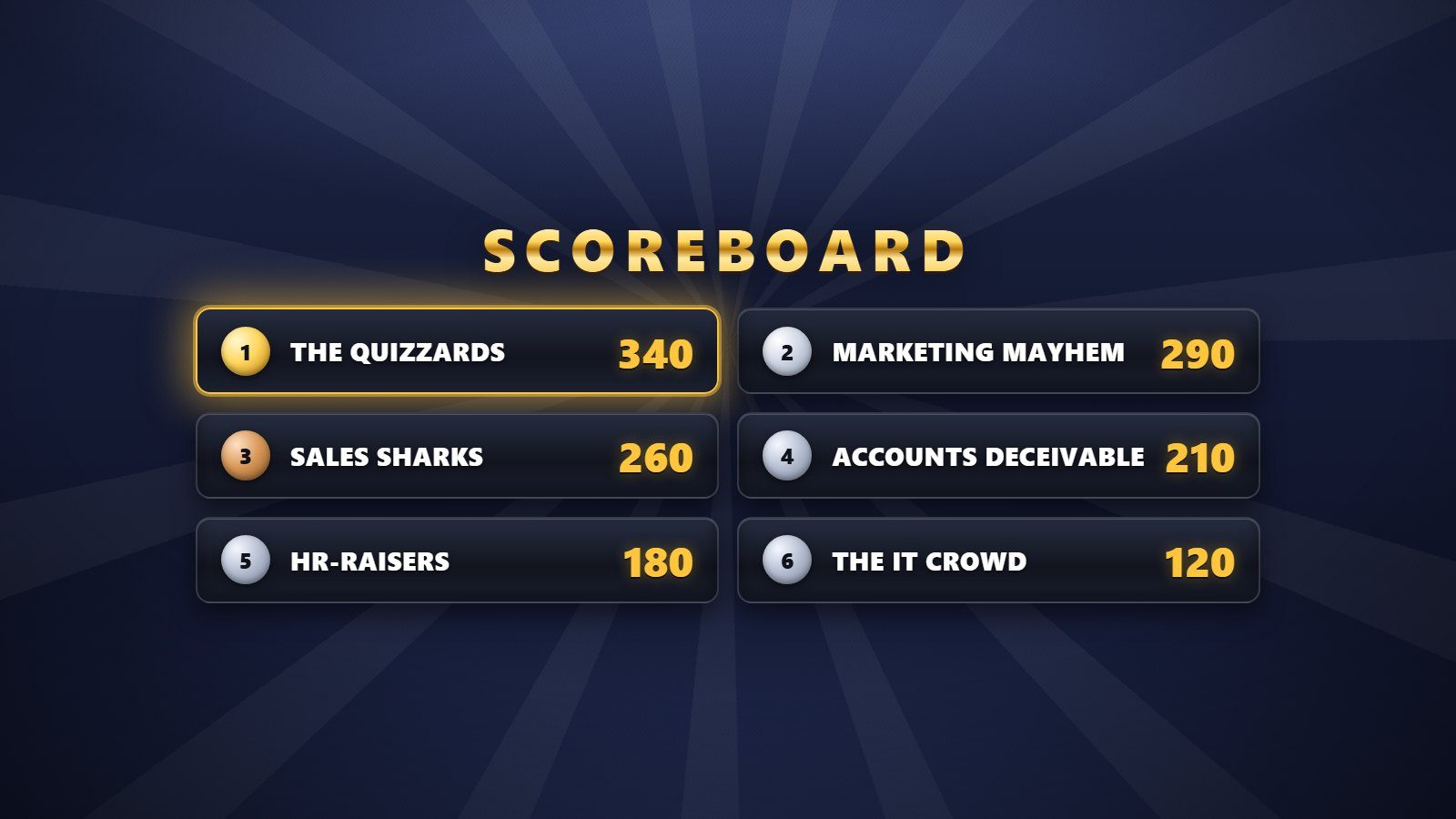
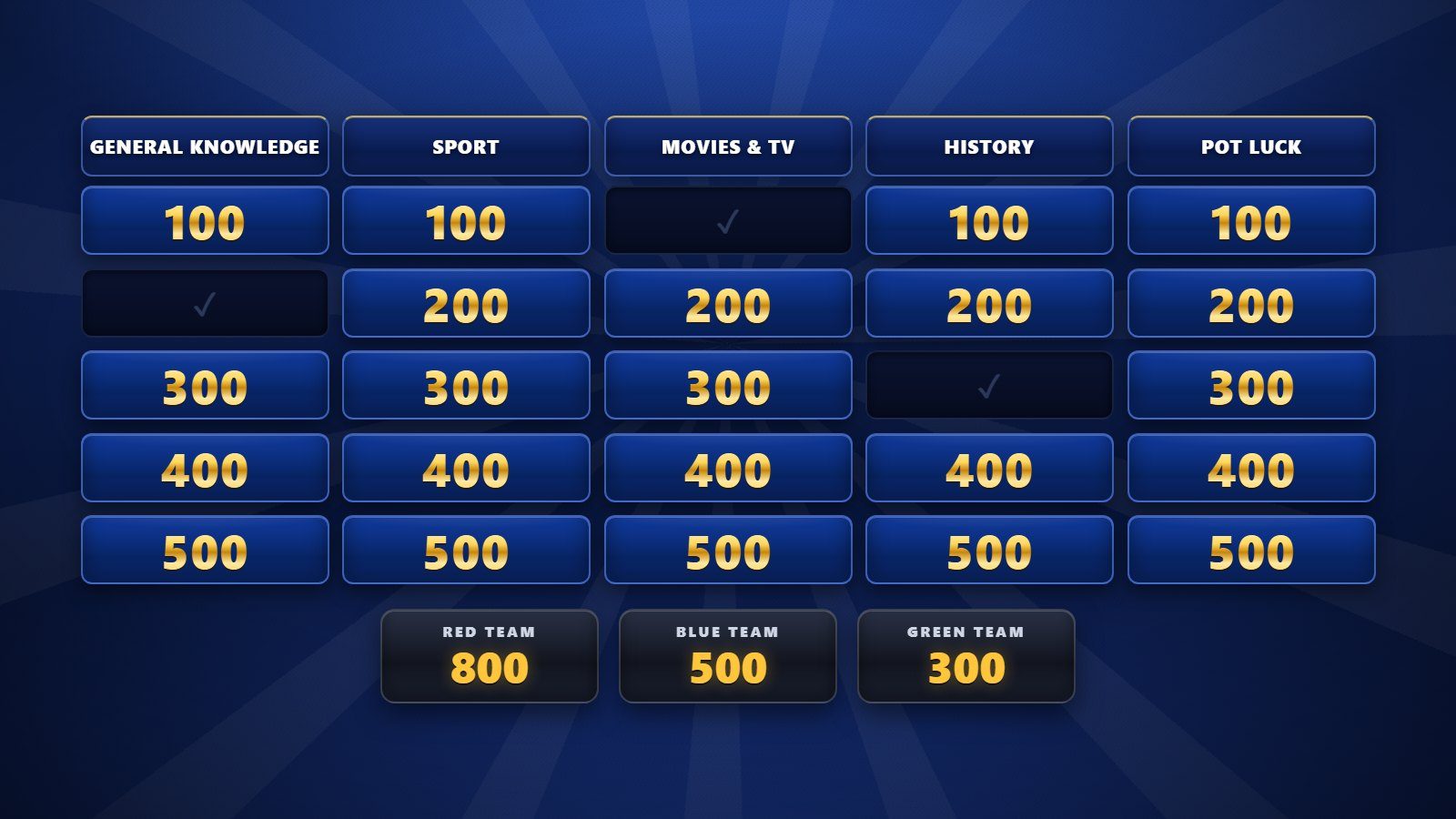
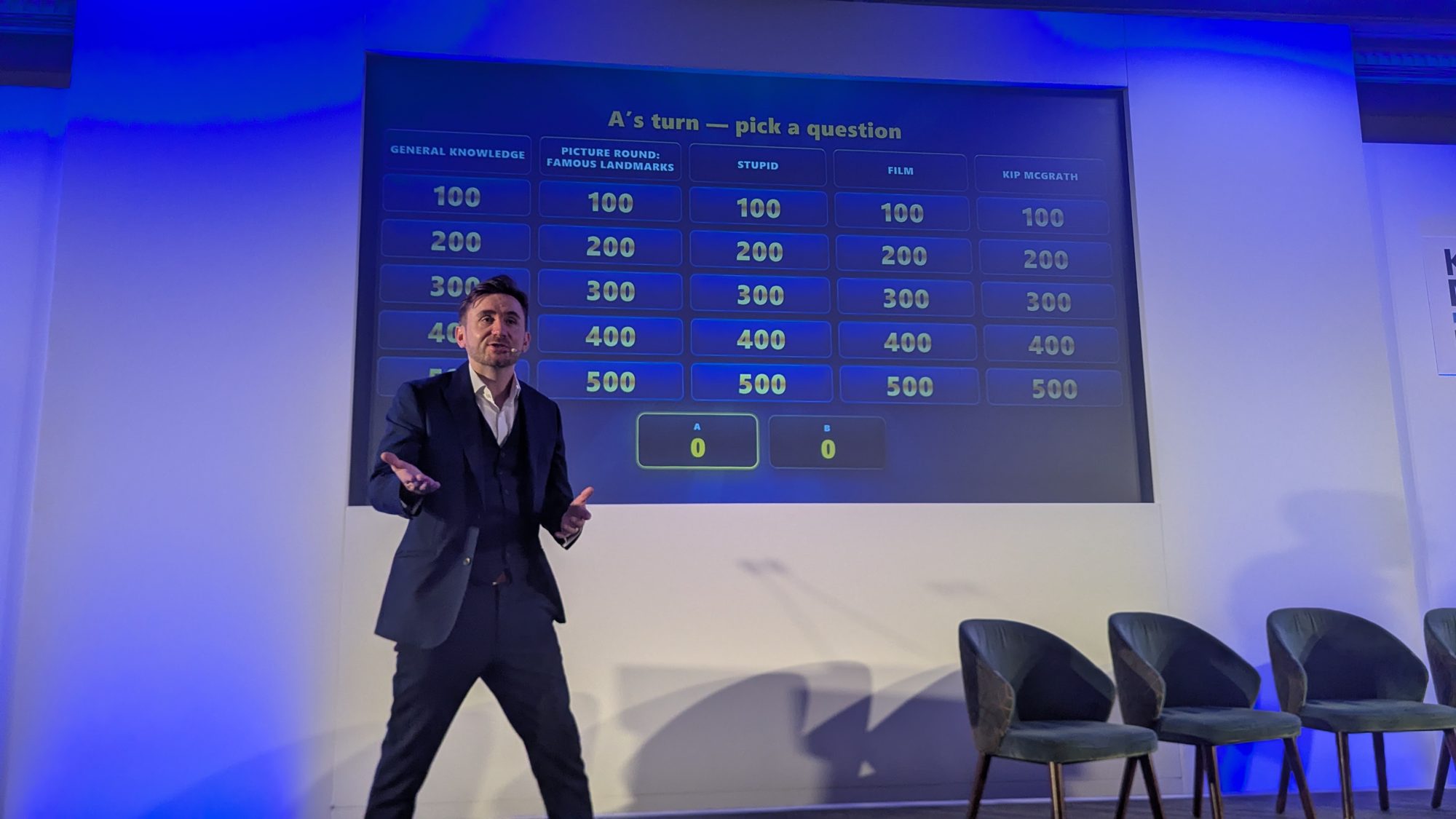
This is the one that scales, because it was designed for a hall, not for twelve people in a training room. Tables become teams, rounds are written about your company, and the whole room plays at once. I run eight whole-room conference games where every delegate plays on their phone, nothing to download, so the same format works for 50 people or 500. Mix departments at each table and the quiz does the cross-team introductions for you.
Eat together, properly
Cornell researchers found that firefighter platoons who ate together more often were rated higher on team performance by their supervisors. A shared lunch where people sit with a different table is a team building activity that almost nobody dreads.
What are good team building activities for small groups?
For groups of 4 to 12, choose activities where everyone has to speak: the role map, fix one problem, and build and explain all work well. Small groups have no hiding place. That is good for participation and bad if one voice takes over.
MIT research on collective intelligence found that groups where one person dominated the conversation did worse across a range of tasks than groups where people took turns. The average and maximum intelligence of individual members did not significantly predict how well the group performed. So design the turn-taking in: go round the table, give everyone a timed slot, or have people write before they talk.
Small groups also suit a “how I work” exchange: three written lines each on how you like to work and receive feedback, read aloud.
What 5 minute team building activities actually work?
Five minutes is a warm-up, not team building. Still worth doing, as long as you call it what it is:
- One win, one block. Each person names one thing that went well this week and one thing in their way.
- Thirty-second thanks. One person thanks a colleague for something specific.
- Quick-fire quiz. Five questions about the team’s own work or industry, played in pairs.
- One-word check-in. A single word for how the week is going. Under two minutes, even with twelve people.
For more short openers, see the team meeting icebreakers and icebreaker games guides.
How do you make corporate team building activities fun without forcing it?
Make it competitive between groups, never at the expense of individuals. Fun at work comes from a good contest, a laugh across a table and a format nobody can fail. Being made to perform is not fun. It is a test.
My rules for any activity:
- Teams are scored, not individuals.
- Every role can be done sitting down.
- Nobody stands up alone unless they volunteer.
- Drinks are optional and never the point.
- It happens in working hours, so the people who have to collect children at 5.30 are still in the room.
The payoff is real. Gallup reports that two in 10 US employees have a best friend at work, and links those friendships to retention, safety and getting more done. You cannot force friendship in an afternoon, but you can stop making it harder. If the group runs into hundreds, the rules shift again; the guide to large group icebreakers covers what changes.
When should you run team building games in the day?
Run the lively, competitive games straight after lunch, and keep the thinking activities for the morning. The energy in a room is a curve, and I have watched it for twenty years: the cold open at 9am, the slump after lunch, the awkward gap before networking.
The slump is not just about food. A review of the post-lunch dip found it can occur even when people have had no lunch, and that a high-carbohydrate lunch makes it worse. So put problem solving and the role map at 10am, and the quiz or marshmallow challenge at around 1:30pm. The guide to conference energisers covers that slot in more detail.
What goes wrong with team building activities?
Almost always the design, rarely the people:
- No purpose. Nobody can say what should change on Monday.
- No debrief. The activity ends, everyone heads off, and the lesson evaporates.
- The spotlight. Someone is asked to perform, role-play or share something personal in front of colleagues.
- The physical test. Running, lifting or crawling quietly excludes people.
- After hours. Evening sessions eat into personal time and shut out carers.
- The runaway table. One group wins everything and the rest switch off. Mix tables and vary the rounds so different people get to shine.
Run it, then debrief it
The debrief is where team building turns into teamwork. The American Psychologist review reports meta-analytic evidence that team debriefs improve performance by an average of 20 to 25%, and the average debrief in that analysis lasted about 18 minutes.
A simple structure:
- What happened? Facts, not blame.
- What helped us?
- What got in the way?
- What is one thing we will do differently, who owns it, and by when?
People rate a debrief higher, the review adds, when they feel able to disagree with the leader, and whoever runs it should not lecture or dominate. That is a hosting job as much as a facilitation one.
If you are planning a team day, a kickoff or an internal conference and want someone to run the room and keep the whole room with you, send the agenda or check availability at hello@conferencehost.uk.
17:00Close
Send me your agenda. I’ll show you where the room comes alive.
A fixed price, a free planning call, and a reply within one working day.