The Best Audience Engagement Tools for Conferences
TL;DR
- Audience engagement tools fall into a few clear categories: live polling, quizzes and game shows, live Q&A, and gamification. Pick by job, not by brand.
- Match the tool to the moment. A poll settles a debate, a game show lifts a flat post-lunch room, and Q&A gives quiet delegates a voice.
- Familiar polling apps like Mentimeter, Slido and Kahoot are easy to run, but a poll on its own rarely holds a hall of hundreds.
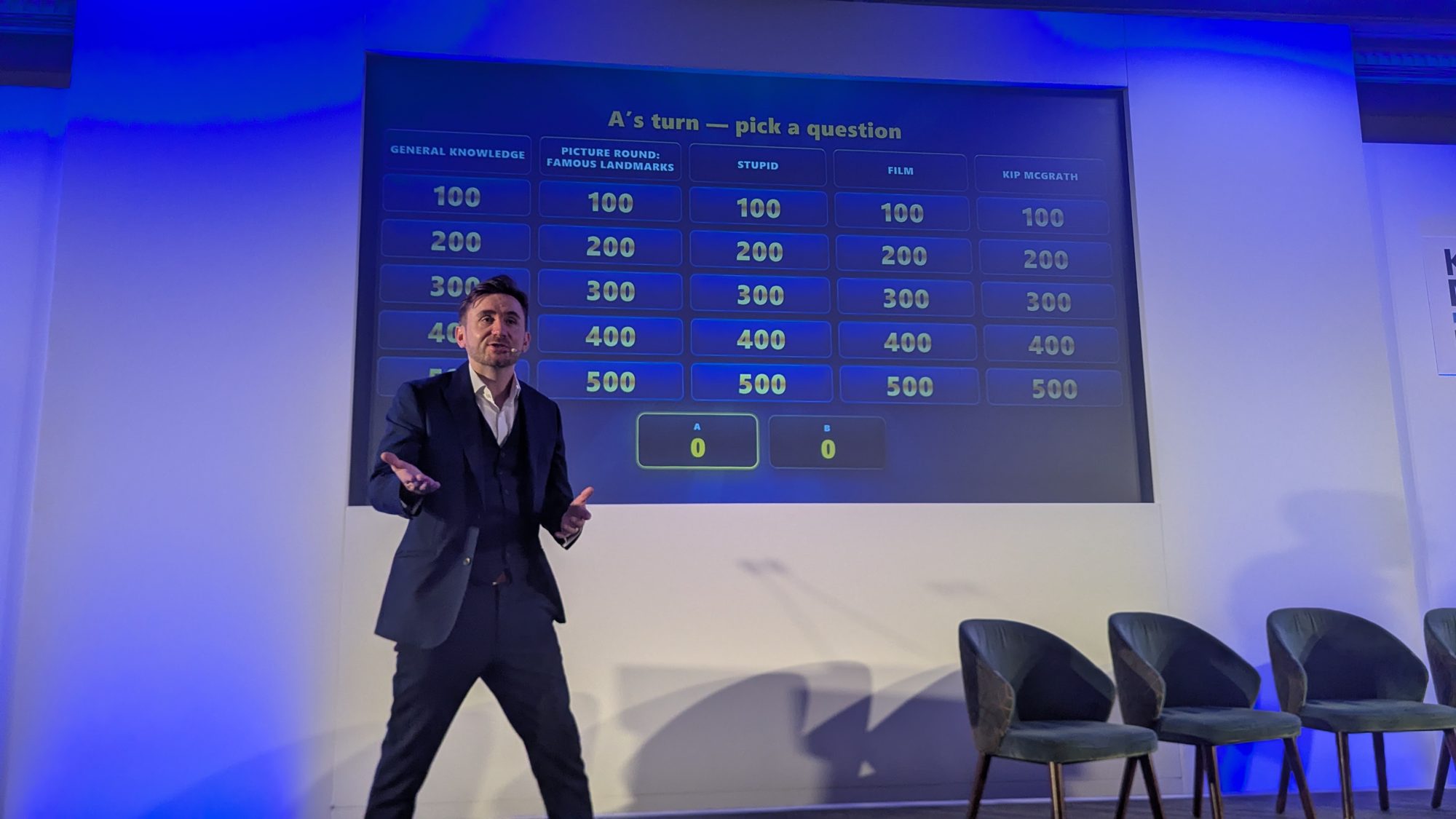
- RoomReader is the host-run option: live Q&A and audience response on every delegate’s phone, run alongside eight whole-room games, nothing to download, and it comes with a booking.
- Choose for the size of your room, not the size of a training group.
Audience engagement tools have multiplied fast, and most organisers now have a shortlist before the agenda is even set. The hard part is not finding engagement tools. It is knowing which category does what, and when each one earns its place in a conference day. I have watched the energy in a room for twenty years, and the tool usually matters less than the moment you choose to use it.
This is a broad roundup of the categories, with real tools named honestly and a simple way to choose. It is deliberately not a deep dive into any single app.
What are audience engagement tools?
Audience engagement tools are the software and formats you use to turn a passive audience into an active one. That means anything that gets delegates voting, answering, asking, competing or reacting in real time, usually on their own phones.
They matter because attention leaks. Bizzabo found the average virtual attendee only watches 68% of a virtual session that runs 20 minutes or longer. A live room is more forgiving, but not by much. Engagement is not a gimmick bolted on at the end. It is how you keep a room with you from the first minute.
The category is broad, so it helps to split it into four working groups: polling, quizzes and games, Q&A, and gamification. Most tools sit mainly in one group, even when they advertise all four.
Which engagement tools fit which moment?
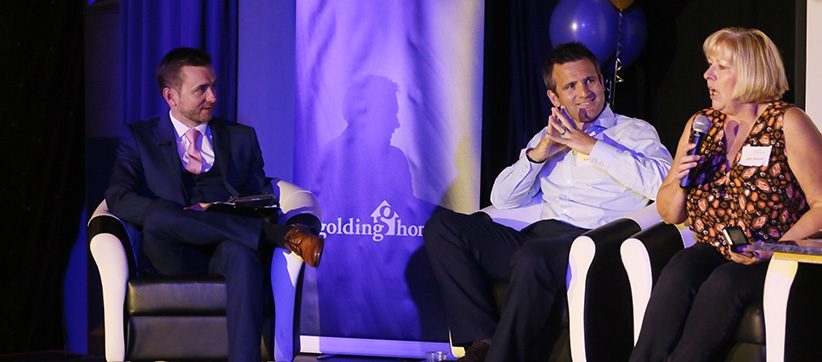
The best engagement tools are the ones matched to a specific point in the day, not the ones with the longest feature list. The energy in a room is a curve, and the dips are predictable: the cold open at 9am, the slump after lunch, and the awkward gap before networking.
Here is the plain version of what each category is for:
| Category | Best moment | What it does well | Watch out for |
|---|---|---|---|
| Live polling | Openers, decision points | Fast read of the room, settles debate | A poll alone rarely holds a big room |
| Quiz and game shows | Post-lunch slump, finale | Lifts energy, gets tables competing | Needs a host to run it with pace |
| Live Q&A | Panels, keynotes, close | Gives quiet delegates a voice | Goes flat without moderation |
| Gamification | Whole-event, networking | Rewards participation over time | Can feel forced if it is childish |
Read that table as a diary of the day, not a menu. You rarely need all four in one session.
Do polling and live voting still work?
Yes, live polling still works, but only when the result changes what happens next. A poll is not a reason to look up from your phone unless the answer is put on the big screen and acted on immediately.
Polling and live voting are the most familiar category, and the tools are genuinely good. Mentimeter and Slido are the names most organisers already know, with word clouds, multiple-choice votes and rating scales that are simple to set up. Kahoot leans more playful, with a quiz-style scoreboard that suits internal teams.
Use polling to open a debate, to check understanding, or to force a decision a room has been avoiding. The failure mode I see most often is a poll added for its own sake. Delegates vote once, nobody discusses the result, and the tool goes quiet. If you are running live polling, the host has to make the numbers mean something out loud.
What do quiz and game show formats add?
Quiz and game show formats add competition and energy that a poll cannot. They turn individuals into teams, and they work hardest at the moments a room is most likely to go flat.
A quiz tool asks questions and keeps score. A game show format does that too, but it is built to be run live by a host, with pace, banter and a big-screen reveal. That difference matters more than any feature comparison. The post-lunch session dies unless something re-energises the room deliberately, and a well-run round of a game does exactly that.
I run eight whole-room game formats that every delegate plays on their phone, nothing to download: Top Answers, Quiz Show, Higher or Lower, What the Blank, Guess the Phrase, Category Clues, Scavenger Hunt and Conveyor Belt. Table plays against table, and the scores go up on the main screen. The point is not the software. It is that the whole room plays as one.
How do you run Q&A in a big room?
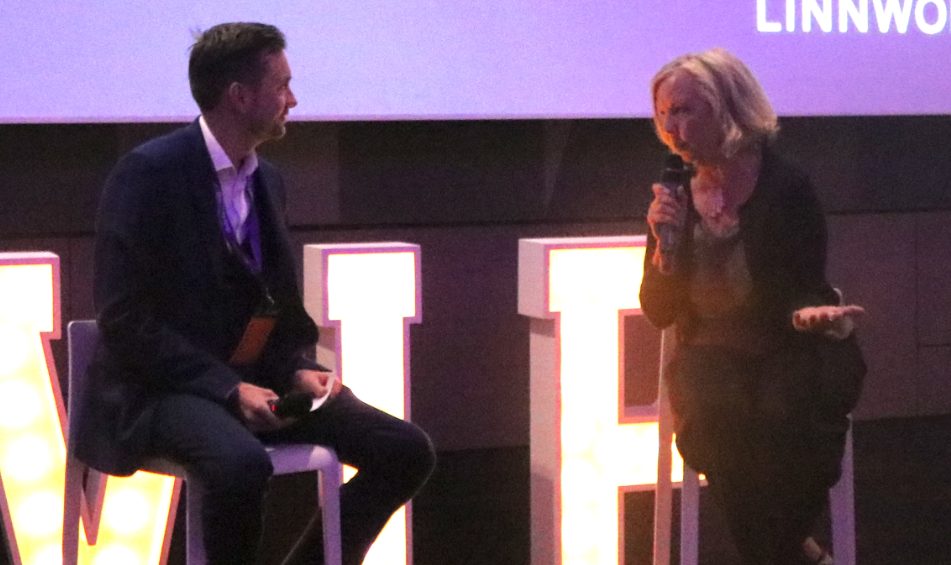
You run Q&A in a big room by taking it off the roving microphone and onto every delegate’s phone, then moderating hard. In a hall of hundreds, hands-up Q&A collapses: the same three confident people speak, and everyone else stays silent.
Digital Q&A fixes the mechanics. Delegates type questions, upvote the ones they want answered, and the moderator pulls the strongest to the front. That gives quieter delegates a voice and stops the session being hijacked. A typed question also carries none of the exposure of standing up with a microphone, which is the real reason more people ask one.
The tools here overlap with polling: Slido is widely used for upvoted Q&A, and most engagement platforms include a Q&A mode. Whatever you pick, the moderation is the job. A queue of unanswered questions on screen is worse than no Q&A at all.
Gamification, icebreakers and interactive games
Gamification is the slow-burn category. Instead of one big moment, it rewards participation across the whole event: points for visiting stands, completing a scavenger hunt, or answering a question of the hour. Done well, it keeps a multi-day conference ticking. Done badly, it feels like a school sports day, which is exactly what a professional audience will not forgive.
Icebreakers sit alongside it. Most icebreakers fail at scale because they were designed for twelve people in a training room, not a hall of hundreds. The fix is a format that lets people take part from their seat, on their phone, with no spotlight on any one person. That is why interactive games on delegates’ own devices beat “turn to your neighbour” every time in a large room.
If you are choosing a gamification tool, ask one question first: does it reward the behaviour you actually want, or just activity for its own sake? Points that nobody redeems are just noise.
The host-run option for whole-room engagement
There is a category most listicles miss: the tool that comes with the person running it. Software you rent still needs someone to drive it, write the questions, read the room and keep the pace. That is usually the missing piece when engagement falls flat.
RoomReader is my answer to that. It is proprietary live Q&A and audience response software that runs in the phone browser with nothing to download, and it is included when you book me to host. Live Q&A and audience response run from it, and the eight game formats run alongside it, all driven by a host rather than left for delegates to find on their own.
I am not selling RoomReader as a standalone app to bolt onto your event. It is how I keep the whole room with you, from the cold open to the close. One booking covers the hosting, the moderation and the engagement, at a fixed price per event with no hidden extras.
Choosing engagement tools: a quick comparison
Choosing between engagement tools comes down to three questions, in this order:
- What is the moment? Name the dip in the day you are solving for before you shortlist anything.
- Who is driving it? A tool with no host behind it needs someone confident on the microphone, or it stalls.
- What is the room size? A format built for twelve will sink in a hall, and a hall format is overkill for a team meeting.
Increasing attendee engagement is the highest priority for the next conference for 19% of organisers, according to Bizzabo’s survey of 1,757 of them. That priority is real, but the answer is rarely a single tool. It is the right category, run well, at the right moment.
If you want polling that a room actually discusses, pick a familiar app and make the results matter. If you want energy after lunch, a game show format run by a host will do more than any poll. And if you would rather book the hosting, the moderation and the engagement as one thing, that is the whole idea behind how I work. Send the agenda and I will tell you exactly where each tool earns its place.

17:00Close
Send me your agenda. I’ll show you where the room comes alive.
A fixed price, a free planning call, and a reply within one working day.