Conference Host or Keynote Speaker: Where Should the Budget Go?
In short
- A keynote buys one talk, usually 45 to 60 minutes. A conference host buys the other seven-odd hours of a nine-to-five day: openings, handovers, timings, questions and recovery.
- If delegates register for a name, put the money into the keynote. If they are coming anyway, put it into the room.
- Speakers Corner suggests 10% to 20% of the event budget for the speaker. A mid-band keynote can use that whole line.
- Most conferences need both. The cheapest mistake to avoid is a keynote with nobody running the day around it.
Conference host vs keynote speaker is a budget question that most organisers answer by default: the keynote gets approved first because it has a name, and the host line is whatever is left. I host whole conference days, so I have a stake in the answer. This page sets out what each one buys, the sums, and where the money does the most work.
What is the difference between a conference host and a keynote speaker?
A keynote speaker gives one main talk that sets the theme, and a conference host runs the day around it. One source puts a keynote on a main stage at 45 to 60 minutes, another at 45 to 90 or more, and says its job is to set the tone. My guide to the keynote speaker covers the slot itself.
The host’s work is everything between talks. A speaker agency’s moderator guide lists keeping speakers to their slots, smoothing technical glitches and fielding questions from the floor.
Take an illustrative day, 9:00 to 17:00. That is 480 minutes. A 45-minute keynote is 9% of it, which leaves 435 minutes, or seven hours and fifteen minutes, with nobody headlining. Somebody has to open that time, link it and end it.
What does each one cost?
Published keynote fees run from a few thousand pounds to six figures. None of these is a fixed rate, so use them as a guide and ask for a written quote.
| Source | What it publishes for a keynote |
|---|---|
| Speakers Corner | £2,000 to £25,000+, in bands, for a local event before travel |
| JLA | Bands from £5k and below, up to over £100k |
| Speaker agency | Most UK corporate conference bookings £3,000 to £10,000, speakers generally |
Host figures are in my conference host cost guide, with what a fixed quote should name.
Here is the arithmetic. Speakers Corner says to allow 10% to 20% of the total event budget for the speaker. On an illustrative £50,000 conference that is £5,000 to £10,000, which is exactly its £5,000 to £10,000 band. One keynote in that band takes the whole line before travel, at roughly £110 to £220 for each of its 45 minutes. The page does not say whether a host belongs inside the same line, so decide that on purpose.
When should the budget go to the keynote speaker?
Spend on the keynote when the name is the reason people register: a ticketed public conference, a sponsor-led show, a launch where the headliner sells seats. Then the keynote is marketing as well as content, and a cheaper one risks empty chairs.
Check that first, because attendees may not want what you assume. Freeman’s 2024 report, based on nearly 2,100 people who had attended business events (fieldwork November 2023), asked about the speakers and topics they most preferred. Innovation led at 39%, industry leaders and experts followed at 34%, inspirational speakers had 14%, and only 1% most preferred celebrity speakers. A smaller May 2025 survey of 69 event professionals found more than half rated big-name keynotes important or higher.
So the keynote earns its fee through the topic and the expert, and fame only matters when it sells tickets. None of that argues against keynote speakers. It argues for knowing why yours is booked.
When does a host earn more than a keynote?
A host earns more when delegates are coming anyway and the risk is in the running of the day: several speakers, a panel, open questions, a hard finish. A keynote speaker is in the building for their slot. The host is there for all of it.
Three jobs a keynote cannot do:
- Cover the dips. Monk’s 2005 review found the post-lunch dip is a real phenomenon that can occur even with no lunch, and a later study places it at 14:00 to 16:00. In my experience the weak points of a day are the 9am cold open, the slump around 1:30pm and the gap before networking. A host plans something for each. The guide to holding attention goes through them.
- Protect the clock. Plan a break at least every two and a half to three hours, with a full hour for lunch and about 15 minutes in the morning. The break length guide has the day plan.
- Absorb what goes wrong. AV failure and a venue short of staff are the most common problems at conferences I host, more than a speaker who misses a walk-on. A host can go with the flow, hold the room and buy the team time.
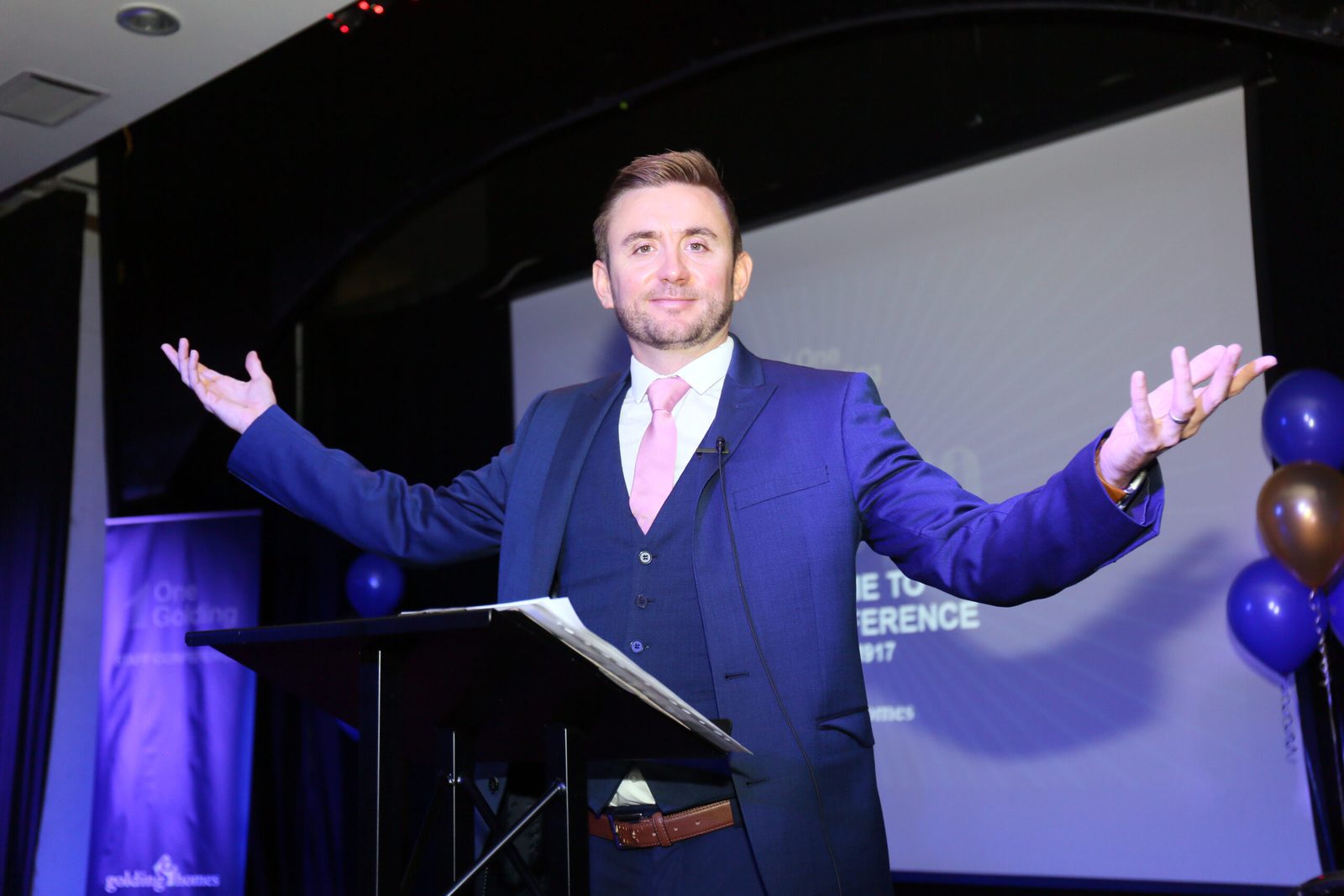
Between speakers, I thank the one who has finished, shake their hand and show them off the stage, then introduce the next. It takes about 60 seconds and nobody notices when it is done well. A housing association conference client said: “Kevin has just facilitated our entire conference today and I must say, his energy, the structure behind it, his natural enthusiasm has just kept the whole thing rolling along.” It is on the reviews page.
Where to spend first, by event type
Pay first for whichever the event cannot run without. The table gives a starting rule, not a verdict, and assumes a day of more than a few speakers.
| Event | Why people come | Spend first on |
|---|---|---|
| Ticketed public conference | The headline name | The keynote, then a host to introduce and link it |
| Staff conference | Company news and each other | A host, with a senior leader as the keynote |
| Association or sector conference | Learning, contacts, CPD | A host for panels and Q&A, then a topic expert |
| Sales kickoff | Targets and morale | A host, with an internal leader and a guest speaker |
For a short internal session an in-house colleague can be enough: the in-house or professional guide sets out where the line is.
Booking a host and a keynote speaker without doubling the cost
Book both by giving each a separate job, so you never pay twice for the same minutes. A host introduces the keynote, interviews them afterwards if you want a conversation, takes the questions and moves the day on, so the speaker only has to deliver the talk.
Three ways to keep the total sensible:
- Fix the keynote’s slot first, then give the host the hours either side.
- Ask the speaker to stay for Q&A, and let the host chair it.
- Where the name is only a draw for part of the day, book the speaker for that slot and not the whole programme.
If the keynote speaker is also asked to host, check who watches the clock when they are the one overrunning. TEDx limits talks to under 18 minutes. A 45-minute slot is a long time for anyone to be both the speaker and the timekeeper.
When is it worth bringing in a professional host?
Bring one in once the day has several outside speakers, a panel, live questions or a hall of delegates who do not know each other. It also suits a room of about 30 people or more: below that, it feels more like a big round-table meeting.
I like to have the agenda and speaker list about a week ahead, though it is the ideal and not a rule. If you are choosing between candidates, how to hire lists what to ask.
What to have ready when you enquire
Send the date, the venue, the number of delegates and the agenda, even a rough one. Add the keynote speaker’s slot and length, and what went wrong at the last conference.
My quote is one fixed price per event, with RoomReader, my live Q&A software, included when I host. To check availability or send the agenda, email hello@conferencehost.uk or call 07596 851647. More about my work as a conference host is on the homepage.



17:00Close
Send me your agenda. I’ll show you where the room comes alive.
A fixed price, a free planning call, and a reply within one working day.