In-House Host or Professional Conference Host: How to Decide
TL;DR
- An in-house conference host is a colleague who runs the day alongside their job. A professional conference host is booked from outside, and the room is the only thing they are there for.
- Use an in-house host when the day is short and informal, few people speak, nobody senior needs managing and nothing has to be produced live.
- Book a professional when there are many speakers, an open Q&A, a hybrid audience or a chief executive who must finish on time. The host’s job is the room, not the content.
- Price your own overrun to make the case: delegates, times minutes lost, times pay per hour. 400 people losing 50 minutes is about £6,900 of paid time.
In-house host or professional conference host? An internal communications lead has to answer that once the date is fixed. If last year’s host was the managing director and the day ran late, you are the reader I had in mind. Here is when a colleague is enough, when an outsider earns the fee, and how to put the case to whoever holds the budget.
What is the difference between an in-house host and a professional conference host?
An in-house host knows your organisation and is paid to do something else. A professional conference host knows how to run a room and is paid to do only that. Neither is better in general: the difference is what each can see from the stage, and what each has at stake.
Fresh Tracks, a team-building company, set the choice out in September 2024 as a familiar face against a professional. A colleague, it says, is free only in theory: the job pulls them from their day jobs, and internal politics travels with the person. An outsider can ask any question and challenge institutional thinking.
When is an in-house host the right call?
An in-house host is the right call when the day is short and informal, only a few people speak, nobody senior is on the running order and nothing needs producing live. In that case your colleague’s knowledge of the people matters more than stage craft, and the stakes are low enough to learn on.
A US agency that sells professional emcees still says low-key internal gatherings suit a confident colleague.
If you go in-house, choose rather than accept. A 1996 telephone survey of 499 people in Winnipeg found that one third reported excessive anxiety when speaking to a large audience. A hand going up tells you about confidence, not skill. Pick someone with no stake in the content, give them the run of show and a real rehearsal, and decide who is hosting early.
When is it worth bringing in a professional conference host?
It is worth hiring a professional conference host when the day has any of five things: many speakers, a senior person who must finish on time, an open Q&A, a remote audience, or someone on stage with a stake in the content. Each adds a job that has nothing to do with the content, and running the room is the host’s whole job.
| What the day has | What tends to go wrong with a colleague | What a professional changes |
|---|---|---|
| Many speakers | Handovers are improvised, so every link costs minutes | One person owns the clock and the transitions |
| A senior person who must finish on time | Nobody in the room outranks them, so nobody stops them | The stop is agreed beforehand and carried out |
| An open Q&A | Nobody reads the feed, or the host picks the questions they like | A neutral person reads and orders the questions |
| Remote or hybrid delegates | The room gets the microphone, online gets a chat box | One host watches both audiences |
| A speaker with a stake in the content | They cannot stay neutral | An outsider has nothing to defend |
Fresh Tracks makes the seniority point directly: a professional is not intimidated by executives, which helps when the CEO needs to shorten a presentation.
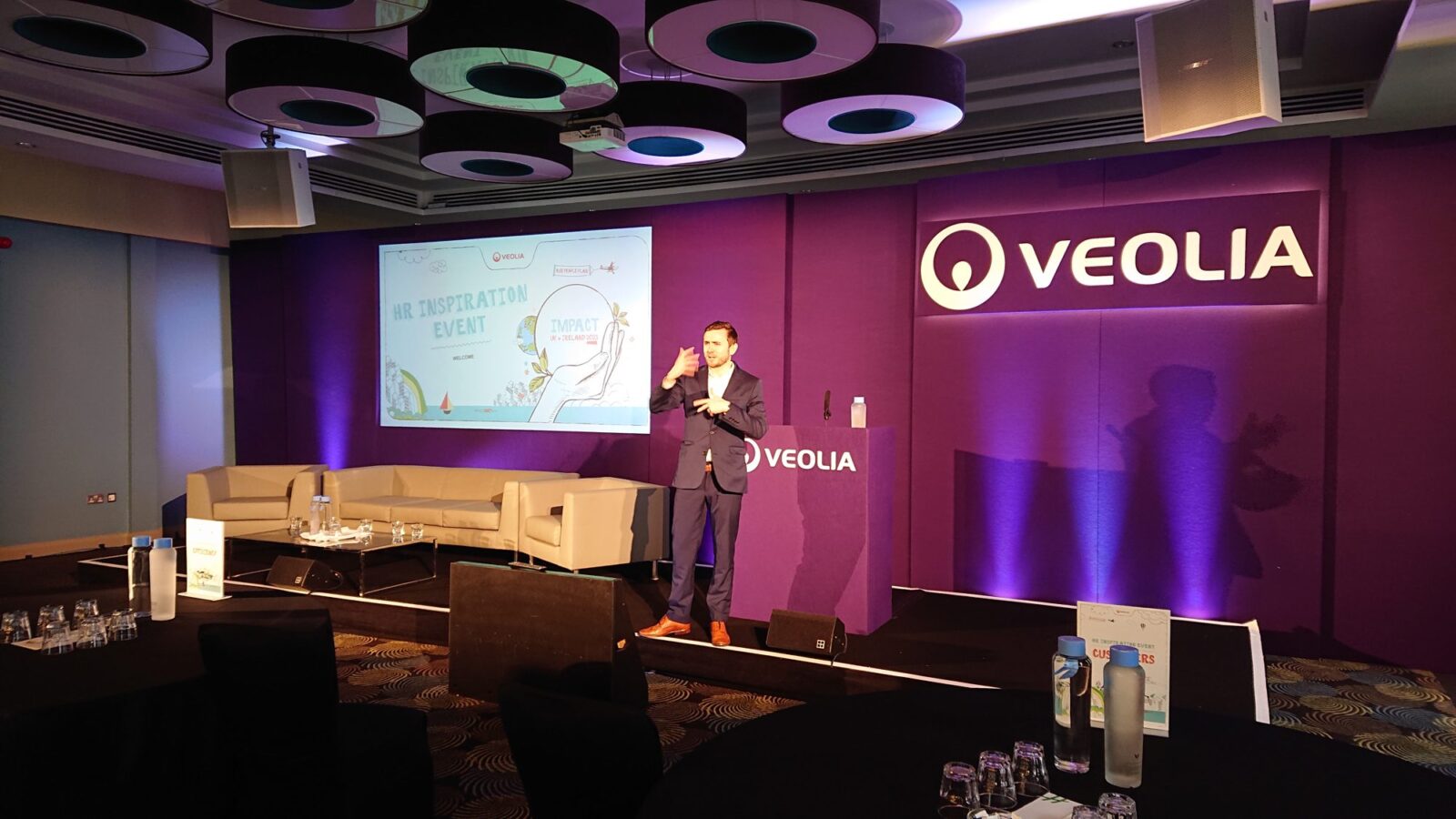
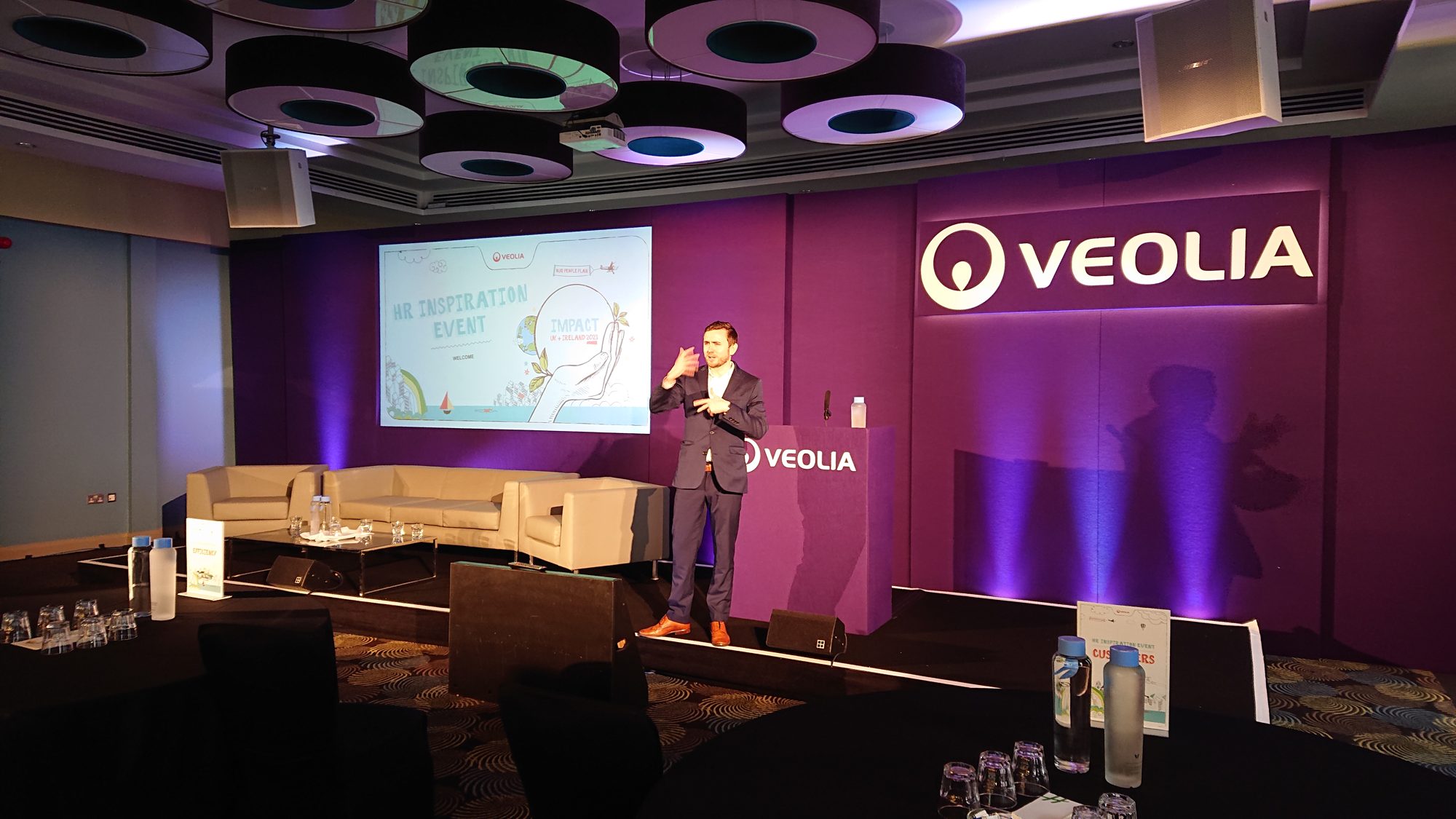
I am broadcast-trained and have hosted 800+ events, and the part of the job nobody sees from the seats is watching the energy of the room as a curve: the cold open, the slump after lunch, the gap before networking. A colleague with a day job and a script is watching the script. My job is to keep the whole room with you.
Golding Homes said this after their staff conference: “Kevin hosted our staff conference event this year which was fantastic. He brought an energy and enthusiasm with him and played a really important part in getting people engaged in the day.” That is Golding Homes (staff conference) on my reviews page. Kind words, but the engagement was theirs.
Delays are the part nobody can rehearse. An organiser of a full-day educational event wrote: “Some of the speakers were late, there was a video problem, there were all sorts of complications and we got delayed by an hour and a half.” Those gaps are where a host earns the fee.
Why shouldn’t the managing director host their own conference?
A managing director should not host their own conference because a host has to stay neutral and a managing director cannot. The host serves the room. The director has a stake in every answer, and nobody present can tell them to stop.
Roger Schwarz, author of The Skilled Facilitator, writes that facilitators are content-neutral by definition, and that mixing it with a content role forces a choice between withholding information the group needs and sharing it in a way that erodes trust. Penny Walker, a professional facilitator, goes further: if strong opinions put your neutrality at risk, you should decline the job. One founder who ran his own company’s offsites wrote in April 2025 that he could not run and join a strategy meeting at once.
The second problem is plainer: a junior colleague cannot cut a director’s talk, and a director rarely cuts their own. The mechanics of taking a room back are in the guide to speaker overruns, but they start with someone allowed to use them.
The managing director’s job instead
Let the managing director open the day, give the update and close it, and let someone else hold the middle. My view is that a director is most useful as a speaker and a delegate, not a timekeeper. They keep the voice of the organisation, and the host holds the clock. A US events vendor recommends this split for mixed audiences, with an internal leader opening and closing while a professional runs the main stage.
Agree two things with them before the day: the hard stop, and where lost minutes come from if they run long. That conversation is the real work of the briefing call. If your Q&A is live, a neutral person should moderate it: Microsoft’s Teams documents show how moderation lets organisers review questions before they appear.
What does an overrun actually cost?
An overrun costs every delegate’s time multiplied by the minutes lost. The Office for National Statistics, in its release of 22 October 2026, puts median full-time hourly pay at £20.81 in April 2026, excluding overtime.
The arithmetic for an illustrative 400-person day that finishes 50 minutes late:
- 400 delegates times 50 minutes is 20,000 minutes.
- 20,000 divided by 60 is about 333 hours.
- 333 hours times £20.81 is about £6,900 of paid time.
That is wages only, before employer costs, and senior delegates earn more. It also ignores what the lost minutes displaced: shortened breaks, a rushed closing session, sponsors who got less time. Use your own overrun and your own delegate numbers. This is an illustration, not a finding about any real event.
How to make the case for the budget
Make the case by pricing the overrun, listing the live jobs on the day and asking for one fixed written quote to set against both.
- Write down last year’s overrun in minutes and what it displaced.
- Multiply by delegates and an hourly pay figure, as above.
- List the live jobs: speakers, Q&A, hybrid feed, any evening, and who holds the clock.
- Ask for a fixed price in writing covering the planning call, preparation, rehearsal and travel. The guide to conference host fees lists what to check.
- Agree with the managing director, before you book, what the host may cut.
When you get in touch, have the date, the room size, the running order and what went wrong last time. The wider question is which role you need.
Booking a professional conference host
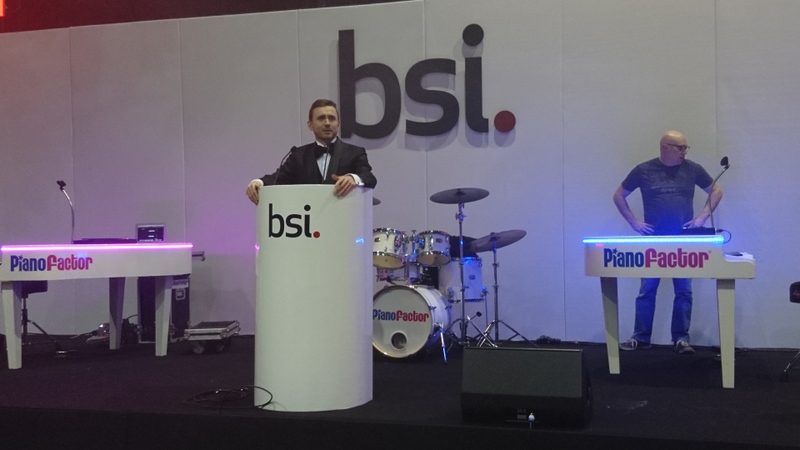
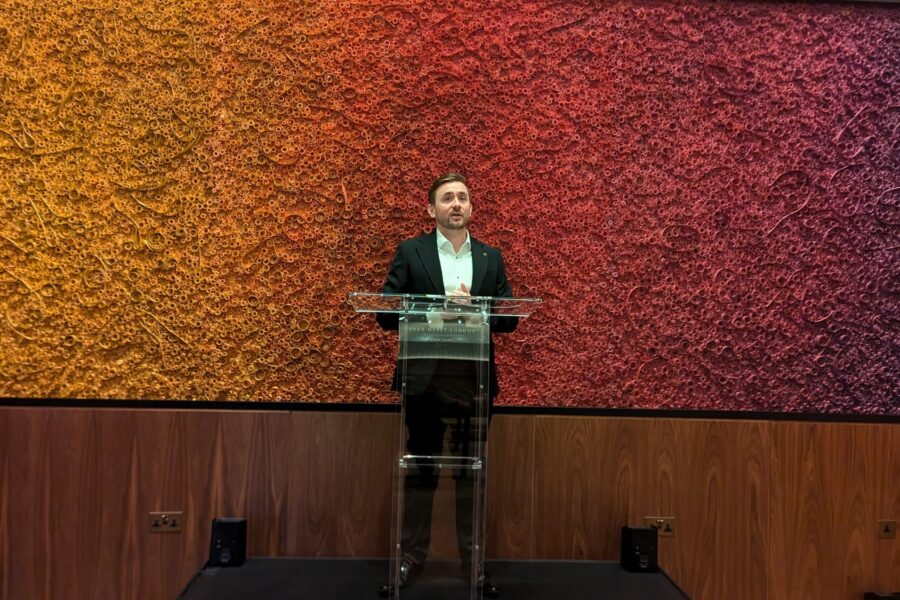
I host, MC and facilitate staff conferences across the UK, in person and hybrid. My live Q&A software, RoomReader, is included with hosting, and the price I quote is the price you pay. If you want the facilitation side, my conference facilitator page sets it out.
Check availability or send the agenda to hello@conferencehost.uk, or call 07596 851647. Tell me what went wrong last time and I will tell you where I would change it.

17:00Close
Send me your agenda. I’ll show you where the room comes alive.
A fixed price, a free planning call, and a reply within one working day.