Host for a Charity Conference: What Changes When the Room Is Supporters
In short
- A host for a charity conference runs the day for a room of supporters, volunteers, members and sometimes beneficiaries, who came because they care, not because they were told to.
- Thank volunteers by team and by impact, in one planned slot, and take individual thanks out of the speeches.
- Brief lived-experience speakers early, in plain language, agree what support they get, and never ask them to carry the room’s emotion alone.
- Any ask must be planned, clear about where the money goes and free of undue pressure, as the Fundraising Regulator’s code requires.
- Do it yourself under about 30 people with a steady chair. Bring in a host when the room is bigger, the programme is tight or an ask sits inside the day.
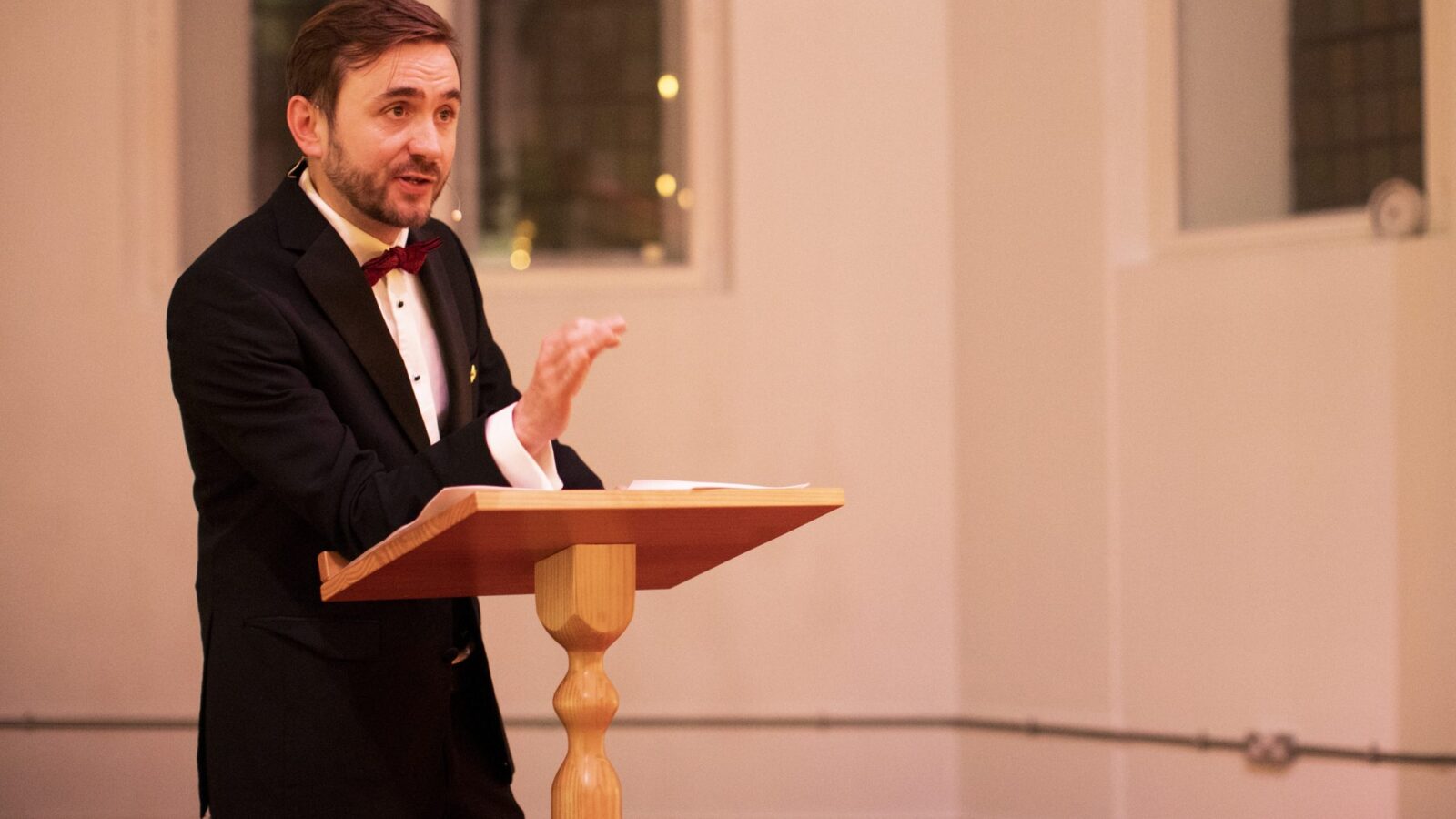
A host for a charity conference is the person who runs the stage and the clock at a supporter, volunteer or member event, so the trustees and staff can be in the room instead of managing it. I am Kevin Durham, and I host conferences and, separately, run charity auctions. I have worked charity conferences, most recently for the Charity Finance Group, a membership organisation for charity finance professionals.
The room is different from a corporate one. Nobody is paid to be here. Supporters give a day, volunteers give many, and someone on the programme may be telling the story of their own illness. This is what a host changes in that room.
What does a host for a charity conference do differently?
A host at a supporter conference protects goodwill. Staff conferences are won on energy and agenda. A supporter room already has the energy; what it needs is to feel respected, thanked sensibly and never cornered.
The Fundraising Regulator’s code says charity fundraising should be legal, open, honest and respectful, and it applies to anything done on a charity’s behalf, by staff or volunteers. A host keeps that in mind on stage, even when nobody is “fundraising”.
Nicola Briscoe of the Electrical Industries Charity said of my hosting: “He’s really professional, engaged the room and took control where we needed it.” The reviews page has the full quote.
Taking control is not the same as taking over. In a charity room the chair, the trustees and the beneficiaries are the story. The host holds the clock and the order, and keeps the opening short, as in conference opening remarks.
How do you thank volunteers without the speeches dragging?
You thank volunteers in one planned slot, by team, with a specific line about what they achieved, and you move individual thanks to a card or a conversation. NCVO’s advice is to tailor thanks to the person, since some like public recognition and others prefer a private note.
NCVO also warns against singling people out in ways that create winners and losers, and suggests thanking whole teams. That is also the cure for a forty-name list read from the stage.
Why it matters: NCVO’s Time Well Spent 2023 survey found 76% of satisfied volunteers likely to keep volunteering over the next 12 months, against 25% of dissatisfied ones. Thanks are not the only cause, but they are part of how people feel.
A workable shape for the slot:
- Name each team and say what it did, in one sentence each.
- Give one figure or one beneficiary line that shows the difference they made.
- Ask the room to applaud once, at the end, not after every name.
I use the same economy between sessions: in the 60 seconds between speakers I thank the speaker, show them off the stage and introduce the next. For a closing thank-you, the structure in vote of thanks fits.
How should a host handle lived-experience speakers?
A host should treat a speaker with lived experience as a contributor, not as an exhibit. Agree the brief early, put it in plain language, ask what adjustments they need, and do not script their message. The advice below is general guidance from the sources, not my own claim.
In Control’s practical guide, based on interviews with 38 people with lived experience and 16 organisers between May and July 2024, covers health and social care events, but the principles travel. It says to give a clear, jargon-free brief, ask upfront about adjustments, avoid trying to control the message, share the payment and expenses policy in advance, and debrief and say thanks afterwards.
What the host adds on the day:
- The introduction. Agree the words with the speaker beforehand. They decide what is said about them, not the programme.
- The mic. If there are questions afterwards, I hold the microphone. As long as I have not handed it over, I keep control, and the speaker is never left to manage a questioner alone.
- The filter. Before the day I gauge, with the client, which questions can go through and which must be stopped. Pre-moderated phone questions in RoomReader, my live Q&A software, let the organiser approve, hold or drop each one before it reaches the screen.
- The room afterwards. Do not follow an emotional story with a loud game. Give the room a breath.
Can you ask for donations at a supporter conference?
Yes, if the ask is planned, honest about where the money goes and free of pressure. The Fundraising Regulator’s behaviour rule 1.1.2 requires reasonable steps to avoid putting undue pressure on a person to donate.
The code’s events section adds two rules that matter on the day. Rule 10.1.3 says to have a plan covering the situations you could reasonably expect. Rule 10.2.1 says to be clear how the money raised will be used. Trustees are responsible for managing and controlling their charity’s fundraising, and the Charity Commission’s CC20 guidance explains what the law requires of them.
Where an ask sits inside a conference, this is what my charity auctioneer work has taught me about running it:
- The pledge runs straight after the auction, not as an afterthought.
- A short appeal video helps, but three to four minutes is the limit. Past five, the ask feels heavy.
- One volunteer for every 10 to 15 guests, so every raised hand is captured and paid quickly.
- Take payment on the night. Most pledges are paid then, and the high drop-out I have seen came when too few terminals and volunteers were in the room.
- Gift Aid needs a declaration from the donor, so collect it at the point of pledge.
Payments go to the charity’s own account. I never take the money myself and pass it on. My charity auction dinner page and my charity auctioneer site, The Charity Auctioneer, cover the evening version.
A charity conference day, hour by hour
A charity conference day should put the mission first, the formal business second and the ask last, with real breaks between. The shape below is an illustration, not a past event.
| Time | Item | Host’s job |
|---|---|---|
| 09:30 | Welcome and the charity’s year | One strong opening, hand to the chair |
| 10:15 | Lived-experience session | Introduce as agreed, hold the mic |
| 11:15 | Break (about 15 minutes) | Keep it to time |
| 11:30 | Members’ business or workshops | Clock, handovers, questions |
| 13:00 | Lunch (a full hour) | Bring them back on time |
| 14:00 | Afternoon session | Re-energise the room on purpose |
| 15:30 | Thanks, then any ask | One planned slot, then the close |
Plan a break at least every two and a half to three hours. If the day includes an AGM, the guide to running an AGM covers it, and CC48 says the chair should leave time for members’ questions.
When is it worth hiring a host for a charity conference?
Hire a host when the room is above about 30 people, the programme is tight, or an ask sits inside the day. Below 30 it feels more like a big round-table meeting, and a steady chair, a trustee or a staff member with a run sheet can do the job well.
A professional earns their place when something goes wrong. AV failure and venue under-staffing are the most common conference problems I meet, and someone has to keep the room moving while they are fixed. A host also frees your team to welcome supporters instead of watching the clock.
What to have ready when you get in touch
Have these ready: the date, the room size, the agenda, who speaks, whether there is an ask, and what went wrong last time. Ideally I would have the details about a week before. The quote is a fixed price per event with no hidden extras.
Call 07596 851647 or send the agenda to hello@conferencehost.uk to check availability, and see how I work as a conference host.

17:00Close
Send me your agenda. I’ll show you where the room comes alive.
A fixed price, a free planning call, and a reply within one working day.