Annual General Meeting: How to Run an AGM People Stay Awake For
TL;DR
- An annual general meeting is the yearly meeting where members or shareholders hear how the organisation did, approve formal business and question the people in charge.
- As of October 2026, public companies must hold one; private companies only if their articles say so; charities should check their governing document. Always read your own constitution.
- Put the formal business early, cap the speeches, and give questions a fixed, protected slot.
- Votes follow the method your rules set. A phone poll can read the room, but it does not replace the formal count.
Most people arrive at an annual general meeting expecting to be bored, and most AGMs oblige. The formal business is fixed, but the running order, the pace and the questions are yours to design. This guide covers the legal basics in brief, then the part most guides skip: how to run the room.
One caveat first: this is general information, not legal advice. The rules depend on what kind of organisation you are, and your own articles, rules or governing document always come first.
What is an annual general meeting?
An annual general meeting (AGM) is a once-a-year meeting of an organisation’s members or shareholders. It is where the board reports on the year, the accounts are presented, officers are elected or re-elected, and members get their chance to ask questions.
The Charity Commission’s meetings guidance sums up the charity version well: an update on performance, the accounts and trustees’ report, any other business such as appointing trustees, and the moment members can ask how the charity is being run. Company AGMs follow the same shape with shareholders in place of members.
Who has to hold an AGM: the rules as of October 2026
It depends on what you are. Here is the position in brief:
| Organisation | AGM required? | Where the rule sits |
|---|---|---|
| Public company | Yes, within six months of the accounting reference date | Section 336, Companies Act 2006 |
| Private company that is a traded company | Yes, within nine months | Section 336(1A) |
| Other private company | No, unless the articles require one | Explanatory note to section 336 |
| Charity | Check the governing document; membership charities usually hold one | Charity Commission CC48 |
| Co-operative or society | Depends on its rules and legal form | Co-operatives UK |
A public company must give at least 21 days’ notice of its AGM. Where a charity’s governing document says nothing on notice, the Commission suggests reasonable notice, such as a minimum of three weeks. Co-operatives UK calls it good practice to hold an AGM even where the law lets a co-op skip it.
Check the current Companies House and Charity Commission guidance, and your own constitution, before you set a date. If anything is unclear, ask your company secretary or a solicitor.
What goes on an AGM agenda?
A standard AGM agenda runs: welcome and apologies, minutes of the last AGM, the annual report, the accounts, elections, any resolutions, members’ questions, and close. Your rules may add items, so start from them.
Here is a 75-minute running order, built around the energy in the room:
| Time | Item | Notes |
|---|---|---|
| 0:00 | Welcome, quorum, apologies | Chair confirms the meeting is quorate |
| 0:05 | Minutes of the last AGM | Approve, do not re-debate |
| 0:10 | Chair’s or chief executive’s report | Ten minutes, hard stop |
| 0:20 | Accounts | Treasurer or finance director, eight minutes |
| 0:28 | Elections and resolutions | Each voted on separately |
| 0:45 | Members’ questions | Protected 20 minutes |
| 1:05 | Guest speaker or highlight | Optional, after the business |
| 1:12 | Results and close | Thank people, say what happens next |
Share the agenda in advance: CC48 says you should, and suggests a standing item for declaring conflicts of interest. If you already use a run of show, the same format works here with one extra column for who speaks.
How do you run an AGM people stay awake for?
You treat it as an event with a formal core, not a formality with an audience. That means short reports, a chair who knows the script, and someone keeping the room moving between items.
Two roles get confused here.
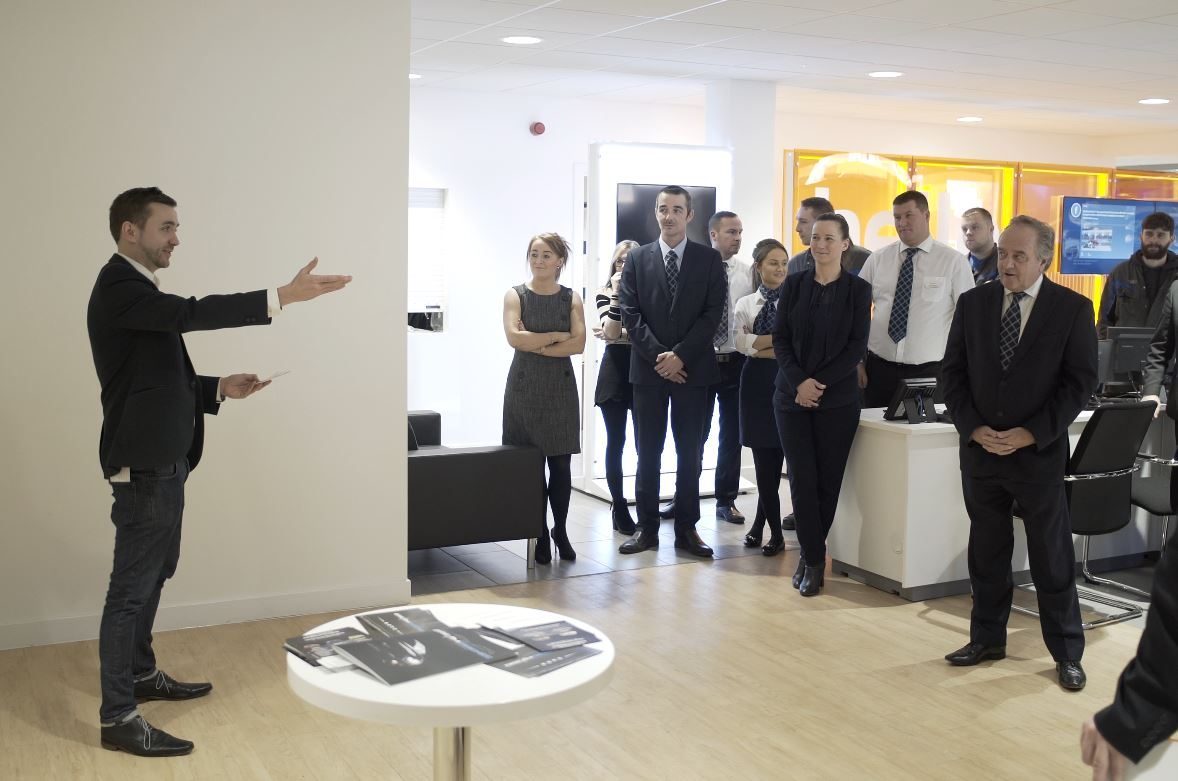
The chair runs the formal business: quorum, motions, votes, rulings. A host can sit alongside, doing the welcome, the housekeeping, the handovers and the clock. Company secretaries typically prepare a chair’s script with opening and closing statements, and that script should be rehearsed out loud at least once.
A few rules that keep the whole room with you:
- Business first. Do the votes while people are fresh. Save the guest speaker or the good-news story for the end, so people stay for it.
- Mind the clock. Attention drops at predictable times. Avoid a 2pm slot if you can: the post-lunch dip is real and can hit even people who skipped lunch.
- Cut the reading. Highlight three numbers from the accounts and point to the papers for the rest.
- Open warmly. The first two minutes set the tone, exactly as they do at a conference. The guide to opening a conference applies almost word for word.
How should you handle members’ questions?
Give questions a fixed slot, collect some in advance, and agree beforehand who answers what. The AGM is the members’ chance to hold the board to account, so the Q&A is the part people came for, even if they will not say so.
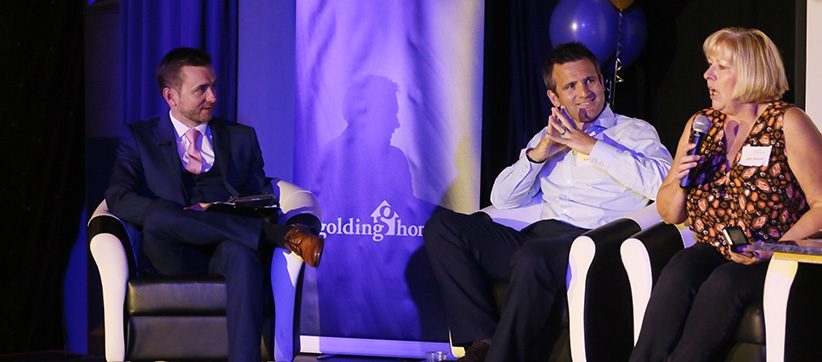
The Elemental guide suggests deciding in advance which questions cannot be answered in the room (commercial, legal or personal reasons) and having a polite line ready for them. CC48 adds that the chair should make sure one person or group does not dominate.
Live Q&A on phones helps here. In RoomReader, the live Q&A software I built and bring to every conference I host, members join by QR code or a six-digit code with nothing to download, ask in their own name or anonymously if the organiser allows it, and back the questions they want answered. Every question lands in a moderation queue first, so the chair sees the room’s priorities before anything reaches the screen.
Why bother? Members do have questions. Standing up alone in front of the board to ask an awkward one is what keeps hands down.
How does voting work at a general meeting?
Votes follow your articles or governing document. For companies, an ordinary resolution passes by a simple majority and a special resolution needs at least 75%, and the notice must say it is a special resolution.
Votes are usually taken on a show of hands or a poll. Articles cannot take away the right to demand a poll (except on electing the chair or adjourning), or block a demand from five or more voting members or members with at least 10% of the voting rights. For listed companies, Elemental describes voting on every resolution by poll as best practice. Charities should check their governing document for proxy, postal and electronic votes, CC48 says.
Where does a phone poll fit? RoomReader runs multiple-choice polls, word clouds and ratings on the big screen, and those are ideal for a “sense of the meeting” question or feedback on next year’s plans. Formal resolutions go through the counted method your rules set, with proxies included. Keep the two clearly separate in the script so nobody mistakes one for the other.
Can an annual general meeting be held online?
For companies, generally yes. Section 360A says nothing in that part of the Act prevents a meeting where members attend, speak and vote electronically, although your articles still matter. For charities, CC48 says you should amend your governing document so it specifically allows virtual or hybrid meetings.
Hybrid AGMs bring their own problems. Remote members need to see the slides, hear every question, and join the Q&A and any electronic vote on equal terms. Brief whoever runs the stream on the voting process before the day. The guide to hybrid engagement covers keeping both audiences involved.
Keeping the annual general meeting to time
Overrunning is the quickest way to lose the room before the questions. Agree speaking times with every presenter in writing, and give the chair a visible clock.
Then plan for each pressure point. If questions overrun, the chair offers written answers within a set number of days. If a vote is contested, move to the next item while the count happens and announce the result before close. If a member wants to reopen last year’s minutes, the chair notes the point and moves on.
This is the job I take off the chair’s plate as host and moderator: I carry the clock and the handovers, so the chair can concentrate on the business.
After the meeting
Minutes are the written legal record of what happened, CC48 notes, and they do not need to be word for word. Record decisions, vote results and actions. Send members a short summary within a week, with answers to any questions you promised to follow up.
If you are planning an AGM, a members’ meeting or a conference with a formal session in the middle, send the agenda or check availability at hello@conferencehost.uk.



17:00Close
Send me your agenda. I’ll show you where the room comes alive.
A fixed price, a free planning call, and a reply within one working day.