Team Away Day Ideas: How to Plan a Day People Look Forward To
TL;DR
- Decide what the day is for before you pick a single activity. One main job per day: strategy, reconnection, a fix, or a thank-you.
- Thinking in the morning, something lively straight after lunch, decisions before people start watching the clock.
- Choose the venue on light, space, temperature and food, not on how it looks in the brochure.
- Keep it inside working hours, ask people what they want, and never make anyone perform.
- Leave with owners and dates, or the day was just a nice day out.
Most lists of team away day ideas are really lists of activities: an escape room, a cookery class, a treasure hunt. The activity is the smallest decision you will make. What people remember is the shape of the day: why they were there, whether the morning felt worth the travel, and whether anything changed afterwards.
That matters more now that many teams rarely share a room. In autumn 2024, 28% of working adults in Great Britain were hybrid working, according to the ONS. For a lot of teams, the away day is one of the few days everyone is in the same place.
What is a team away day for?
A team away day is for one main job that you cannot do properly on a normal working day. Name it before you book anything. If you cannot say it in a sentence, the day will drift.
People need that reason. In Microsoft’s 2022 Work Trend Index, a survey of 20,000 people in 11 countries, 73% of employees said they needed a better reason to go into the office than company expectations. The same survey found 85% would be motivated by rebuilding team bonds. A day away has to offer at least that much.
Most away days fall into one of four jobs:
- Set direction. Agree next year’s priorities.
- Reconnect. The team has grown, merged or gone remote, and half of it has only met on a screen.
- Fix something. A process, a handover, a recurring row.
- Say thank you. The day is the reward.
You can mix two. Trying to do all four in six hours is how you end up doing none of them.
Corporate away day ideas by purpose
Once you know the job, the shape of the day follows. This is how I would build each one.
| Purpose | Morning | Afternoon | Avoid |
|---|---|---|---|
| Set direction | Pre-read, then two priority sessions | Turn priorities into owners and dates | A two-hour slide deck from the boss |
| Reconnect | Short work sessions in mixed groups | A whole-team game, then a long lunch | Personal sharing in front of the room |
| Fix something | Map the problem as it really is | Agree one fix and who owns it | Letting it become a moan |
| Say thank you | A short look back at the year | Something the team picked | Sneaking in a strategy session |
Staff away day ideas aimed at wellbeing belong in that last row. Say so. If the invitation says “relaxed day out” and the agenda says “three-year plan”, people notice.
What should an away day agenda look like?
A good away day agenda runs from about 9:30 to 4:30. Hard thinking goes before lunch. Decisions go in mid-afternoon, never the final half hour, when half the room is checking train times. The energy in a room is a curve, and I have watched it for twenty years: the cold open, the slump after lunch, the drift before home time. Build the agenda around it.
| Time | Session | Why it sits here |
|---|---|---|
| 9:30 | Arrival, coffee, a quick opener | Travel stress needs somewhere to go |
| 10:00 | Why we are here, and what we leave with | Sets the job for the day |
| 10:15 | Main work session one | Freshest heads tackle the hardest topic |
| 11:15 | Break | Breaks are part of the work |
| 11:30 | Main work session two | Still good thinking time |
| 12:30 | Lunch, seated with a different table | Mixes the groups without forcing it |
| 1:30 | Something lively and competitive | Aimed at the slump |
| 2:15 | Decisions: owners, dates, next steps | People are awake again |
| 3:30 | Break, then a short look back at the day | Gives the day a clear end |
| 4:15 | Close | Finish on time and people trust the next one |
For timings and cues, use a run of show template.
How do you keep the energy up across the day?
Plan for the dip. A review of the post-lunch dip found it can happen even when people skip lunch, and a high-carbohydrate lunch makes it worse. Order a lighter lunch and put something active at 1:30.
Breaks are not wasted time either. A 2022 meta-analysis in PLOS ONE found that short breaks of ten minutes or less gave a small boost to vigour and reduced fatigue. The same review suggests a really draining task may need more than ten minutes to recover from. After a heavy strategy session, that means a proper break, not a dash for the coffee urn.
Stanford researchers found that creative output rose by an average of 60% while walking, but walking helped with generating ideas, not with focused decisions. So send pairs on a 20-minute walk to come up with options, then sit down to choose. The guide to conference energisers has more for that 1:30 slot.
How do you make the strategy sessions count?
Send a short written brief beforehand, start each session by reading it in silence, and make it safe to disagree. Then end every session with a decision, even a small one.
The silent read is borrowed from Amazon. In his 2017 letter to shareholders, Jeff Bezos explained that the company uses six-page memos instead of slide presentations, and reads one in silence at the start of each meeting. Everyone starts from the same facts, including the people who never open a pre-read.
Disagreement needs protection. Amy Edmondson’s study of 51 work teams defined psychological safety as a shared belief that the team is safe for interpersonal risk taking, and found that learning behaviour linked it to team performance. On an away day, that means the most senior person speaks last, and nobody is punished for the awkward question.
Where should you hold a company away day?
Hold it somewhere with good light, enough space, a comfortable temperature and proper food. Less glamorous than a country house with a lake. Far more useful.
A 2011 study of 367 working adults found that meeting quality was predicted by design details: using an agenda, starting on time, and facility quality, including lighting, space, refreshments and temperature. The venue’s job is to stay out of the way.
A quick venue checklist:
- Access. Employers must make reasonable adjustments for disabled staff, and Acas says these can cover any area of work, including building layout and entrances. Check step-free access and toilets before you book.
- Food. Caterers must tell you whether dishes contain any of the 14 allergens in Food Standards Agency guidance. Collect dietary needs with the invitation, not on the day.
- Rooms. One main room for everyone, plus breakout space for small groups.
- Travel. If the journey adds two hours each way, start later.
Team building away day ideas that earn their slot
The team building should be the shortest part of the day, not the whole of it. Plenty of people dread it: in an Acas poll published in March 2025, team building topped the list of disliked workplace social activities, picked by 31% of employees. Acas advises holding it within normal hours and asking staff what appeals rather than assuming.
My view, after 800+ events, is that professional adults will happily take part if the format removes the risk of looking foolish. Cringe, not reluctance, kills participation. So keep away day activities scored by team, seated, and short.
At 1:30, I would put on a whole-room game. I run eight game show formats that every delegate plays on their own phone, nothing to download, so a team of 15 or a department of 300 can play together. For a five-minute opener at 9:30, the team meeting icebreakers guide has options that will not make anyone squirm.

Who should run your team away day?
Someone who is not the boss. A leader who also runs the room cannot listen properly and tends to steer every discussion towards the answer they arrived with.
For a small team, a colleague from another department can keep time and hold the agenda. For a bigger day, or one where people need to say difficult things, bring in a conference facilitator or host. Their job is to keep the whole room with you: hold the timings, draw out the quiet half, keep the boss in check and make sure every session ends with a decision.
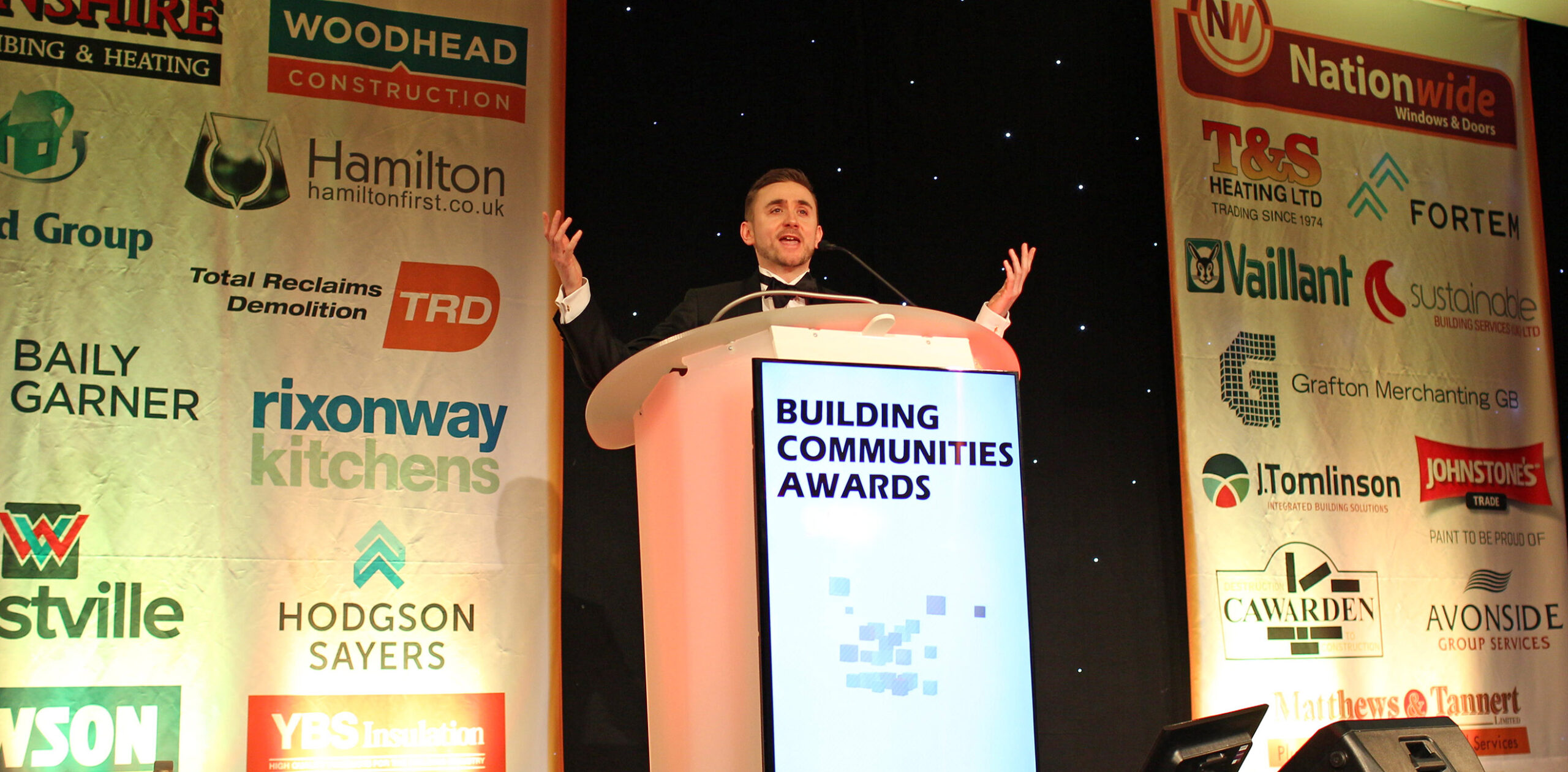
Running the room so the leaders can be in it is the job I do as a conference host and facilitator. A sales kickoff needs exactly the same thing, just louder.
Close the day with owners and dates
End with a 15-minute round-up: what we decided, who owns it, and when we will check. Write it on one page and send it the next morning, while people still remember the day.
Then follow up on the date you agreed.
An away day that leads to one visible change will get a better turnout next year than one with a better lunch.
If you are planning a team away day or an internal conference and want someone to run the room so you can be part of it, send the agenda or check availability at hello@conferencehost.uk.
17:00Close
Send me your agenda. I’ll show you where the room comes alive.
A fixed price, a free planning call, and a reply within one working day.