Icebreaker Ideas for Adults: Professional, Low-Cringe Options
TL;DR
- The best icebreaker ideas for adults are opt-in, quick, and carry no risk of looking foolish. Cringe is what kills participation, not reluctance.
- Sort your options by risk level. Low-risk openers work with a cold or senior room. Higher-risk formats need a warm room and a reason to take part.
- Match the opener to the moment: the 9am cold open, the post-lunch slump, and the awkward gap before networking each need a different move.
- Most generic icebreakers fail in a large room because they were built for twelve people in a training session, not a hall of hundreds.
- Give a professional audience a clear, structured task with a fast payoff and they will play. Vague “turn to your neighbour” prompts get vague results.
If you are opening a conference or an all-hands and you want icebreaker ideas that grown-ups will actually take part in, the problem is rarely the people. It is the format. Professional adults do not hate participation. They hate being put on the spot, and they hate forced fun that feels built for a classroom.
I have watched the energy in a room for more than twenty years across 800 plus events. The pattern holds every time: give people a low-risk, structured way in and they lean forward. Give them a vague prompt with a chance of embarrassment and they fold their arms. This guide sorts the options by risk and by setting, so you can pick openers that fit your actual room.
What makes an adult icebreaker low-cringe?
A low-cringe opener removes the risk of looking foolish while still asking people to take part. That single principle explains why some openers land with executives and others empty the room.
Adults will happily join in when three things are true. The task is clear, so no one has to guess what is expected. The exposure is low, so a wrong answer costs nothing. And the payoff is fast, so the effort feels worth it.
Cringe creeps in when you invert those. Open-ended sharing (“tell us a fun fact about yourself”) is high exposure with no structure. Anything that singles out one person in front of hundreds is pure risk. The fix is not to drop engagement. It is to design the risk out of it.

Low-risk icebreaker ideas for a cold room
Start here if the room is cold, formal, or senior. These icebreaker ideas ask for a small, safe response and nobody is exposed.
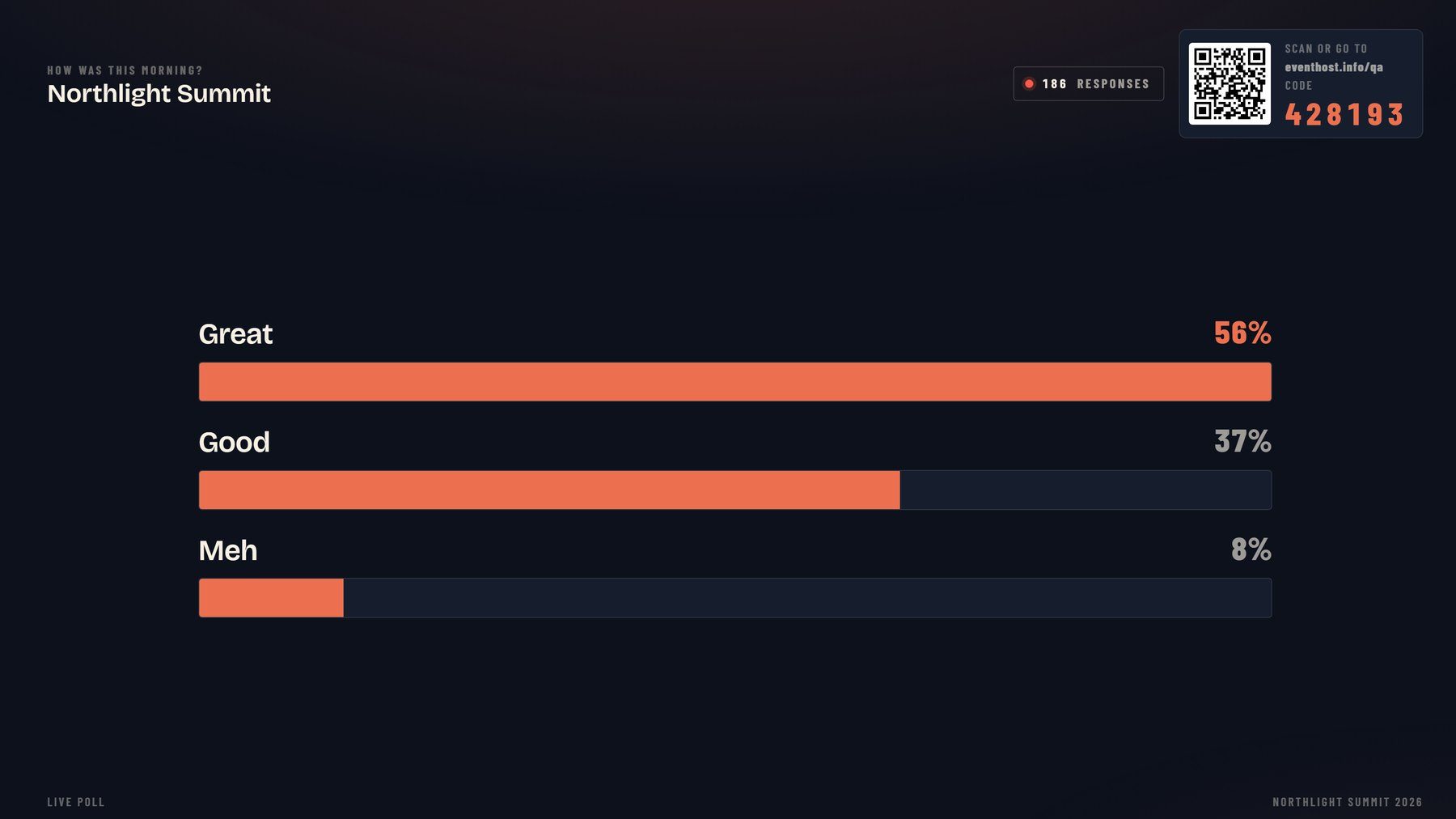
- Anonymous live poll. One sharp question on screen, everyone answers on their phone, results appear as a bar chart. No names, no risk, instant shared reference point.
- Two-word check-in. Ask for two words on how the quarter felt, collected live. Short enough that anyone will do it, revealing enough to set a tone.
- This or that. A run of quick binary choices (tabs or spaces, early bird or night owl). People vote with a show of phones, not hands, so shy delegates are not visible holdouts.
- Guess the number. Put a company or industry stat on screen and have the room guess before the reveal. Curiosity does the work.
These are quiet wins. Nobody performs, everybody contributes, and you get a live sense of the room in under two minutes. They pair well with the openers on our conference icebreakers page.
Which icebreaker ideas work for a nervous audience?
For a nervous or reluctant audience, the safest icebreaker ideas are anonymous, phone-based, and answered by everyone at once. When no single person is visible, the fear of standing out disappears.
The mistake organisers make is reading silence as “this crowd will not engage”. Usually the crowd is fine. The format asked them to be brave, and bravery is a big ask at 9am in front of colleagues.
Swap the ask. Instead of “who wants to share”, use “everyone tap your answer now”. A whole-room response feels safe precisely because it is anonymous and simultaneous. You still get real input, and the room warms without anyone being put in the spotlight.
Medium-risk icebreaker games for adults
Once a room is warm, you can raise the stakes a little. Medium-risk icebreaker games for adults ask people to compete or create, but still in teams rather than alone.
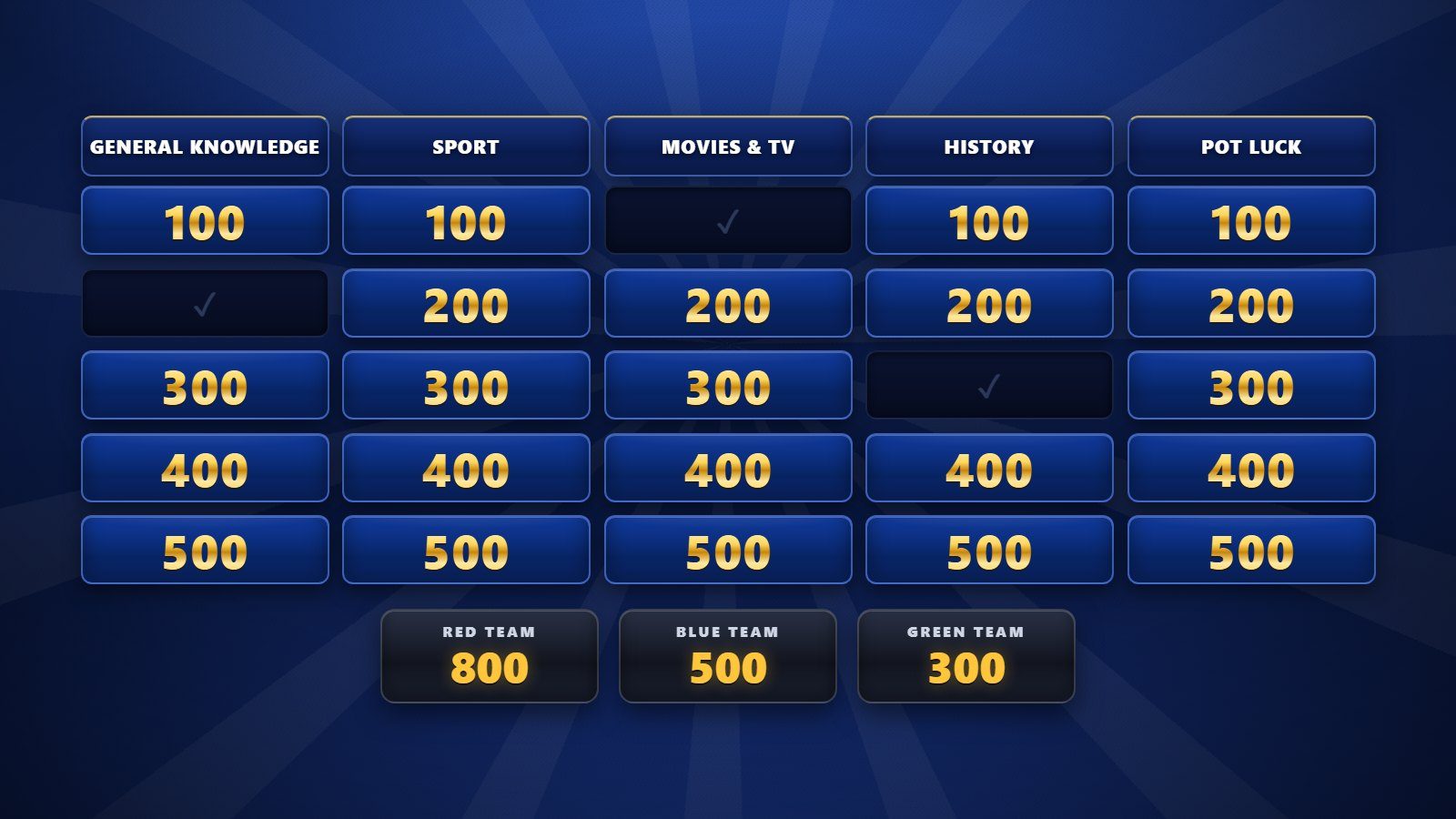
- Table trivia. Split the room into tables and run a short quiz. The team carries the risk, not the individual, so people relax and get competitive.
- Higher or lower. Show a value and have the room predict whether the next one is higher or lower. Fast, funny, and no wrong answer feels personal.
- Caption or category. Give teams a prompt and collect their best short answer. Light creativity, shared credit, quick laughs.
- Ranking challenge. Teams order five items (biggest markets, oldest products) and compare. Debate happens naturally at each table.
The rule with medium-risk formats: keep the individual hidden inside a team, keep rounds short, and keep the scoreboard visible. Structured competition gives professional adults a reason to look up from their phones and actually play.
What are the best fun icebreaker activities for large groups?
The best fun icebreaker activities for large groups are ones every person can play at once from their own seat. Anything that relies on people moving around or speaking up individually collapses past about thirty delegates.
This is where most listicle advice falls down. It was written for a training room of twelve, so it suggests standing in a circle or pairing off. In a hall of two hundred that is chaos, and organisers feel it. Employees already report feeling less engaged in larger meetings, so the format has to fight that, not add to it.
Whole-room game show formats solve the scale problem. Every delegate plays on their own phone with nothing to download, the action is on the main screen, and hundreds of people move together. My eight formats (Top Answers, Quiz Show, Higher or Lower, What the Blank, Guess the Phrase, Category Clues, Scavenger Hunt and Conveyor Belt) are built for a hall, not for twelve people in a training room. You can see how they run on the conference games page.
How long should an adult icebreaker run?
Most adult icebreakers should run two to five minutes, not fifteen. The job of an opener is to shift energy and get people participating, then hand cleanly to the agenda.
Length is where good intentions go wrong. An opener that overstays becomes the thing people endure before the real content. Keep it tight and the room reads it as a lift, not a delay.
A rough guide by slot:
| Slot | Length | Aim |
|---|---|---|
| 9am cold open | 2 to 3 min | Wake the room, set the tone |
| Mid-morning | 3 to 5 min | Sharpen focus before a dense session |
| Post-lunch slump | 5 to 7 min | Re-energise deliberately, more play allowed |
| Pre-networking | 3 to 5 min | Warm people up to talk to strangers |
When do icebreaker activities for adults fall flat?
Icebreaker activities for adults fall flat when they carry risk, run too long, or ignore the size of the room. Those three failures cover almost every dead opener I have seen.
The energy in a room is a curve, and it has predictable dips: the cold open at 9am, the slump around half past one, and the awkward gap before networking. An opener aimed at the wrong moment does nothing. A polling tool bolted on with no reason to engage does nothing either, because a poll on its own is not a reason to look up from your phone.
The other silent killer is scale. A format that shines with twelve people can die with two hundred, not because the idea is bad, but because the mechanics do not carry across a hall. Test every opener against your real headcount before the day.
Icebreaker for adults by setting
The right icebreaker for adults depends on the setting as much as the crowd. A sales kickoff, a formal AGM, and a hybrid town hall each reward a different opener. Use the table as a starting point, then dial the risk up or down to match the room.
| Setting | Good opener | Keep it |
|---|---|---|
| Sales kickoff | Team trivia or ranking challenge | Competitive, fast |
| Formal conference or AGM | Anonymous poll, guess the number | Low-risk, dignified |
| Internal all-hands | Two-word check-in, this or that | Inclusive, quick |
| Team offsite | Caption game, higher or lower | Playful, team-based |
| Virtual or hybrid | Live poll, whole-room quiz on phones | Simple, one-tap |
For virtual and hybrid rooms especially, simplicity wins. One clear task, one tap, results on screen. If you want the mechanics behind sustained participation, our audience engagement page goes deeper.
How do you match the opener to the energy in the room?
You match the opener to the room by reading two things first: how cold the audience is, and which dip in the day you are hitting. Then you pick the lowest-risk format that still creates real participation.
Engagement is not a gimmick bolted on at the end. It is how you keep the whole room with you from the first minute, and openers are simply the first tool in that job. Start safe, earn a little trust, and you can raise the stakes as the day warms.
If you are planning a conference and want the openers, the games, and the whole-room engagement handled by one host who runs it live, you can check availability and send the agenda. Tell me the room and the moments you are worried about, and I will build the openers around them.

17:00Close
Send me your agenda. I’ll show you where the room comes alive.
A fixed price, a free planning call, and a reply within one working day.