Human Bingo: Questions, Template and How to Run It at an Event
TL;DR
- Human bingo is a “find someone who” grid. Delegates mingle, find a different person for each square, and race to complete a line.
- It works because it gives people a reason to talk to strangers, which most guests at a mixer say they want and then fail to do.
- Write prompts about work, skills and quirks. Keep health, religion, politics, family and drinking off the card.
- Match the grid to the room: a 3×3 or 4×4 card for 20 people, a 5×5 card in three versions for 200.
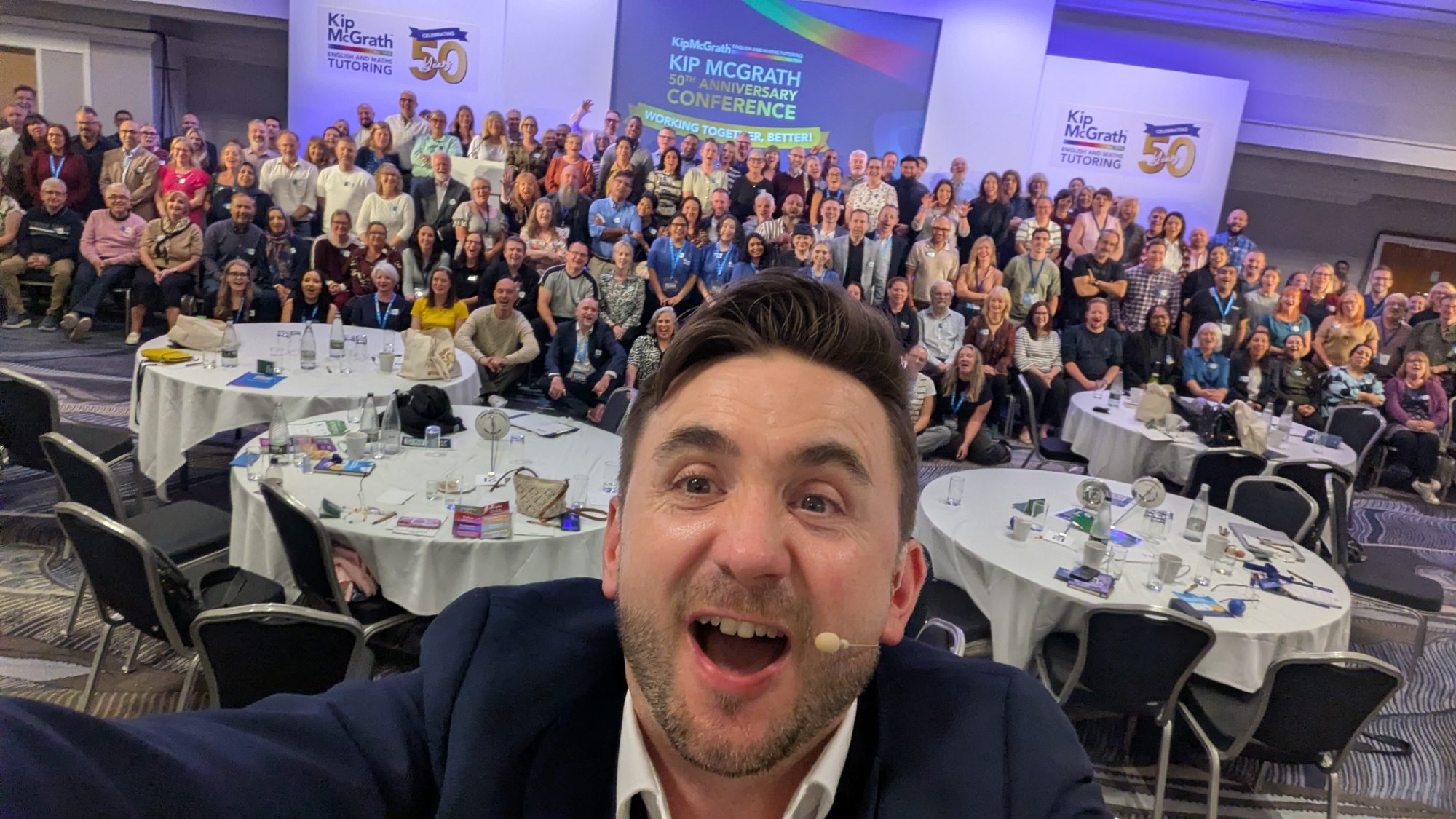
Human bingo is the icebreaker that quietly fixes a stubborn problem at networking sessions: people talk to the colleagues they already know. Here are the rules, 33 professional prompts, a copyable 5×5 template, and how to run it with 20 people or 200.
What is human bingo?
Human bingo (also called people bingo or “find someone who”) is a mingling game played on a bingo-style grid. Each square holds a prompt, such as “has worked in three or more sectors”. Delegates move around the room, find a colleague who fits each square, and get that person’s name in the box.
It is a classroom staple. The University of Oklahoma’s K20 Center lists human bingo as a conversation-starting strategy for groups of 30 or more that takes under 20 minutes. Facilitators use it with adults for the same reason teachers do: it gets a room moving and talking without anyone standing up alone.
Why does human bingo work as an icebreaker?
It works because it gives people a reason to approach strangers, and most adults need one. At a Columbia Business School mixer of about 100 executives, 95 percent said they had come to meet new people. Electronic name tags showed the average guest had 14 encounters, and half of them were with friends.
There is a second reason. People underestimate how pleasant a conversation with a stranger will be. Chicago commuters asked to chat to a stranger rated the journey more positively than those who sat in silence, even though they had predicted the opposite. After a first conversation, we also underestimate how much the other person liked us, the so-called liking gap.
The grid also hands people something in common. In a UK study, partners who shared more traits were rated as more likeable, with musical taste the strongest predictor. Research at Ruhr University Bochum found that a shared unusual interest draws strangers together more than a popular one. So the quirky squares do the most work.
How do you play human bingo?
Hand everyone a card and a pen, set a timer, and let them find a different person for each square. Facilitator Penny Walker’s core rules are simple:
- Every prompt is a yes or no question, and either answer is comfortable to give.
- Each square needs a different person. No name twice.
- The person who fits writes their own name or initials in the box.
- First to complete a line (or the whole card, if you have time) calls “bingo”.
Two additions make it better at work. Ask people to write one word next to each name about something they learned, which turns a signature hunt into a real exchange. And spot-check the winner by reading out two squares and asking each named person for a quick nod. K20 suggests a verification step like this, and it stops the “just sign mine” shortcut.
Ten to fifteen minutes is plenty. Stop while the room is still loud, not when it has gone quiet.
Human bingo questions for work events
Good human bingo questions are about work, skills and harmless quirks. Mix easy squares with a few rare ones, because the rare ones start the best conversations. Write them as “Find someone who…”
Career and work
- Has worked here for less than six months
- Has worked in three or more sectors
- Started their career in a completely different job
- Has a job title their family does not understand
- Has worked in another country
- Had a Saturday job in a shop, café or pub kitchen
- Has moved department at least once
- Has presented to a room of 100 or more
Skills and hobbies
- Speaks three or more languages
- Plays a musical instrument
- Can solve a Rubik’s cube
- Bakes their own bread
- Grows their own vegetables
- Has run a book club
- Can touch type without looking
- Has a hobby they have never mentioned at work
Places and travel
- Has lived in three or more cities
- Cycles to work
- Has visited every UK nation
- Has travelled more than 100 miles to be here today
- Can name the town where this company started
Rare and quirky
- Has met someone famous
- Has been on TV or radio
- Collects something unusual
- Shares your birthday month
- Has the same first initial as you
- Has a party trick they will demonstrate in under ten seconds
- Has read a book this month they would recommend
Event-specific
- Is at their first company conference
- Has a question they want answered today
- Knows who is speaking after lunch
- Has worked on a project with another department this year
Penny Walker’s advice is to make sure at least one person in the room can say yes to every square. Swap in your own company history and in-jokes; they beat any generic list. For more prompts in the same spirit, see these icebreaker questions.
What should you leave off a human bingo card?
Leave off anything a delegate might not want to reveal to a colleague. Of Britons who had done a team building exercise, YouGov found 60% found it embarrassing or cringe-worthy. A badly written square is how human bingo joins that list.
The quickest test is the ICO’s list of special category data: racial or ethnic origin, political opinions, religious or philosophical beliefs, trade union membership, health, sex life and sexual orientation (plus genetic and biometric data). If a square touches any of those, cut it. Also skip:
- Family status (“has three children”, “is married”)
- Alcohol (“can down a pint”)
- Physical feats (“has run a marathon”), which quietly exclude people
- Money and status (“owns a second home”)
- Embarrassing confessions of any kind
Some neurodivergent staff, Acas notes, may find certain social activities uncomfortable, and its advice is to ask staff rather than assume. Let anyone take the role of a “bingo checker” instead of playing. I have hosted 800+ events, and professional adults will happily take part if the format removes the risk of looking foolish. Cringe, not reluctance, is what kills participation.
Human bingo template: a copyable 5×5 grid
Copy this human bingo template into a document, swap in your own squares, and keep the centre free. Print it at 12pt Arial or larger; clear print guidance asks for a minimum of 12pt, ideally 14pt, so leave room for names.
| B | I | N | G | O |
|---|---|---|---|---|
| Has worked in three or more sectors | Plays a musical instrument | Has lived in three or more cities | Has met someone famous | Is at their first company conference |
| Started in a completely different job | Speaks three or more languages | Cycles to work | Collects something unusual | Has a question for today’s panel |
| Has worked here under six months | Bakes their own bread | FREE | Shares your birthday month | Knows who is speaking after lunch |
| Has a job title their family does not get | Can solve a Rubik’s cube | Travelled 100+ miles to be here | Has been on TV or radio | Has worked with another department this year |
| Has worked in another country | Grows their own vegetables | Has visited every UK nation | Has a ten-second party trick | Has read a great book this month |
Print three versions with the squares shuffled. K20 recommends at least three card variations so patterns do not emerge too easily, and it stops neighbours copying each other’s answers.
How do you run human bingo for 20 people versus 200?
Shrink the grid for a small group and add structure for a big one. The maths decides it: a 5×5 card needs 24 different names, which a team of 20 cannot supply.
| 20 people | 200 people | |
|---|---|---|
| Grid | 3×3 or 4×4 | 5×5, three shuffled versions |
| Time | 8 to 10 minutes | 12 to 15 minutes |
| Win | Full card | First line, then first full card |
| Space | Any meeting room | Clear the aisles, or run it at the drinks reception |
| Host | Group leader, no mic | A host on a microphone calling time |
For 20, Penny Walker’s sweet spot is 10 to 30 people with room to move, and a short debrief is easy to add. For 200, the risk is chaos. So give a two-minute warning, have someone at the front to verify winners, and announce prizes from the stage so the room hears it.

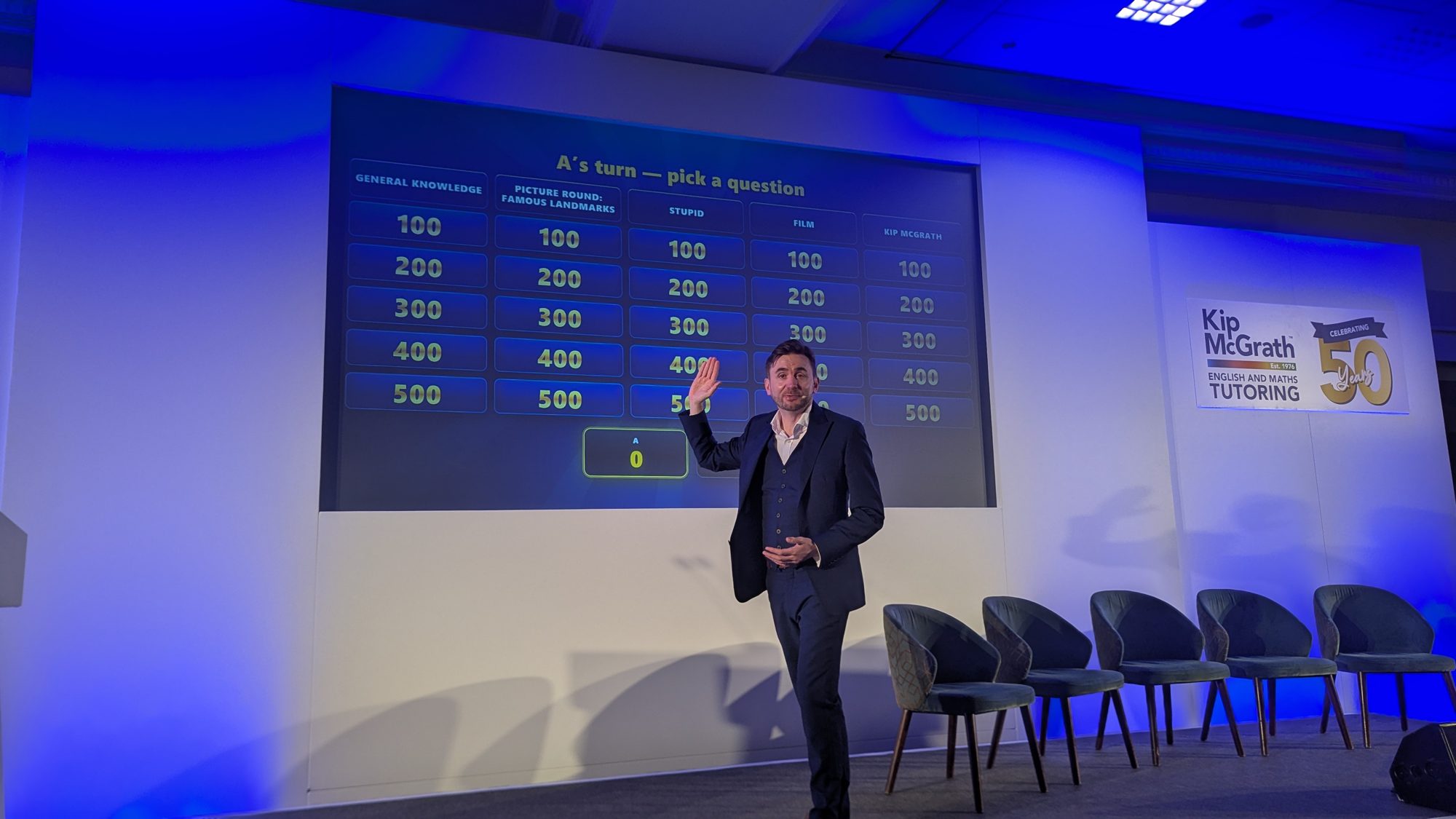
Past a few hundred, walking bingo stops working. Paper cards, pens and a crush at the bar do not scale to a hall. That is the job my whole-room conference game shows were built for: every delegate plays on their phone, nothing to download. For other options, the guide to icebreakers for large groups covers what changes at scale.
When in the day should you play human bingo?
Play it just before the first networking break, or at the start of the drinks reception. The energy in a room is a curve, and I have watched it for twenty years: the cold open at 9am, the slump after lunch, the awkward gap before networking.
Human bingo is built for that awkward gap. The Columbia mixer study shows what happens when people are left to it: they drift back to friends. Run the cards during the coffee break and the first conversations are already happening when people collect their drinks.

It is a weaker choice for a 9am open with everyone seated in rows. For that slot, look at seated conference icebreakers that work from the chair.
After the last square is filled
Take two minutes to close the loop. Penny Walker suggests asking which squares were the easiest and hardest to fill, which tells you something real about the room (nobody had worked abroad, half the room was new). Link that to the first session of the day and the game has done more than fill time.
Keep the prize small and the tone light. The point is the conversations, not the winner. For more formats that mix a room, see these group icebreakers.
If you are planning a conference, a kickoff or an awards night and want a host who keeps the whole room with you from the first minute, send the agenda or check availability at hello@conferencehost.uk.


17:00Close
Send me your agenda. I’ll show you where the room comes alive.
A fixed price, a free planning call, and a reply within one working day.