Conference Theme: How to Choose One That Survives the Agenda

TL;DR
- A conference theme is not a slogan. It is the thread a host pulls through the welcome, the handovers, the panel questions and the close.
- Choose one that can ask a question of every session on your agenda. Otherwise it is decoration.
- Test it on a sample of real delegates before you print anything. Committees fall in love with themes their audience finds baffling.
- Say it out loud. A theme that needs a graphic or a glossary dies the moment somebody has to speak it from a stage.
- They collapse the same five ways: abstract noun, borrowed trend, hollow pun, no budget, and nobody told the host.
I have hosted more than 800 events, and I can usually tell in the first twenty minutes whether a conference theme is doing any work. The tell is the handover. If I can say why the next session exists in one line that connects to the last, the theme is real. If I have to read the banner behind me and hope, it was a slogan all along.
There is no shortage of lists: Cvent alone offers 19 themes for 2026. Harder to find is how to pick one that survives contact with the agenda, and what it looks like in the room when it works.

What makes a conference theme different from a slogan?
A slogan is a line you print. A conference theme is a decision rule that changes the programme.
If yours is working, it has already rejected a speaker, merged two sessions and renamed a track.
Momentus puts the test plainly: your theme should directly support what you are trying to accomplish, and becomes a decision-making tool for the content team. Cvent says the theme guides the selection of speakers and topics.
Dianne Devitt, an event designer quoted by Meetings Today, is blunt about what happens without one: “When there isn’t an effective theme, things get disjointed. People will be wondering why they came.”
A thread beats a list of topics for a reason. Research on persuasion found narratives are processed more fluently than non-narratives, and easier processing makes persuasion more likely. A day with a thread is easier to follow than a day of unrelated excellence.
How do you choose a conference theme that survives the agenda?
Choose a conference theme that can ask a question of every session on the agenda. That is the whole test, and it is harsher than it sounds.
Write your draft programme in one column. In the next, write the question your theme asks of each item. “Built to last” asks a procurement update what it is building. It asks the CEO what she expects to still be true in ten years. It asks the post-lunch breakout why its process survives a bad quarter. If three sessions produce nothing in that column, the host will spend the day papering over the gaps.
Then run three more checks before you commit.
| Check | What you are asking | Fail signal |
|---|---|---|
| Say it out loud | Can a host say this ten times without wincing? | It only works written down |
| Price it | What does it cost before it means anything? | It needs a set build to exist |
| Translate it | Does it turn into session and track names? | Every title needs explaining in brackets |
The budget check is not optional. Stova recommends a line budget early, because length, venue and layout decide what a theme will require. Momentus adds that abstract themes are hard to turn into session titles, and that the AV team needs to know which keynotes need stage design tied to the theme.
Keep the language plain. In a study of 650 adults, readers of jargon-heavy passages came away less interested in the subject and less confident discussing it, and adding definitions made no difference. A theme built from internal vocabulary does the same to delegates.
Test it on the people who have to live with it
Committees are the worst possible test audience. Everyone in the room already has the context, so a cryptic theme reads as clever. It has to work on a hall, not on the eight people who wrote it.
Momentus recommends testing a few theme directions with a sample of your target audience before committing, using registration data, pre-conference polls and post-event surveys. Do it with ten delegates from last year and one question: what do you think this day is about? If you get ten different answers, the theme is not finished.
I run live polling anyway, on my own software, RoomReader: every delegate answers on their phone, nothing to download. Ask the room what they came for, and in ninety seconds you know whether the theme on the screen matches the reason people travelled.
Where the theme actually shows up on the day
Four places, in order of how much they matter.
The welcome. The theme gets stated once, in the first two minutes, in plain words, with the reason it was chosen. Not read off the banner. Memory is lopsided in your favour: the serial position effect means people recall the first and last items better than the middle, a pattern Murdock mapped in 1962.
The handovers. This is where a theme earns its money, and where most of them quietly die. One or two sentences between sessions: what we just heard, what the theme does with it, why the next speaker follows. Done properly nobody notices. Done badly the day feels like a playlist on shuffle.
The questions. A theme gives me a spine as a moderator. When a panel drifts into sales patter, the theme is the way back: if the day is about the next decade, ask every panellist what they would stop doing tomorrow. Reading the room tells you when to use it.
The close. People remember experiences by their peaks and their ending, a bias Kahneman and Fredrickson established in 1993. So the theme returns at the end, answered rather than repeated, with three things the room decided today. That is what closing remarks are for.
The dips in a conference day are predictable. Timothy Monk set the post-lunch dip out in 2005: a real mid-afternoon slump with roots in human biology, which shows up even when nobody has eaten, and is made worse by a high-carbohydrate lunch. So it is not the buffet’s fault, though the buffet does not help. If your theme has a competitive or playful side, that is where it goes: my eight whole-room conference game shows get written to the theme and dropped into that slump.
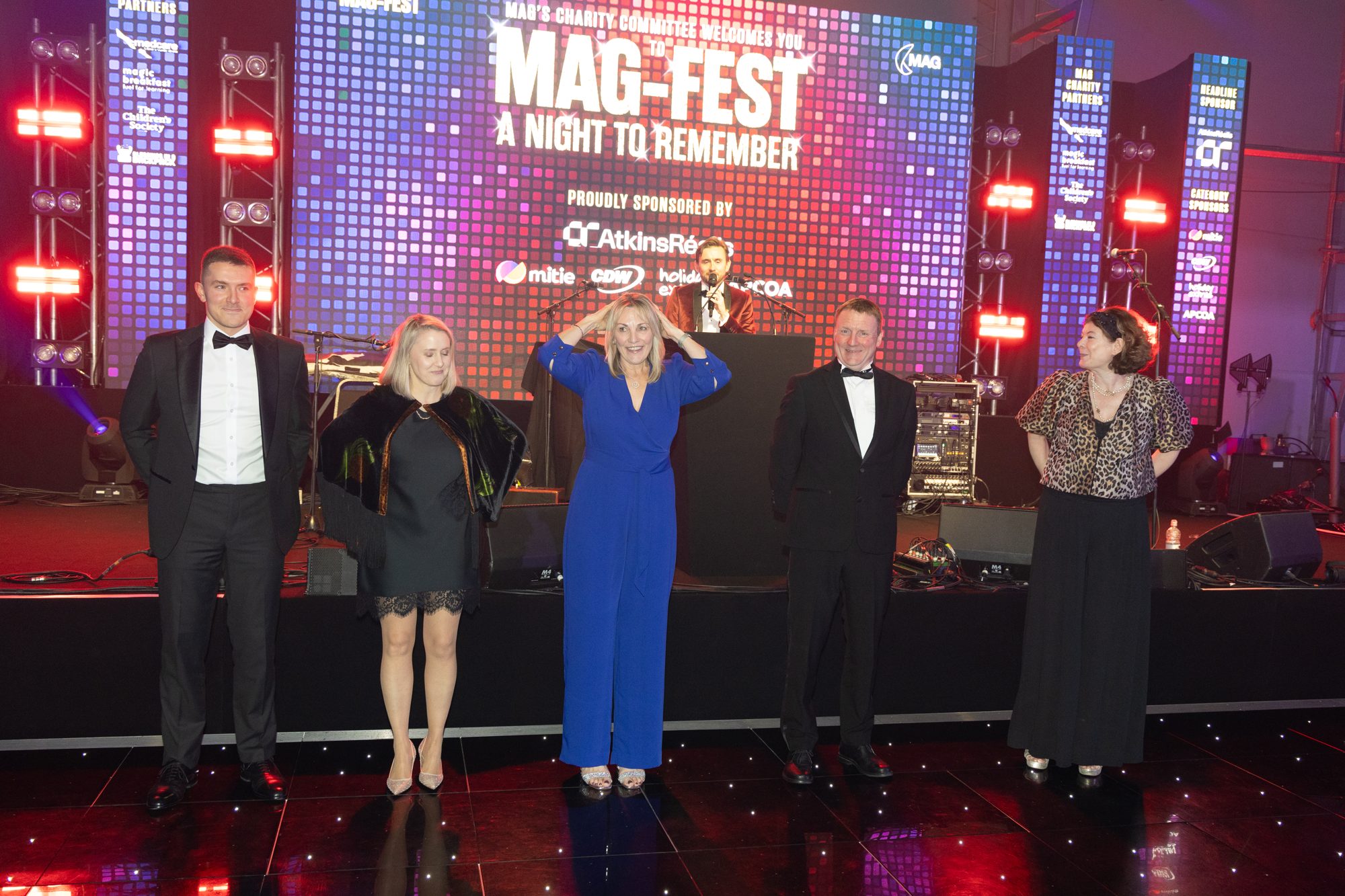
Brief the speakers early. Dave Lutz, quoted by Meetings Today, advises sending them an abstract of the objectives well in advance, opening with a keynote that sets the tone, then running breakouts that connect to each other. Your conference agenda is where that connection shows up or does not.
Should the theme be in your session titles?
Only where it adds information. A session title has one job: telling a busy delegate what they will get. A theme that hijacks every title makes the programme unreadable.
The guidance on session titles is to stay around 10 to 15 words, be specific enough that nobody reads the title twice, and avoid a provocative hook that does not match the content, because that loses trust. Use the theme in track names and in the one-line framing underneath, and let the titles stay literal. Mike May, quoted in the same Meetings Today piece, says that if you go with a conference slogan, keep it brief and catchy or you lose people, and write it the way you would write a headline. That is advice for the banner, not for the breakout on pensions auto-enrolment.
Which conference themes collapse on the day?
The ones that were never tested against the programme. Five recur.
- The abstract noun. “Excellence”. “Momentum”. It asks nothing of any session, so it survives as a backdrop and nothing else.
- The borrowed trend. Lifted from a trend report because it sounded current. It fits the opening keynote and none of the operational content. Delegates can tell.
- The pun. Funny once in the planning meeting, unsayable from a stage by lunchtime. Devitt’s warning is to qualify your audience and not get too annoyingly cute.
- The one that needs a budget it does not have. A theme that only exists as a set build. Stova’s feasibility check catches these.
- The one nobody told the host. It is common for a theme to be on every sign and in nobody’s brief. Half its value is in the links between sessions, and the person making those links needs it a fortnight early.
Culture is worth a check. Renee Radabaugh warns that colours and graphics carry different meanings in different places, so a theme built on one visual idea needs reading by someone outside your office.
So do the two-column exercise before you brief a designer, and say the line out loud five times. If it still holds, write the handover sentences for every transition in the day, and you have a conference theme rather than a banner. The rest of the day sits in my guide to hosting a conference.

17:00Close
Send me your agenda. I’ll show you where the room comes alive.
A fixed price, a free planning call, and a reply within one working day.